


5th September 2026
https://medium.com/@haritas2/who-owns-the-style-43010782372d
Thirty Seconds vs. Fourteen Months
There are multiple, behind-the-scenes documentary on Studio Ghibli that shows what it takes to animate just four seconds of crowd movement in one year and three months. Every figure drawn by hand. Every background painted individually. Hayao Miyazaki checking every frame.
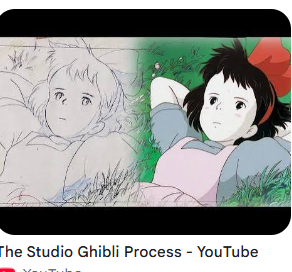
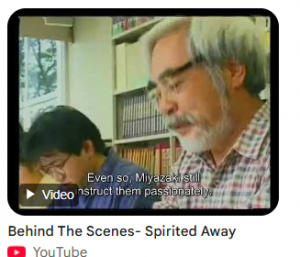
Source: Youtube
On March 25, 2025, OpenAI’s image generator did something similar in under thirty seconds.
Within days, 130 million users had produced over 700 million images in what everyone was calling “the Ghibli style.” Sam Altman, OpenAI’s CEO, changed his own profile picture to a Ghiblified version of himself and cracked a joke about it. The White House even posted a Ghibli-style image of a woman being arrested by immigration officers. Things got uncomfortable fast.
Here is what got lost in all the noise: a company with $12.7 billion in annual revenue used the life’s work of an 84-year-old filmmaker — his name, his studio’s identity, forty years of painstaking craft — to drive product excitement. No permission. No payment. Not even a heads-up.
Miyazaki once called AI-generated art “an insult to life itself.” He said nothing this time. The Ghibli fan community on Reddit did it for him — they had banned AI art long before this moment, and they weren’t about to make an exception.
The Gap That AI Fell Through
Copyright law protects specific works — a film frame, a painting, a recorded song. It does not protect style. That line always existed, but it was never a big problem. If a young animator was “inspired by Ghibli,” they still had to spend years learning the craft. The result was their own work. It took effort. It took time.
AI changed that completely. These tools are trained on millions of images and recordings — most of them copyrighted, almost none of them licensed. The style gets extracted and reproduced at a scale no human could match. What used to require years of skill now takes a text prompt and thirty seconds.
When pressed, OpenAI said it would block prompts that specifically named living artists. Within days, users worked around it by describing visual features instead of names. The restriction was cosmetic. It fixed nothing.
The Music Industry Had Enough
In June 2024, Universal Music Group, Sony Music, and Warner Music filed copyright suits through the Recording Industry Association of America (RIAA) against Suno and Udio — two AI platforms generating songs in the style of real artists, trained on their catalogued recordings. Damages sought ran up to $150,000 per infringed track. By late 2025, Warner settled with Suno and Universal with Udio. Sony refused and kept fighting.
Europe moved too. Germany’s GEMA, representing 100,000 music creators, sued Suno in Munich in January 2025 — the first AI music copyright case on the continent. Denmark’s Koda followed, calling it “one of the biggest thefts in music history.” GEMA also separately sued OpenAI for reproducing copyrighted lyrics in its generated outputs.
Voice cloning is increasing rampantly. In 2023, an AI track faking Drake and The Weekend called “Heart on My Sleeve” went viral before Universal pulled it down. Bad Bunny called out an AI imitation spreading on TikTok. In early 2026, an independent singer-songwriter named Murphy Campbell found out — entirely by accident — that someone had scraped her YouTube videos, cloned her voice, and uploaded fake covers to Spotify under her name. No fame, no legal team, no warning.
Then there is the Scarlett Johansson episode. In May 2024, OpenAI launched a voice assistant called “Sky” that sounded remarkably like her. OpenAI had approached Johansson to license her voice — she had said no. The product launched anyway. She threatened legal action. OpenAI pulled Sky without explanation.
These cases lean on old precedents. Bette Midler, a popular American actress, singer, comedian sued Ford in 1988 after they hired someone to imitate her voice in an ad — after she had already said no. She won. Tom Waits a popular American singer and song writer, won $2.375 million in 1992 when Frito-Lay did something similar. These rulings were never designed for AI, but they are the closest thing the legal system currently has.
In India, It Got Personal
Indian celebrities have been fighting a version of this same battle — except here it is less about style and more about identity being taken outright.
Arijit Singh, the most-streamed artist on Spotify in 2025 with 138.5 million monthly listeners, sued Codible Ventures LLP in 2024 for cloning his voice for commercial recordings. The Bombay High Court ruled in his favour — the first Indian judgment dealing directly with AI and music. The court protected not just his recordings but his vocal style, mannerisms, and way of singing. Everything that makes him recognisable.
Anil Kapoor had moved court a year earlier. Companies were selling ringtones, GIFs, and merchandise using his image, voice, and even his catchphrase “Jhakaas” without asking. The Delhi High Court issued an injunction covering AI-generated versions of his persona too, explicitly noting that AI could now replicate a celebrity’s identity for profit and that the law needed to respond.
Aishwarya Rai Bachchan filed in September 2025 against fake websites selling merchandise with her image and AI likenesses she never approved. Abhishek Bachchan filed separately over AI-generated explicit content using his face. Asha Bhosle won protection against Mayk Inc for cloning her voice — the court said a voice is part of a person’s identity, not raw material for a product. Amitabh Bachchan, Jackie Shroff, and the estate of Ratan Tata have all filed similar petitions.
Every single case is about the same thing: someone’s identity being used to make money for someone else. The value being exploited was built over decades by the person it was taken from. Given the fact that in India , movies and cricket are considered to be a religion. The strong affinity and bonds the fans and audience have with these celebrities is akin to parasocial relationships. Thanks to this fanatic fandom, there is a high probability that the audience may perceive these fake cloned images/videos as real and may start engaging with them.
The Law Is Behind. Quite Far Behind.
India’s Copyright Act hasn’t had a serious update since 2012. The 2025 draft IT Rules require platforms to label AI content and remove harmful material within 36 hours — but the burden falls on platforms, not on the companies building these tools or the brands deploying them. There is no compensation route for artists whose work trained the models, and ASCI has issued no guidance on AI-generated endorsements.
Other countries are moving faster. The EU’s AI Act requires transparency. The US NO FAKES Act would protect voice and likeness federally. India has strong court rulings but no statute. That means celebrities with lawyers are protected — and most other creators are not.
Course Relevance
This caselet works well in Marketing Communication and Brand Management and Consumer Behaviour modules on digital ethics and the legal environment of advertising. The Ghibli and Arijit Singh cases raise direct questions about where creative inspiration ends and commercial theft begins — and what responsibility brands carry when they use AI tools for campaigns. The Indian court cases show how celebrity brand equity, built over decades, can be commercially appropriated at near-zero cost, and what limited remedies exist.
Theoretical Alignment
- Keller’s CBBE Model (2001): A celebrity’s identity — voice, face, persona — is brand equity built over years of public trust. AI replication extracts that equity without contributing anything to its creation.
- Indian Copyright Act, 1957 (Section 57 — Moral Rights): Section 57 gives authors the right to object to distortion or mutilation of their work, even after publication. AI tools that reproduce the essence of a creator’s style — without touching the original — test this protection in ways the Act was never designed to address.
- Parasocial Relationship Theory (Horton & Wohl, 1956): Audiences build real emotional bonds with celebrities over time. When AI generates a fake version — a cloned voice, a synthetic face — it trades on that bond without consent, and risks damaging it permanently.
Learning Outcomes
- Analyse how AI image and voice generation has exposed a gap in copyright law that existing frameworks were not built to handle.
- Evaluate what Indian courts have done to protect celebrity identity and whether that is adequate without a proper statute.
- Apply Keller’s CBBE model to explain why AI copying of a celebrity’s persona is a brand equity problem, not just a legal one.
- Critique the ethical position of brands and agencies that use AI creative tools without clear consent or compensation frameworks.
Discussion Questions
Q1) Pick one international case (Ghibli or RIAA) and one Indian case (Arijit Singh, Anil Kapoor, or Aishwarya Rai). Who was harmed in each, and how? Is the harm the same kind or a different one?
Q2) Indian courts have been using constitutional privacy, trademark law, and copyright moral rights to protect celebrity identity — none of these were designed for AI. What problems does this patchwork approach create for smaller creators who cannot afford to litigate? What should a proper law actually include?
Q3) You run brand strategy at an Indian consumer goods company. Your agency proposes a campaign with visuals “inspired by” a well-known Indian animation style and a voice-over that sounds “similar to” a famous playback singer — no names used, no actual recordings. The agency says it is legally safe. The campaign will run on Instagram, YouTube, and OTT. What do you do?
Teaching Note
Suggested Opening
Play two audio clips back to back without naming them — Arijit Singh’s actual voice on a well-known song, then an AI-cloned version. Ask: would you share the second clip as a genuine recommendation from him? Does it matter that he had no idea it existed? That discomfort — of course it matters, but why exactly? — is the tension the whole case turns on.
Discussion Sequencing
Start with Q1 to get everyone working from the same set of facts. Move to Q2 once the class sees how many different legal tools courts are improvising with. Q3 usually splits the room — one group treats it as a legal risk calculation, another as an ethics question. Both are right. Push them to talk to each other.
Supplementary Material
WIPO Magazine’s 2025 piece on the Arijit Singh case (wipo.int) is short and readable. For Ghibli, TechCrunch and DesignRush’s April 2025 coverage together tell the story well. The RIAA filing summaries are accessible even to non-law students.
References
Copyright Act, India. (1957, amended 2012). Section 57: Author’s Special Rights. Government of India.
Berne Convention for the Protection of Literary and Artistic Works. (1886, as amended). WIPO.
Friestad, M., & Wright, P. (1994). The persuasion knowledge model. Journal of Consumer Research, 21(1), 1–31.
Horton, D., & Wohl, R. R. (1956). Mass communication and para-social interaction. Psychiatry, 19(3), 215–229.
Keller, K. L. (2001). Building customer-based brand equity. Marketing Management, 10(2), 14–19.
MeitY. (2025, October 22). Draft Amendments to IT Rules, 2021: Synthetically Generated Information. Government of India.
Anil Kapoor v. Simply Life India & Ors. CS(COMM) 652/2023. Delhi High Court.
Arijit Singh v. Codible Ventures LLP. (2024). Bombay High Court.
Aishwarya Rai Bachchan v. Aishwaryaworld.com & Ors. (2024). Delhi High Court [Interim Order].
RIAA v. Suno, Inc. No. 1:24-cv-11611 (D. Mass. 2024).
Midler v. Ford Motor Co., 849 F.2d 460 (9th Cir. 1988).
LiveLaw. (2025, November 27). Deepfakes and dignity: The new battle for celebrity rights in India.
WIPO Magazine. (2025). AI voice cloning: How a Bollywood veteran set a legal precedent.
TechCrunch. (2025, April 3). Studio Ghibli hasn’t commented on OpenAI’s AI copies, but the fan subreddit has.
US Copyright Office. (2025, January). Copyright and Artificial Intelligence: Part 3. Library of Congress.
Source: https://www.youtube.com/watch?v=zvY-SlHuDSo