






Aditi Sanjay Gowrishankar¹, G Varsha², Rashmi Jha*³
International School of Management Excellence
¹,² Associate Professor of Practice, International School of Management Excellence
Abstract:
Purpose:The purpose of this study is to investigate how employee mindfulness(EMF)and psychological empowerment independently influence employee creativity (EC), which in turn enhances employee performance. This framework aims to clarify the distinct roles of mindfulness and empowerment in fosteringcreativityanddrivinghigherperformanceoutcomeswithinorganizations.
Methodology : A pilot study was conducted with a sample of 10 employees from IT industry, Bengaluru (India). IBM SPSS was used to test the reliability of the instrument. IBM SPSS was used to test the reliability of the instrument. IBM SPSS will be used to test the conceptual model and to validate and statisticallyanalysetheresults.
Findings: At this stage, we have done a pilot study with 10 samples to validate the instrument. Subsequently, the data collection will be done in the next three months. And the analysis will be performedinordertofindthe significanceof the factors.
Implications: This study highlights the importance of integrating employee mindfulness and psychological empowerment to enhance employee creativity and performance. It provides a theoretical foundation for understanding how these factors independently drive performance outcomes. Practically, organizations can implement mindfulness practices and empowerment strategies to boost employee engagement and productivity. This approach fosters a resilient and competitive workforceindynamicbusinessenvironments.
Keywords: Employee Mindfulness, Psychological Empowerment, Employee Creativity, Employee Performance,Indian ITSector.
Introduction
In the rapidly evolving and highly competitive global business environment, organizations are increasingly recognizing the need to leverage psychological and behavioral factors to enhance employee performance and secure a sustainable competitive advantage. Among these factors, Employee Mindfulness (EMF) and Psychological Empowerment (Psy Emp) have emerged as significant predictors of workplace success (Brown & Ryan, 2003; Spreitzer, 1995). However, the mechanisms through which these constructs contribute to enhanced performance outcomes remain underexplored. This study aims to bridge this gap by proposing a conceptual framework that investigates how employee mindfulness and psychological empowerment independently foster Employee Creativity (EC), subsequently enhancingEmployee Performance (Emp Perf). Employee mindfulness refers to an individual’s ability to maintain present-moment awareness and non-judgmental attention to experiences (Brown & Ryan, 2003). Research has demonstrated that mindfulness improves emotional regulation, enhances stress management, and supports cognitive flexibility (Glomb et al., 2011). These qualities are essential for navigating complex tasks, fostering resilience, and maintaining focus, all of which are pivotal for optimal job performance (Dane & Brummel, 2014). Despite these recognized benefits, the specific pathways through which mindfulness influences employee performance require further investigation. One potential mechanism is its impact on employee creativity. Mindful employees are more likely to engage in innovative thinking, problem-solving, and creative processes due to heightened awareness and openness to new experiences (Reb et al., 2015). Psychological empowerment, defined by an employee’s perception of meaning, competence,self-determination,andimpact,has been shown to foster proactive behaviors and intrinsic motivation (Spreitzer, 1995; Thomas & Velthouse, 1990). Empowered employees are confident in their abilities and feel a strong sense of purpose in their work, which encourages them to take initiative and engage in creative problem- solving (Seibert et al., 2011). Psychological empowerment fosters a work environment that promotes innovation and adaptability, both of which are critical for improving employee and organizational performance (Zhang & Bartol, 2010). However, similar to mindfulness, the pathways through which psychological empowerment translates into creativity and performance needdeeperexploration. Employee creativity plays a crucial role in connecting psychological states to tangible performance outcomes. Creativity in the workplace involves generating novel ideas, developing innovative solutions, and adapting to new challenges (Amabile, 1996). It is widely acknowledged as a key driver of organizational success, particularly in industries that depend on continuous innovation (Shalley et al., 2004). Both mindfulness and psychological empowerment can independently stimulate creativity by creating an environment where employees feel safe and encouraged to explore new ideas (Zhou & George, 2001). This creative engagement not only benefits individual employees but also translates into improved organizational performance. The proposed conceptual framework suggests that both employee mindfulness and psychological empowerment independently influence employee creativity, which subsequently enhances employee performance. This model offers a comprehensive understanding of how
psychological and cognitive factors work together to drive performance outcomes.Byfocusing on the mediating role of employee creativity, this framework provides a more nuanced perspective onhoworganizationscanharnessmindfulnessand empowerment to cultivate an innovative and high- performing workforce(Gongetal.,2009). Fromapracticalstandpoint,thisframework offers actionable insights for organizational leaders and human resource practitioners. Implementing mindfulness-based practices, such as mindfulness training programs and stress reduction initiatives, can enhance employees’ present-moment awareness and emotional regulation (Hülsheger et al., 2013). Additionally, fostering a psychologically empowering work environment—through supportive leadership, meaningful job design, and autonomy—can boost employees’ intrinsic motivation and creative capacities(Deci&Ryan,2000;Zhang&Bartol,2010). Integrating these strategies cancreate a workplace that nurtures creativity and drives superior performance outcomes. In summary, this study aims to enrich the existing literature by integrating employee mindfulness and psychological empowerment into a unified conceptual framework. It emphasizes the independent yet complementary roles of mindfulness and empowerment in fostering employee creativity, which subsequently leads to improved performance. By exploring these relationships, the study seeks to provide both theoretical contributions and practical strategies for building a resilient, engaged, and high- performing workforce. This integrated approach offers a pathway for organizations to navigate the complexities of the modern workplace, fostering innovationandensuringlong-term success.
Literature Review
Understanding the factors that contribute to employee performance has been a longstanding focus in organizational behavior research. Two significant constructs that have gained attention in recent years are Employee Mindfulness (EMF) and Psychological Empowerment (Psy Emp). Both constructs are believed to enhance Employee Creativity (EC), which in turn leads to improved Employee Performance (Emp Perf). This literature review examines existing studies on the relationships between mindfulness, psychological empowerment, creativity, and performance, thereby laying the foundation for the proposed conceptualframework. EmployeeMindfulnessand EmployeePerformance Employee mindfulness is characterized by an individual’s ability to maintain present-moment awareness and non-judgmental attention to experiences (Brown & Ryan, 2003). Research indicates that mindfulness improves emotional regulation, stress management, and cognitive flexibility(Glombetal.,2011;Hülshegeretal.,2013). These attributes contribute to higher focus and resilience, which are essential for optimal job performance (Dane & Brummel, 2014). Mindful employees are better equipped to handle workplace stress and adapt to dynamic environments, leading to enhanced performance outcomes. Furthermore, mindfulness has been linked to increased psychological well-being, which directly affects employee engagement and productivity(Reb etal., 2015). Psychological Empowerment and Employee Performance Psychological empowerment involves an employee’s perception of meaning, competence, self- determination, and impact in their work role (Spreitzer, 1995). Empowered employees tend to be more proactive, motivated, and engaged, all of which are critical drivers of job performance (Seibert et al., 2011). Empowerment fosters intrinsic motivation, enabling employees to
take ownership of their tasks and make autonomous decisions (Thomas & Velthouse, 1990). This autonomy and sense of competence have been found to positively influence creativity and innovation, which are vital for organizational success(Zhang & Bartol, 2010). Thus, psychological empowerment directly and indirectly enhances employee performance by encouraging initiative andproactivebehavior. TheRole ofEmployeeCreativityasa Mediator Employee creativity, defined as the generation of novel and useful ideas (Amabile, 1996), is a crucial factor linking psychological states to performance outcomes. Creativity is especially important in industries that require continuous innovation and adaptability (Shalley et al., 2004). Mindfulness has been shown to stimulate creativity by fostering open-mindedness, cognitive flexibility, and divergent thinking (Baas et al., 2014). Similarly, psychological empowerment creates a supportive environment that encourages employees to experiment and explore new ideas without fear of failure (Zhou & George, 2001). Studies have found thatwhenemployeesfeelempoweredandmindful, they are more likely to engage in creative problem- solving, which leads to enhanced job performance (Gongetal., 2009). Integrating Mindfulness and Empowerment to EnhancePerformance Although mindfulness and psychological empowerment have been studied independently, limited research has explored their combined impact on creativity and performance. Integrating these two constructs may provide a more comprehensive understanding of how psychologicaland cognitive factors drive employee outcomes (Deci & Ryan, 2000). Mindfulness can enhance self-awareness and emotional regulation, while empowerment fosters autonomy and competence. Together, these factors create an environment conducive to creativity, ultimately leadingtoimprovedperformance (Hülshegeretal., 2013; Zhang & Bartol, 2010). This integrated approachis particularly relevant in today’s complex anddynamicworkenvironments,whereinnovation and adaptability are crucial for organizational success.
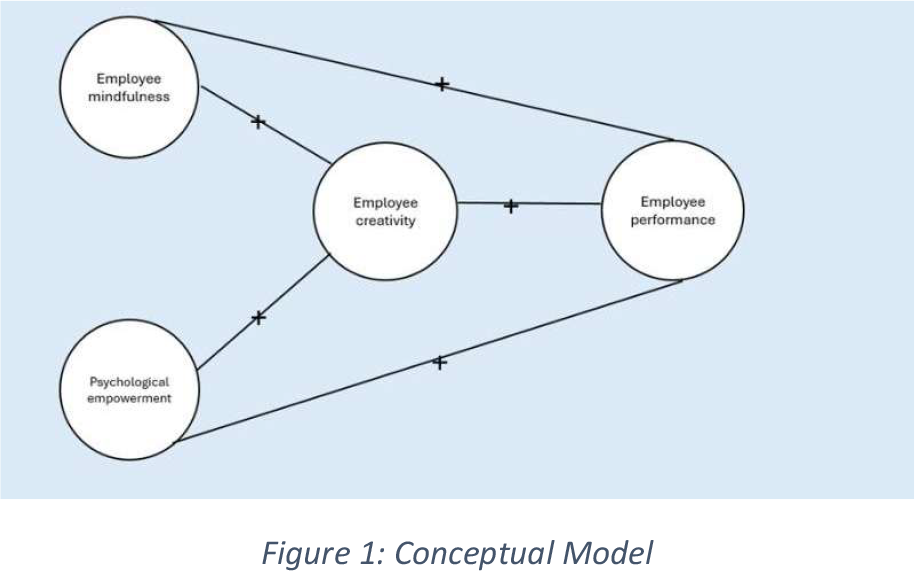
Figure 1: Conceptual Model Hypothesis and ConceptualModel Employee Mindfulness andEmployee Creativity: Employee mindfulness is positively related to employee creativity as it enhances cognitive flexibility, open-mindedness, and the ability to generate novel ideas (Baas et al., 2014). Mindful employees are more attentive to present experiences, which fosters divergent thinking and innovative problem-solving (Montani et al., 2018). This heightened awareness enables them to explore creative solutions without being hindered byhabitualthoughtpatterns(Rebetal.,2015).Thus, mindfulness serves as a catalyst for creativity in dynamic workenvironments. H1: Employee Mindfulness is positively related to Employee Creativity. Employee Creativity and Employee Performance : Employee creativity is positively related to employee performance as creative employees generateinnovative solutionsand adapteffectively to changing work demands, leading to improved task outcomes (Shalley et al., 2004). Creativity
fosters problem-solving and proactive behaviors that directly enhance organizational effectiveness and productivity (Gong et al., 2009). Moreover, creative contributions drive innovation, giving organizations a competitive edge and improving overallperformance (Zhou&George,2001). H2: Employee Creativity is positively related to EmployeePerformance. Psychological Empowerment and Employee Creativity: Psychologicalempowermentispositivelyrelatedto employee creativity as it enhances employees’ sense of autonomy, competence, and meaning in their work, fostering intrinsic motivation and innovative behavior (Spreitzer, 1995). Empowered employees feel more confident to take risks and explore novel ideas, which stimulates creative problem-solving (Zhang & Bartol, 2010). This supportive environment encourages proactive engagement in creative tasks, leading to higher levelsof innovation(Seibertetal., 2011). H3: Psychological Empowerment is positively related toEmployee Creativity. Employee Creativity mediates the positive relationship between Employee Mindfulness and EmployeePerformance: Employee creativity mediates the positive relationship between employee mindfulness and employeeperformanceby translatingthe cognitive flexibility and open-mindedness fostered by mindfulness into innovative work behaviors that enhance performance (Montani et al., 2018). Mindfulemployees are more capable of generating creative solutions and adapting to dynamic work environments, which directly contributes to improved job outcomes (Reb et al., 2015). This creative engagement serves as a crucial mechanism through which mindfulness positively impacts overall employee performance (Shalley et al., 2004). H4: Employee Creativity mediates the positive relationship between Employee Mindfulness and Employee Performance. Employee Creativity mediates the positive relationshipbetween PsychologicalEmpowerment andEmployeePerformance: Employee creativity mediates the positive relationship betweenpsychologicalempowerment and employee performance by enabling empowered employees to leverage their sense of autonomy, competence, and purpose to engage in innovative problem-solving and idea generation (Zhang & Bartol, 2010). Psychological empowerment fosters intrinsic motivation, encouraging employees to take initiative and explore creative approaches, which in turn enhances job performance (Spreitzer, 1995). This creative engagement acts as a critical mechanism through which empowerment translates into improved employee performance outcomes (Seibert etal.,2011). H5: Employee Creativity mediates the positive relationship betweenPsychologicalEmpowerment and EmployeePerformance.
Research Methodology
A pilot study was conducted with a sample of 10 employees from IT industry,Bengaluru(India).IBMSPSSwillbeusedto test the conceptual model and to validate and statisticallyanalysetheresults. Sampling Procedure: Convenience sampling was used in order to collect data. It is non probability sampling in which people are sampled because theyareconvenientsourcesofdataforresearchers. Instrument Development: A structured questionnaire was used from the respondents, a seven-point Likert scale (1 as strongly disagree and 7 as strongly agree). The scale items for Employee
Mindfulness, Employee Creativity, Psychological Empowerment andEmployee Performance. Online google form was used which consisted of 25 questions. 4-7 questions were used for each factor, resulting into a total of 20 questions to determine the factorsinfluencingtheemployee performance. Data Collection: Since we have done a pilot study, additional data collection will be done in the next three months, and we expecttocollect200samples forthestudyfromvariousITindustriesacrossIndia.
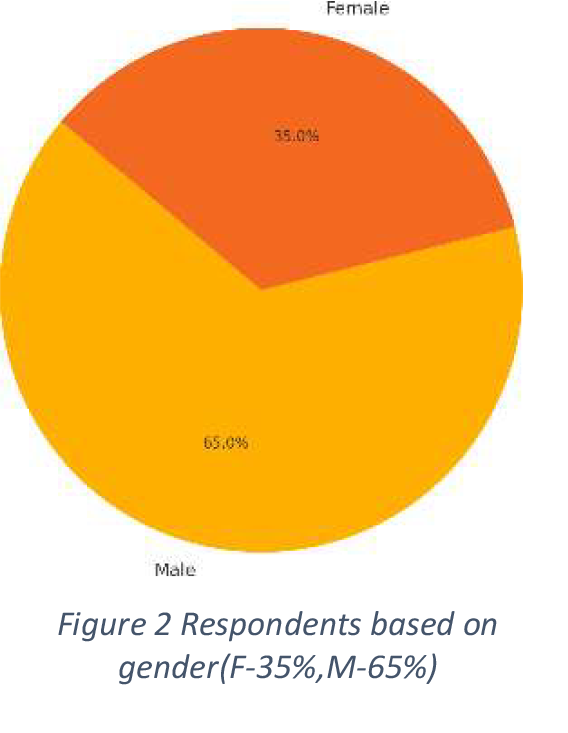
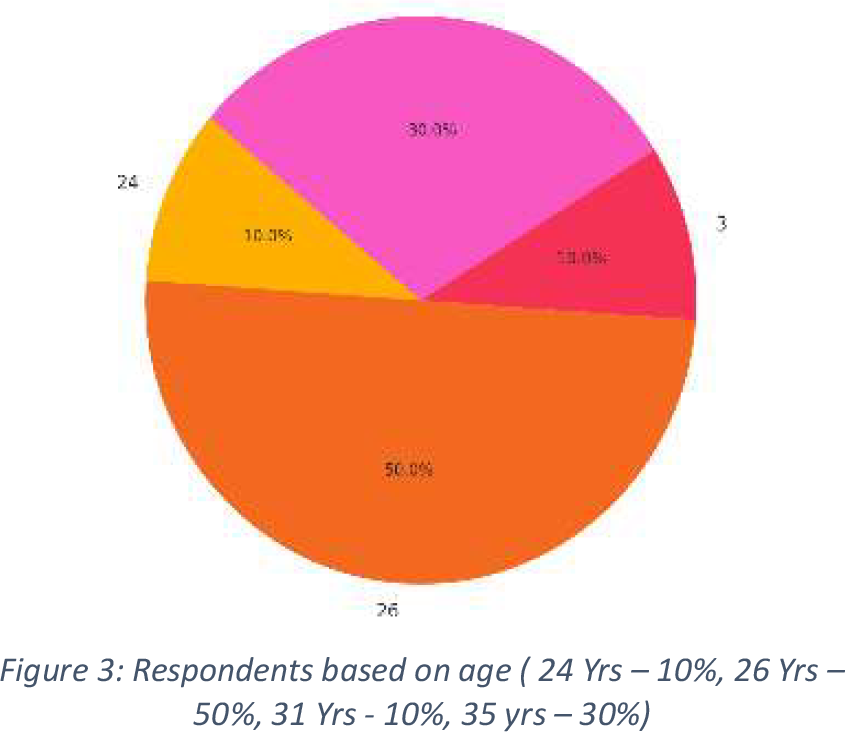
IBM SPSS will be used for the statistical analysis in this study for the reliability, validity and inferential statistics. Descriptive Statistics: From the sample of 10 respondents: Gender Distribution: 65% were male,
Figure 2 Respondents based on gender(F-35%,M-65%)
and 35% were female. Occupation: All respondents (100%) were employees whose work requires creativity.AgeDistribution:50%oftherespondents wereaged26.10%wereaged31.30%wereaged35. 10%wereaged24. Instrument Validity : A reliability test using Cronbach’s Alpha was conducted on the pilot study data using IBM SPSS. The resulting Cronbach’s Alpha value for the 20 items was 0.90, demonstrating strong internal consistency across all items included in the study. Additionally, the Cronbach’s Alpha values for each individual factor, as detailed in Table 1, were above the recommended threshold of 0.7 (Hair et al., 2010), further confirming the reliability of the measurement scales.
Conclusion
This study presents a comprehensive conceptual framework integrating Employee Mindfulness (EMF) and Psychological Empowerment (Psy Emp) as independent drivers of Employee Creativity (EC), which subsequently enhances Employee Performance (Emp Perf). The literature supports
the positive influence of mindfulness on employee creativity by fostering cognitive flexibility, emotional regulation, and openness to novel experiences, all of which contribute to innovative problem-solving and adaptability in dynamic work environments (Baas et al., 2014; Reb et al., 2015). Similarly, psychological empowerment enhances employees’ intrinsic motivation, autonomy, and confidence, encouraging proactive and creative behaviors that directly impact job performance (Spreitzer, 1995;Zhang&Bartol,2010). Importantly, employee creativity serves as a critical mediator in the relationships between both mindfulness and empowerment with performance outcomes. Creative engagement enables employees to transform psychological resources into tangible contributions, driving organizational innovation and productivity (Shalley et al., 2004; Gong et al., 2009). This mediating role of creativity highlights the need for organizations to cultivate work environments that support both mindfulness practices and psychological empowerment to maximize performance outcomes. Practically, organizations can benefit from implementing mindfulness-based training programs and empowerment strategies to nurture a creative and high-performing workforce. By fostering psychological empowerment through autonomy, meaningful work, and leadership support, companies can stimulate employee creativity and drive sustained performance improvements. This integrated approach provides valuable insights for human resource strategies aimed at building resilient, innovative, and engagedemployees,ultimatelysecuringlong-term organizational success in today’s competitive businesslandscape.
References
Creativity in context: Update Amabile, T. M. (1996). to the social psychology of creativity. Westview Press.
Baas, M., Nevicka, B., & Ten Velden, F. S. (2014). Specific mindfulness skills differentially predict Personality and Social creative performance. Psychology Bulletin, 40(9), 1092–1106. https://doi.org/10.1177/0146167214535813
Brown, K. W., & Ryan, R. M. (2003). The benefits of being present: Mindfulness and its role in JournalofPersonality psychologicalwell-being. and Social Psychology, 84(4), 822–848. https://doi.org/10.1037/0022-3514.84.4.822
Dane, E., & Brummel, B. J. (2014). Examining workplace mindfulness and its relations to job Human performance and turnover intention. Relations, 67(1), 105–128. https://doi.org/10.1177/0018726713487753
Deci,E.L.,&Ryan,R.M.(2000).The”what”and”why” of goal pursuits: Human needs and the self- Psychological determination of behavior. Inquiry, 11(4), 227–268. https://doi.org/10.1207/S15327965PLI1104_0
Glomb, T. M., Duffy, M. K., Bono, J. E., & Yang, T. Research in (2011). Mindfulness at work. Personnel and Human Resources Management, 30, 115–157. https://doi.org/10.1108/S0742- 7301(2011)0000030005
Gong, Y., Huang, J. C., & Farh, J. L. (2009). Employee learning orientation, transformational leadership, and employee creativity: The mediating role of employee creative self- Academy of Management Journal, efficacy. 52(4), 765–778. https://doi.org/10.5465/amj.2009.43670890
Hülsheger,U.R.,Alberts,H.J.,Feinholdt,A.,&Lang,J. W. (2013). Benefits of mindfulness at work: The role of mindfulness in emotion regulation, emotional exhaustion, and job satisfaction. Journal of Applied Psychology, 98(2), 310–325. https://doi.org/10.1037/a0031313
Montani, F., Odoardi, C., & Battistelli, A. (2018). A self-determination theory perspective on fostering organizational creativity: The role of employee autonomous motivation and leader Journal of Organizational Behavior, behaviors. 39(5), 690–709. https://doi.org/10.1002/job.2249
Reb, J., Narayanan, J., & Chaturvedi, S. (2015). Leadingmindfully:Twostudiesontheinfluence of supervisor trait mindfulness on employee Mindfulness,6(1), well-beingandperformance. 36–47. https://doi.org/10.1007/s12671-014- 0354-7
Seibert, S. E., Wang, G., & Courtright, S. H. (2011). Antecedents and consequences of psychological and team empowerment in Journal organizations: A meta-analytic review. of Applied Psychology, 96(5), 981–1003. https://doi.org/10.1037/a0022676
Shalley, C. E., Zhou, J., & Oldham, G. R. (2004). The effects of personal and contextual characteristics on creativity: Where should we Journal of Management, 30(6), go from here? 933– 958. https://doi.org/10.1016/j.jm.2004.06.007
Spreitzer, G. M. (1995). Psychological empowerment in the workplace: Dimensions, Academy of measurement, and validation. Management Journal, 38(5), 1442–1465. https://doi.org/10.5465/256865
Thomas, K. W., & Velthouse, B. A. (1990). Cognitive elements of empowerment: An “interpretive” Academy of model of intrinsic task motivation. Management Review, 15(4), 666– 681. https://doi.org/10.5465/amr.1990.4310926
Zhang, X., & Bartol, K. M. (2010). Linking empowering leadership and employee creativity: The influence of psychological empowerment, intrinsic motivation, and Academy of creative process engagement. Management Journal, 53(1), 107–128. https://doi.org/10.5465/amj.2010.48037118
Zhou, J., & George, J. M. (2001). When job dissatisfaction leads to creativity: Encouraging Academy of the expression of voice. Management Journal, 44(4), 682–696. https://doi.org/10.2307/3069410