

Medium Link: https://medium.com/@geetaashok/billionaire-to-bankruptcy-the-anil-ambani-business-collapse-e53d156db442
Course Relevance: Banking Law and Practice – BBA 5th Semester
Academic Concepts:
1. Credit Appraisal & Due Diligence
- 5 Cs of Credit (Character, Capacity, Capital, Conditions, Collateral)
- Financial due diligence (cash flows, revenue reliability, leverage, debt coverage)
- Technical & commercial feasibility studies
- Industry risk assessment (telecom, power, defence—high capex & high gestation sectors)
- Credit rating analysis & rating migration risk
Relevance: Banks ignored red flags in RCom, RPower, and Pipavav due to group reputation.
2. Non-Performing Assets (NPA) & Provisioning Norms
- RBI prudential norms
- SMA categories and early warning signals
- NPA classification and provisioning requirements
- Recovery channels for lenders
Relevance: Anil Ambani group companies became major NPAs (RCom, RPower, Reliance Capital).
Teaching Note: This case examines the rise and fall of Anil Ambani, once among the world’s richest business leaders, whose conglomerate collapsed due to flawed business decisions, excessive leverage, governance failures, and misconduct allegations. Despite early successes—including a record-breaking Reliance Power IPO and expansion into telecom, defence, and entertainment, systemic misjudgments resulted in massive debt accumulation, default, and insolvency proceedings across multiple group companies.
The case demonstrates the importance of credit appraisal, due diligence, governance assessment, and post-lending monitoring for banks, especially when lending to large, reputed business groups
Learning Objectives:
Students should be able to:
- Explain the components of credit appraisal and how banks evaluate large corporate borrowers.
- Identify early warning signals and red flags that lenders should have noticed in Anil Ambani’s companies.
- Understand NPA classification, provisioning norms, and consequences for banks.
- Analyse the role of corporate governance, ethics, and transparency in credit risk and investor confidence.
- Evaluate strategic and technological mistakes (e.g., CDMA vs GSM, debt-heavy infrastructure ventures).
- Examine the role of IBC, insolvency proceedings, and creditor rights in resolving large corporate failures.
- Discuss diversification, leadership style, succession planning, and their impact on financial stability.
- Reflect on how ESG-based lending could help prevent similar failures.
Billionaire to Bankruptcy:
The Anil Ambani Business Collapse
This is a tale of the Ambani brothers. While one of them became the richest man in Asia, the other went on to become bankrupt, setting an example for a case study. Mr. Anil Dhirubhai Ambani is the Ambani brother, who went bankrupt as a result of his bad choices.
Mr. Anil Dhirubhai Ambani– A Profile
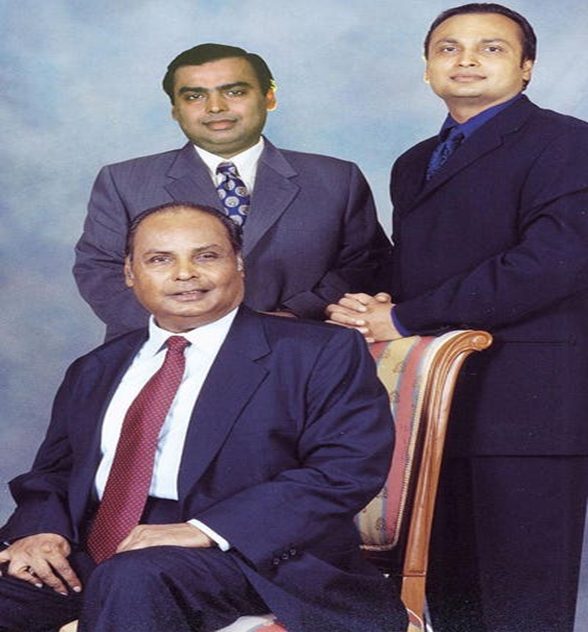
On June 4, 1959, Anil Ambani was born to Mr. Dhirubhai Ambani and Mrs. Kokila Dhirubhai Ambani in Mumbai. His father, Mr. Dhirubhai Ambani was an Indian industrialist and entrepreneur who founded Reliance Industries. Mr. Dhirubhai Ambani made Reliance well-known in 1977. He died in 2002. His two sons, Anil and Mukesh Ambani, split the Reliance group after his death.
Education and Early Life of Anil Ambani
In 1983, Anil Ambani completed his B.Sc from the Kishinchand Chellaram College, Mumbai University. He acquired MBA from Wharton, University of Pennsylvania. Thereafter, he came back to India to work as a Chief Executive Officer alongside his father. Anil Ambani assumed the daily control of the company’s financial management under his father’s supervision, following a stroke that his father, Dhirubhai Ambani suffered.
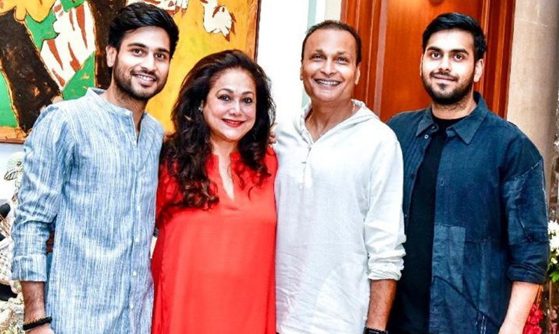
In 1991, Anil Dhirubhai Ambani married Indian actress, Tina Munim. In addition to his brother, Mukesh Ambani, Anil has two sisters, Nina Ambani Kothari and Dipti Ambani Salgaocar. Anil Ambani also has two sons, Jai Anmol Ambani and Jai Anshul Ambani.
Following the passing away of the business magnate, Mr. Dhirubhai Ambani, there was a serious dispute between the brothers regarding their share of the property and business. Dhirubhai Ambhani had made no plans or will regarding the division of his property. Their mother, Mrs. Kokila Dhirubhai Ambani, decided to divide the firms between them in order to resolve their frequent arguments. Thus, the separation of businesses took place with Anil Ambani acquiring the Reliance Group along with stakes in financial services, communications, entertainment, electricity, and infrastructure.
Business Career
Anil Ambani was given credit for the biggest Reliance Power IPO in India.
In 2008, the IPO was subscribed to in less than a minute. It was the quickest subscription in the Indian Capital Market history. Around 11,563 crores of rupees was raised. Thirteen gas, coal, and hydroelectric projects were planned to be established. Mr. Mukesh Ambani was supposed to provide the inexpensive gas needed for these projects. Then, in 2005, Mr. Anil chose to make his debut with a controlling ownership in Adlabs Films due to his great interest in the entertainment business. This business was engaged in digital marketing, film processing, production, and exhibition. It changed its name to Reliance Media Works in 2009, after almost four years.
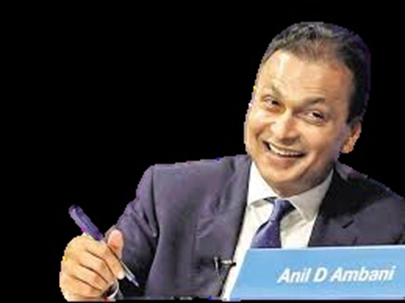
Anil Ambani proceeded to establish a joint venture between DreamWorks, which is a Steen Spielberg’s production business and Ambani Media Works. It was his goal to make Ambani Media Works a global platform. Additionally, Ambani produced a few Steven Spielberg movies. Lincoln, was one of the movies it produced and it was an Academy Award winner. Forbes ranked Anil Ambani as the sixth richest person in the world in 2008. At that time, his estimated net worth was $42 billion USD. Anil later bought other companies in industries like telecom, financial services, and power generation. Although everything appeared to be going well, Mr. Anil eventually encountered difficulties. This is where life began to give Anil lemons, without sugar and water.
The power project was not successful. The gas pricing set by the Indian government was $4.2, per million British thermal units. Mr. Mukesh Ambani could not fulfil his promise and was unable to provide the gas at the agreed-upon price of $2.34 per million. The court said in disagreement that the government’s gas pricing strategy would have precedence over family arrangements. In this manner, the power project failed. A number of projects for which debts were raised took longer than expected, resulting in a debt accumulation of up to 1,20,000 crores.
Reliance Communications Failed to honor financial obligations
In 2006, Reliance Communications was India’s second-largest telecom provider. Anil Ambani owned 66% of it. The two most popular mobile communication technologies were Code Division Multiple Access (CDMA) and the Global System for Mobile Communications (GSM). Of the two, GSM was more sophisticated and adaptable. When Reliance Communications first entered the communication industry in 2002, it chose CDMA technology instead of GSM, which contributed to RCOM’s disastrous failure. Only 2G and 3G technology could use CDMA technology.
After Mukesh Ambani introduced Jio 4G, which was a huge success for RCOM, the two became embroiled in a price war and RCom became mired in debt. In the end, RCom sold its wireless division to Aircel in 2017, and RCom Cable declared bankruptcy in 2019.
Reliance in the Defence Sector:
On March 5, 2015, Anil Ambani’s Reliance Infrastructure Limited paid Rs. 2082 crore to acquire Pipavav Defence and Offshore Engineering. It was unaware that it had a debt of seven thousand crores. Due to Pipavav Defence’s failure to pay debts owed to Industrial Finance Corporation of India and Industrial Development Bank of India, the National Company Law Tribunal (NCLT) initiated insolvency proceedings.
Other Countries’ Horrible Performance:
Reliance Capital also performed horribly. Reliance Infrastructure owed more than Rs 5,960 crores in 2019, whereas the financial debt as of September 2019 was approximately 19,805 crores. Reliance Home Finance and Reliance Commercial Finance are the two subsidiaries of Reliance Capital.
What went wrong?
1. Scandals
The Central Bureau of Investigation (CBI) believed Mr. Anil Ambani was involved in the 2G scandal. He was charged with establishing Swan Telecom in order to obtain 2G licenses. Anil Ambani owed Ericsson Rs 580 crore for services rendered to Reliance Communications. If he hadn’t paid, he may have been imprisoned for three months. By making the payment, Mr. Mukesh Ambani was able to save his brother.
• Anil Ambani owed money to three Chinese banks. They were Industrial and Commercial Bank of China Limited, China Development Bank, and Exim Bank of China.
- Because he owed more than Rs 5,276 crores, including legal fees, the UK court issued an affidavit. As a result, his reputation took a serious hit.
2. Insufficient Vision and Concentration
• The share price of the Reliance Power IPO, which raised a significant amount and was oversubscribed 73 times, did not ever come close to the issue price at any time thereafter. Investors lost money as a result of Reliance Power’s IPO, which was overpriced at Rs 450 before falling to Rs 372.50. The market capitalization of about $9 billion was destroyed, and the wealth of billions of investors disappeared.
3. Lack of professionalism
• Anil Ambani was obsessed with Bollywood and the entertainment sector. In order to grow his company in the entertainment sector, he paid Rs 350 crores to businessman Manmohan Shetty in 2005 for the multiplex chain Adlabs.
• With around 700 screens across India, he went on to become the biggest multiplex owner. However, Reliance Entertainment had to sell hundreds of screens as a result of its mounting debt.
4. Political Career
• In 2004, Anil Ambani was selected to represent Uttar Pradesh in the Rajya Sabha, the highest legislative body in India. He resigned in 2006 in response to a public uproar over lawmakers occupying high-paying positions.
• A similar problem caused Sonia Gandhi, the leader of the Indian National Congress, to resign from the lower chamber a few days earlier. Ambani declared that his “firm view” was that public servants should be shielded from scandals, although he was not accused of any wrongdoing.
Anil Ambani Business Today
• Anil’s business got considerably reduced and several mergers took place. The goal of the merger was to lower the accumulated debts. Vidharbha Industries Power, a subsidiary of Reliance Power, formerly known as Reliance Energy Limited, was eventually acquired by the Adani Group. As a result of this, on August 30, 2019, it had an overall rating of (ICRA) D – in the issuer-not- cooperating category.
• Reliance Power and Reliance Natural Resources Limited (RNRL) were combined. As of November 9, 2010, RNRL’s market capitalization was Rs 6883.64 cr.
• Anil Ambani announced his resignation from Reliance Power and Reliance Infrastructure as director. During the same time, he was elected to the Rajya Sabha, although he later resigned.
• In London Court in 2020, Anil declared, “After accounting for my liabilities, my net worth is zero.” In conclusion, I don’t own any significant assets that could be sold to fund these procedures.
What Mr. Anil Dhirubhai Ambani Can Teach Us:-
Dhirubhai Ambani came from very humble beginnings and achieved considerable fortune, but his son Anil Ambani had the exact opposite experience. Anil Ambani has been struggling to pay his debts even though he owns everything.
It is important to take note of the following managerial lessons from his failure:
1. Investment choices
A good businessman needs to be able to make decisions quickly and accurately. Anil Ambani’s poor investment choices contributed to his company’s losses. Due to his poor financial choices, he was charged with a crime, chose CDMA technology over GSM, and invested in the entertainment sector.
2. A Cash-Hungry Enterprise
For an entrepreneur, patience and positive relationships are crucial. As soon as the family broke up, Anil Ambani tended to take on initiatives that required a lot of finance. However, his choices did not follow his plan.
He got into greater problems as a result of his conflict with his own brother, Mukesh Ambani, regarding the cost of gas. Anil Ambani developed enemies outside of his family due to his tendency to pursue legal action, wherever possible. He was also sued multiple times for accusations and defamation against journalists.
3. Vibrant Lifestyles
• While his brother attended meetings for hours on end without taking a break, Anil Ambani preferred ostentatious lifestyles and seldom handled his business at the micro level.
• Anil Ambani was unsure of his precise goals for his company.
Conclusion
In conclusion, we can say that even failures may be overcome with a strong company concept. You prepare yourself and have enough cash on hand to deal with financial crises. However, Anil Ambani didn’t know how to overcome the obstacles because he somehow didn’t grasp his own business.
•These days, Mr. Anil Ambani’s enterprises have the option of declaring bankruptcy. In an attempt to seize the chance, he has appointed his older son, Mr. Anmol, as a director.
Discussion Questions:
1. Analysis of Decision-Making
What crucial mistakes in Anil Ambani’s investing choices caused his corporate empire to fail? How could solid financial and strategic planning principles have prevented these?
2. Technology Selection and Its Effects:
Analyze the effects of Anil Ambani’s choice for Reliance Communications to use CDMA technology instead of GSM. What strategic errors occurred, and how did they affect the company’s telecom industry failure?
3. IPO Strategy and Investor Impact:
Reliance Power’s IPO failed after debut despite being oversubscribed 73 times. Examine the IPO price and investor communication strategy’s shortcomings. What can be learned about investor trust and valuation?
4. Corporate Governance and Ethics:
Discuss how Anil Ambani’s crisis is related to corporate governance. What effects did accusations like the 2G scam and unpaid dues have on stakeholder confidence and the company’s reputation?
5. Diversification and Risk Management:
Anil Ambani actively expanded into a number of industries, such as communication, entertainment, electricity, and defence. Examine how excessive diversification without sufficient risk management contributed to his demise.
6. Family Dynamics and commercial Strategy:
How did Anil Ambani’s commercial difficulties stem from the absence of a succession plan following Dhirubhai Ambani’s passing? Talk about the significance of succession planning for family-run companies.
7. Vision and Leadership:
Compare and contrast Anil and Mukesh Ambani’s leadership philosophies. What part did operational involvement and leadership clarity play in one’s success and the other’s downfall?