






30th October 2025
The Role of Body Positivity and Self-Image in Indian Consumer Behaviour
Body positivity has never been more mainstream. Since the hashtag #BodyPositivity gained traction in 2012, the movement promoting acceptance of all body types has garnered more than 43 billion views on TikTok and over 12 million posts on Instagram. Reports also show that conversations around body positivity on platforms like Facebook and Instagram have risen by 43% year on year.
For fashion and beauty brands, this is not just a social trend but a market opportunity. For decades, the industry thrived on exclusion— privileging size-zero models, Eurocentric beauty, and skin-lightening products, especially in South Asia. But today, inclusivity has become an imperative. It is no longer enough for a brand to sell products; it must also address how those products shape and reinforce consumers’ self-image.
Self-Image and Self-Identity in the Indian Context
Self-image refers to how individuals view themselves—how they see their body, personality, and worth, whether in front of a mirror or in their own minds. Self-identity, by contrast, is broader: it encompasses the roles, values, affiliations, and attributes a person associates with themselves. In consumer behaviour, both concepts are critical because individuals often use brands to construct, reinforce, or negotiate their self-identity and self-image.
In India, these dynamics take on unique cultural weight. A woman’s self-image is often not her own; it is filtered through the expectations of family, society, and tradition. From arranged marriages to workplace perceptions, physical appearance—skin tone, hair, weight, height—remains a significant axis of judgment.
Research illustrates this societal pressure. A 2020 Dove study revealed that 9 out of 10 single Indian women felt judged and rejected for their looks during marriage introductions. Another survey found that 80% of schoolgirls in India faced “beauty tests” based on arbitrary appearance standards, eroding their confidence from an early age. These numbers reveal that self-image in India is not just an individual construct but a collective one—shaped by how others perceive and evaluate women.
Body Positivity and Consumer Brands
Some brands have responded to this cultural tension by embedding body positivity into their core business models. For example, Snag Tights, a British brand, redefined hosiery by offering sizes from UK 4 to 36. Founder Brie Read explained: “Our bodies aren’t wrong—the tights are wrong.” By using real fit models instead of mechanical grading, Snag reduced return rates to 1.35%, compared to the industry average of 35%.
While Snag illustrates inclusivity in product design, India’s landscape is more complex. The cultural weight of beauty norms means that campaigns must extend beyond product functionality; they must tackle deep-rooted biases and reshape narratives around femininity and worth.
Dove’s #StopTheBeautyTest Campaign in India
Dove, a Unilever brand long associated with “real beauty,” has been at the forefront of India’s body positivity discourse. Its #StopTheBeautyTest campaign directly challenges regressive practices, with three main focus areas:
1. Arranged Marriage Bias (2021)
Women shared stories of rejection during marriage introductions based on their looks. Dove reframed this by creating “mothermonials”—matrimonial profiles written by mothers that highlighted achievements and personality rather than skin tone or weight.
2. Early-Age Body Shaming (2022)
Campaigns showcased schoolgirls receiving a “beauty report card” grading them on appearance. The emotional storytelling highlighted how biases start early and corrode confidence. Dove partnered with UNICEF India to embed body confidence modules in school curricula.
3. Digital Interventions (2023–24)
Through a partnership with Bobble AI, Dove created a smartphone keyboard that intercepted body-shaming language with positive alternatives. This intervention reduced size-based comments by 18%.
The campaigns resonated widely because they tapped into cultural practices that Indian women know intimately—arranged marriage scrutiny, classroom teasing, and online trolling. Unlike global campaigns that simply feature diverse models, Dove localized its storytelling to Indian social structures, making it more authentic.
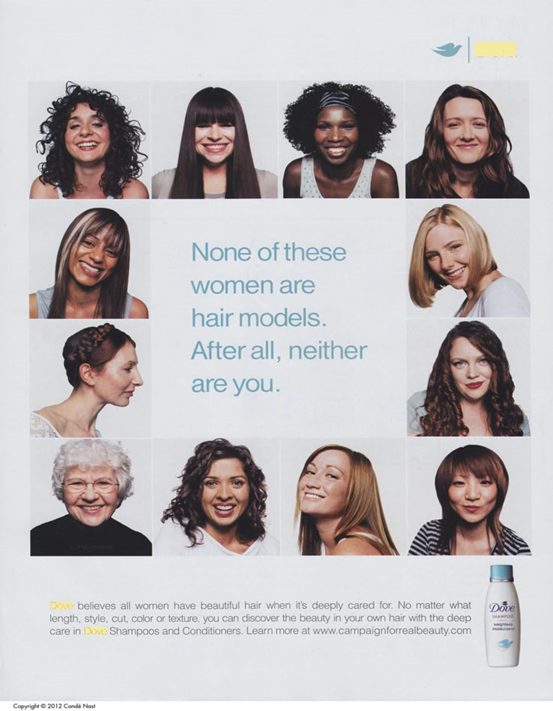
Source:Pinterest (Source link given in references)
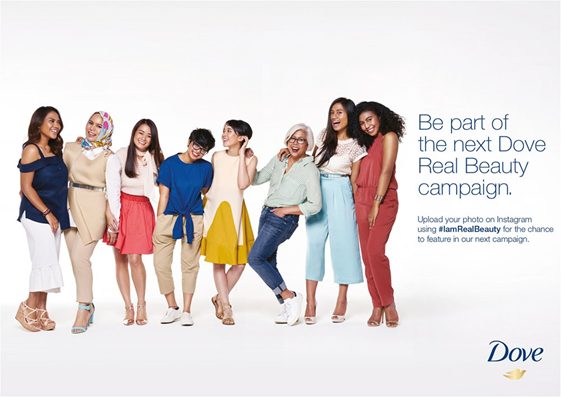
Source: Brandripe (Source link given in references)
Yet, as the body positivity movement becomes mainstream, it has also sparked criticism of what scholars and activists call “diversity washing.” Much like “greenwashing,” diversity washing occurs when brands use the language or imagery of inclusivity without embedding it in their core operations. It is representation as a marketing tactic, not a social commitment.
Diversity washing can often be spotted through:
– Superficial representation: Showing diverse models in ads but not extending inclusivity to product ranges.
– Tokenism: Featuring one “plus-size” or “dark-skinned” model in an otherwise conventional campaign.
– Lack of follow-through: Running emotional ads but not addressing inclusivity in organizational practices or pricing.
– Trend chasing: Jumping onto body positivity only when the topic trends, without long-term commitment.
Globally, some fashion retailers have been accused of showcasing plus-size models while offering very limited larger sizes in stores. In India, certain fairness cream brands have rebranded as “skin glow” or “radiance” products while retaining the same underlying message: lighter skin equals beauty. Such contradictions erode trust and signal diversity washing.
This is why Dove’s campaigns have been closely scrutinized. On the surface, their emotional films strike a chord with Indian consumers. But the critical question remains: how do we know if these campaigns are genuine?
Signs of Authenticity vs. Diversity Washing
Several indicators help distinguish genuine inclusivity from diversity washing:
– Consistency across touchpoints: Dove extended the #StopTheBeautyTest message not just in ads but through partnerships with UNICEF and digital tools, embedding it beyond storytelling.
– Long-term engagement: Rather than a one-off ad, Dove has continued this campaign for over three years, evolving its focus areas.
– Product alignment: Dove positions itself as a widely accessible brand, not a niche luxury product, aligning with its promise of democratized beauty.
– Third-party collaborations: Partnerships with institutions like UNICEF provide credibility and signal that the effort is more than performative.
For Indian consumers, these signals are critical. Social media backlash has been swift when campaigns are seen as tokenistic—such as when fairness cream brands suddenly pivot to “positivity” narratives without addressing their legacy of colorism. The cultural memory of decades of regressive advertising means consumers now demand substance, not just sentiment.
Course Relevance – The caselet is relevant to Consumer Behaviour course
Theoretical alignment – The caselet is relevant for concepts on self-image and self-identity
Teaching Notes
Key Learning Objectives
1. To understand the link between self-image, self-identity, and consumer behaviour in the Indian context.
2. To explore how cultural pressures—marriage, skin tone, early-age shaming—shape women’s consumption patterns and perceptions.
3. To evaluate how brands can engage with the body positivity movement authentically without falling into diversity washing.
4. To critically assess Dove’s #StopTheBeautyTest campaign as a model of localized brand activism.
Discussion Questions
1. How do self-image and self-identity influence purchase decisions in Indian society?
2. In what ways does Dove’s campaign resonate more deeply in India compared to Western contexts?
3. What signals can consumers use to differentiate genuine inclusivity from diversity washing?
4. Could Dove still face accusations of diversity washing? Why or why not?
5. How might brands in categories beyond beauty (e.g., apparel, fitness, tech) apply body positivity without appearing performative?
6. Do you think emotional storytelling is enough to create brand trust, or should it always be backed with structural interventions?
7. What risks do brands face if consumers perceive their campaigns as diversity washing?
8. If you were a brand manager in India, how would you design a campaign around inclusivity that avoids the pitfalls of tokenism?
References
https://dc.etsu.edu/cgi/viewcontent.cgi?article=1865&context=honors
https://in.pinterest.com/pin/84794405481092872/
https://brandripe.com/blog/52/12-beauty-ads-that-successfully-promote-diversity