





Published in Medium ( https://medium.com/@dr.shashikala.s.patil/sorry-marketing-do-apologies-sell-better-than-promises-3557ad866f56)
1) The course for which the caselet is relevant:
Marketing, Branding and Consumer Behaviour
2) The specific academic concepts:
Emotional Marketing & Affect Theory
•Apologies tap into empathy, guilt, and forgiveness—emotions that can drive consumer engagement. • Promises, by contrast, lean on rational persuasion.
Crisis Communication Theory
• Frameworks like Situational Crisis Communication Theory (SCCT) explain how apologies, denial, or corrective action affect consumer trust.
• Useful for analyzing whether apologies outperform promises in repairing or enhancing brand reputation.
3) A short teaching note:
It offers a valuable lens for exploring how brands use emotional appeals to connect with consumers. In the classroom, this topic can be used to highlight the tension between traditional marketing strategies that emphasize promises of quality, innovation, or value, and newer approaches that leverage humor, vulnerability, and apology to humanize a brand. Students can examine theories of brand authenticity, crisis communication, and emotional marketing to understand why apologies often resonate more deeply than promises, particularly in the age of social media where relatability and shareability drive engagement. A practical exercise could involve dividing students into groups to craft short social media posts—one using an apology format and the other using a promise format—and then comparing which message feels more persuasive, authentic, and likely to go viral. This activity encourages critical thinking about the role of emotion versus rationality in consumer decision-making and helps students see how marketing strategies evolve to meet cultural and technological shifts.
Class room Exercise:
• Team Apology: Craft a short social media post using an apology format (humorous, sincere, or ironic).
• Team Promise: Craft a short social media post using a traditional promise format (quality, innovation, or value).
“Sorry Marketing” do Apologies Sell Better than Promises
In the last week I saw 2 or 3 apology posts — an “Official Apology Statement” from Dabur Chyawanprash for making people *too healthy* to skip work or school, from Wonderla saying “being too thrilling and too safe.” the other from LuLu Connect apologising for making tech shopping irresistible.” All these brands say, “We’re sorry” and “We admit it…” — the kind that scream PR crisis. At first glance, it felt like classic damage control. Then the twist hit. They were not apologizing for a blunder. They were apologizing for doing their job too well. It was clever and unexpected and it is totally a strategic move from the brands. This refers to a current advertising trend where brands issue a humorous, pseudo “apology” for their own excellence adopting the formal tone, letterhead format, and serious design of a true corporate apology to highlight their product’s best features in a witty, self-aware manner, challenging traditional marketing expectations to generate attention and engagement. This trend has been particularly popular earlier at Philippines and now in India.
Brands now design apologies with the same care as ad campaigns. They are scripted, stylized, and often shared across social media platforms with hashtags, visuals, and influencer support. The goal? To humanize the brand, spark conversation, and sometimes-even go viral, where saying “sorry” is not just about accountability, it is about opportunity. It was FOSO (Fear of Standing Out) by not apologizing.
Why Apologies Work in Marketing
Pattern Distraction: The word “sorry” immediately seizes the attention of consumers as they are conditioned to associate it with controversy or a crisis, which makes them stop scrolling
Storytelling: Every apology tells a story, and stories sell
Humanization & Relatability: The use of wit and a self-critical tone makes the brand seem more relatable, authentic, and less promotional
Engagement: Apologies invite responses, shares, and discussions increasing organic reach and brand visibility
Real-World Examples of Apology Marketing
Several brands have used this approach successfully:
- Volkswagen India apologized for making cars that were “too hard to part with”.
- Škoda India “regretted” that its cars had set standards too high for rivals.
- Ambuja Cement saying apology because its walls had become “too strong to drill through”.
- Myntra apologized for making fashion “too irresistible”
- Swiggy saying sorry for the “late-night cravings”
- Mamaearth saying sorry for making few users as “Skin Care Expert”
- Tatasoulfull saying sorry for making millets “too tasty to resist”
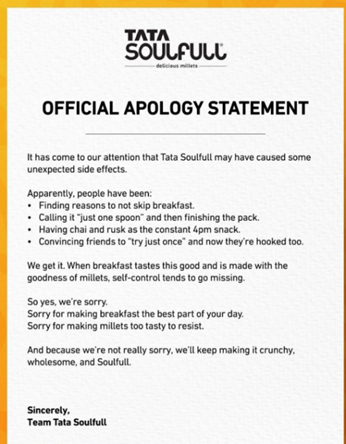
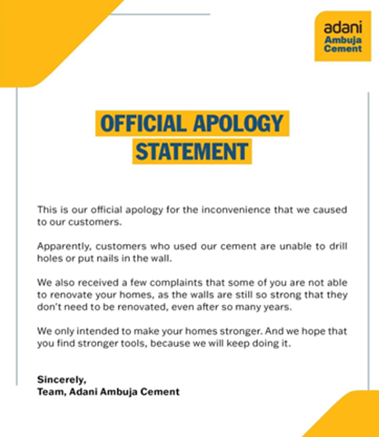
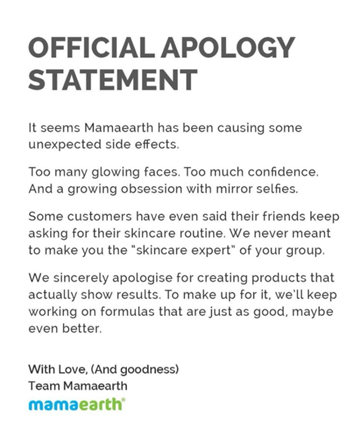
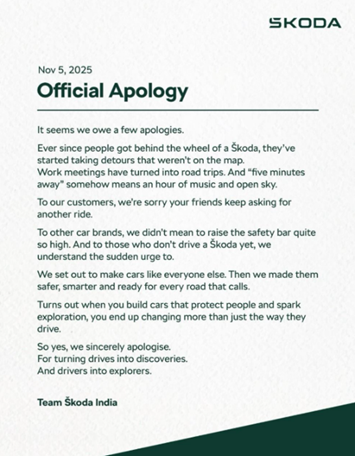
In a marketplace flooded with predictable slogans and polished promises, a genuine apology can cut through the noise. “Sorry Marketing” is a creative tactic that leverages attention through emotion, and then flips the expectation to deliver value. Sometimes, breaking the pattern (even with a simple “Sorry”) is exactly what makes the brand unforgettable. This trend is flipping the traditional advertising on its head. Instead of selling, brands *confess*. Instead of boasting, they *laugh at themselves*. In addition, that humility, wrapped in creativity, earns trust and vitality in today’s digital ecosystem. These campaigns made the brands look like Human, showed their confidence in the brand and they rode the viral wave. They triumphed all three E’s – Educate, Entertain, Engage. The “Official Apology Trend” has proven to be a marketing method—, which humanizes brands, builds connections with audiences, and creates highly shareable content that best suits for social media. By linking the apology with a unique format, it captures courtesy, draws reader’s attention, and keeps the brand at the center of the conversation.
However, brands should be careful when using the word “Sorry”. It is not a marketing gimmick, rather it is a responsibility, clarity, and a faith and it only matters when it is real. The word loses its weight if it is used excessively.
Questions:
1. Why do audiences respond more positively to brand apologies than to traditional promises of quality or value?
2. Can “Sorry Marketing” create lasting trust, or is it just a short‑term social media gimmick?
3. What risks do brands face when apologies become a marketing strategy rather than a genuine act of accountability?