






22nd January 2026
Medium Link: https://medium.com/@geetaashok/when-toyota-met-general-motors-7dc7a6ae8680
Course Relevance: Fundamentals of Costing – B.Com 3rd Semester
Academic Concepts:
Material Costing
- Scrap & wastage
- Inventory control (JIT, Kanban)
- Material usage & yield variances
- Supplier quality variance
- Rework costing
B. Labour Costing
- Labour efficiency & idle time
- Overtime cost
- Absenteeism cost
- Standard labour time & motion study
- Training and multi-skilling
C. Overhead Costing
- Factory overhead absorption
- Preventive vs breakdown maintenance
- Cost of rework & defects
- Layout-driven overhead costs
- Cost centres & cost drivers
Teaching Note: NUMMI shows how Toyota reduced material, labour, and overhead costs using lean systems (JIT, Kanban, Jidoka, TPM) and cultural transformation.
Learning Objectives:
· Demonstrates how operational inefficiencies translate into cost overruns.
· Shows how TPS eliminates cost drivers.
· Connects costing theory with real-world factory operations.
When Toyota Met General Motors:
The Unlikely Alliance That Changed Auto History
Introduction:
The NUMMI case highlights one of the most remarkable industrial turnarounds in history, where Toyota transformed a failing General Motors automobile plant into a model of world-class efficiency. Once known for absenteeism, defects, rework, and chaotic workflows, the Fremont plant became a benchmark for lean manufacturing within just a few years. Through the Toyota Production System—JIT, Kanban, Jidoka, Standardised Work and TPM—NUMMI drastically reduced material waste, labour inefficiencies, and overhead costs. This case illustrates how system design, culture, and employee empowerment are far more powerful than incentives or technology alone. Most importantly, NUMMI proves that with the right processes and respect for people, even the most troubled workforce can achieve exceptional performance.
History:
In the early 1980s, a huge automobile plant in Fremont, California was considered the worst-performing factory in the entire United States. It did not have a bad month or a bad year – it had almost two decades of chaos.
Workers skipped shifts regularly. Supervisors yelled instead of solving problems. Cars rolled off the line with doors that didn’t fit, engines that rattled, and dashboards that vibrated. Every car needed rework — sometimes days of rework — before it could be sold.
Material was wasted, labour was inefficient, overheads spiralled, and costs suffocated the business.
General Motors (GM) owned the plant then. They tried everything — incentives, punishments, policy changes — nothing worked. Eventually, the plant was shut down. For the automobile industry, Fremont became a symbol of failure.
And then, Toyota entered the story.
A Radical Idea
In 1984, GM and Toyota formed a joint venture. The world thought Toyota would bring only its machines and systems to America. But Toyota made an unexpected choice: They rehired the same workers who had made the factory famous for all the wrong reasons.
Why? Because Toyota believed:
“Bad systems create bad workers. Fix the system, and the people will shine.”
This belief became the foundation of one of the most dramatic turnarounds in industrial history.
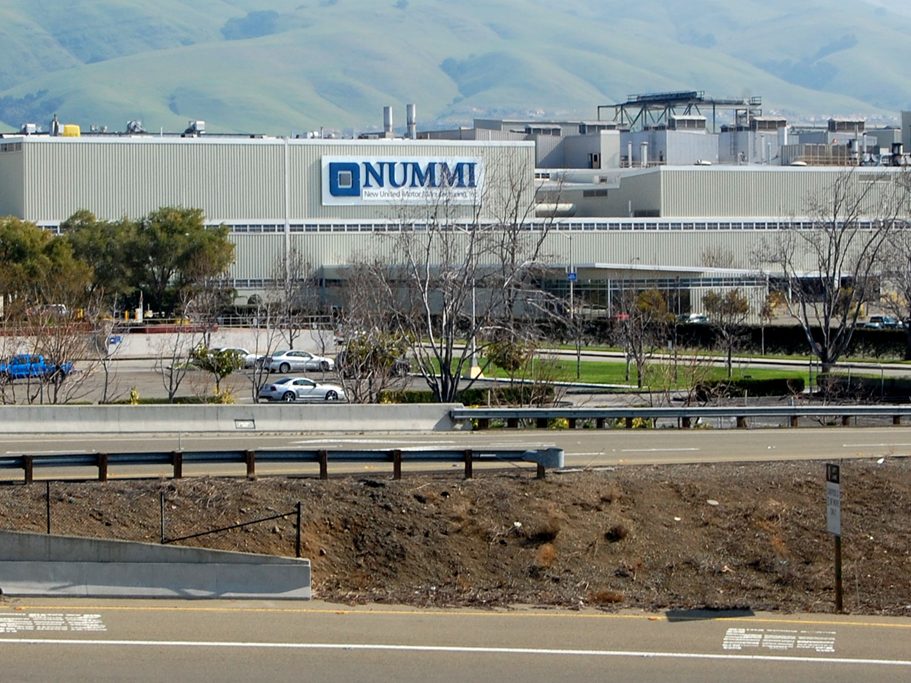
The plant reopened as NUMMI – New United Motor Manufacturing Inc.
Cost Analysis Assignment
In 1985, a young cost analyst, Peter, from Toyota Headquarters in Japan, was sent to California.
His job was simple on paper, impossible in practice: Identify why costs at NUMMI were so high and find a way to bring them down.
Peter wasn’t merely reviewing spreadsheets. He had to uncover the hidden story behind:
- Material wastage
- Labour inefficiency
- Exploding overhead costs
- Machinery downtime
- Inventory chaos
- Poor quality leading to rework
The plant was alive with noise, heat, tension, and decades of bad habits.
And he had to start somewhere.
The Material Maze
On his first factory walk, Peter saw huge cages filled with discarded parts.
- Bent metal panels.
- Scratched dashboards.
- Damaged wiring harnesses.
- Misaligned hinges.
Peter asked a supervisor, “Are these scrap materials?” The supervisor replied casually, “We throw this much out every week.” Peter nearly dropped his notebook.
Material Costing
Problems he found:
- Excess Inventory Everywhere
- Pallets stacked 8–10 feet high.
- Parts bought months in advance.
- Ratios of inventory that would make a cost accountant faint.
- Damaged Components During Handling
- Forklifts rushed.
- Workers dragged parts on the floor.
- Boxes were torn open with metal tools.
- Rework That Wasted Material
- Every defect meant parts replaced or re-cut.
- Supplier Variance
- Parts from different suppliers varied in quality, throwing off standard usage.
Peter wrote one sentence in his report that became famous inside NUMMI:
“We are not building cars. We are repairing our own mistakes at very high cost.”
The Labour Reality
Next, Peter analysed the labour performance.
- Absenteeism was around 25% on Mondays and Fridays.
- Rate of grievances was high.
- Workers were frustrated, unmotivated, and disconnected.
- Mechanics slowed down intentionally to get overtime.
- Some misalignments were ignored because supervisors didn’t want conflict.
- Skills varied widely — training was minimal.
He quietly watched the assembly line and noticed workers struggling with parts stored far away, walking unnecessary distances, bending constantly, and improvising tools.
Labour Costing Issues
- Low efficiency due to poor workflow design
- High idle time from frequent line stoppages
- Learning curve losses since workers weren’t cross-trained
- Overtime dependence
- Very low output per labour hour
But the biggest problem was cultural: People feared speaking up. If a defect occurred, the worker got blamed — never the system.
Peter realised:
If the system didn’t respect people, no costing technique would work.
The Overhead Explosion
Overheads were a disaster zone:
1. Maintenance Costs Were Enormous
- Machines broke down randomly.
- Repairs were done only after the breakdown — never before.
- Emergency repairs cost 3–4 times more than preventive maintenance.
2. Utility Costs Shot Up
The plant ran inefficient heating and ventilation systems. Assembly timing didn’t sync with welding and painting, causing machinery to run unnecessarily.
3. Layout Inefficiency Created Hidden Costs
A worker in welding walked nearly 5 km per shift because tools were scattered. Material handling employees spent time searching for the right components.
4. Rework Overheads Were Shocking
Entire sections existed only to fix defects produced upstream. NUMMI was spending more on fixing cars than assembling them. For Peter, this was the clearest proof of overhead bleeding.
The Toyota Way Arrives
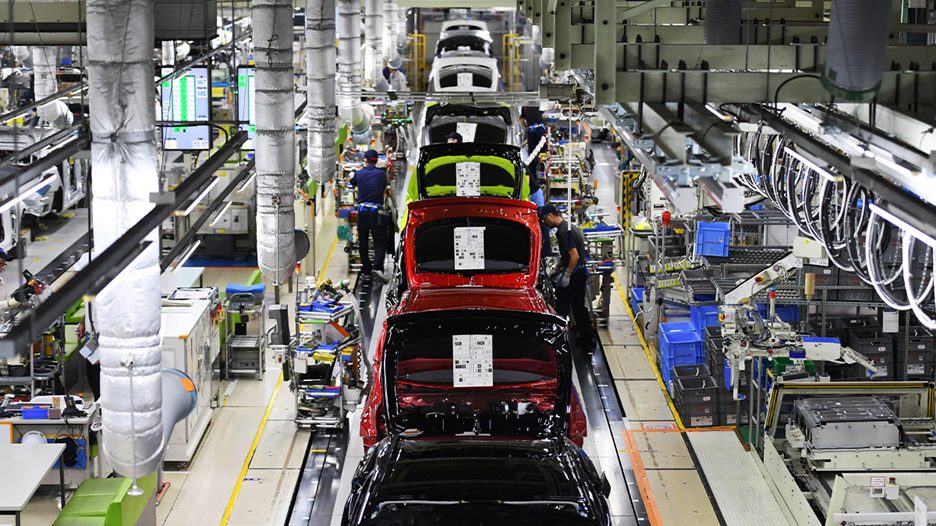
Toyota introduced its famous system — the Toyota Production System (TPS). But it wasn’t just a manufacturing philosophy.
It was a costing revolution, disguised as a workflow revolution.
A. JUST-IN-TIME Inventory
- No more mountains of stock
- Minimise holding cost
- Eliminate material obsolescence
- Reduce space requirements
- Only what is needed, when it is needed
This alone cut working capital requirements massively.
B. The Kanban Card System
Workers pulled materials only when needed.
This prevented:
- Over-ordering
- Overstocking
- Line-side clutter
- Material damage from long storage
C. Jidoka — Quality at the Source
Every worker had the right to stop the line if something seemed wrong.
This shocked American managers.
But defects dropped drastically.
Material waste plunged.
D. Standardised Work
Time and motion studies helped design:
- Optimal paths
- Correct tool placements
- Best sequence of tasks
Labour hours per car improved dramatically.
E. Total Productive Maintenance (TPM)
Instead of waiting for breakdowns:
- Machines were serviced regularly
- Parts were replaced before failure
- Workers were trained to maintain their own equipment
- Overhead variance stabilised as maintenance became predictable.
Peter’s Analysis Six Months Later
Peter collected costing data after six months of Toyota’s reforms.
The numbers told one of the most impressive turnaround stories in industrial history.
1. Material Costs Dropped Dramatically
- Scrap reduced by nearly 50%
- Inventory reduced by 60%
- Supplier price variance decreased because suppliers were now partners
- Rework material consumption fell sharply
- Material cost per car fell from disastrous to globally competitive.
2. Labour Costs Became Shockingly Low
- Absenteeism fell below 3%
- Output per worker increased by 85%
- Overtime almost disappeared
- Multi-skilled workers improved efficiency
- Line problems reduced drastically
- Workers who were once labelled “unmanageable” became role models.
3. Overheads Became Predictable and Low
- Breakdown frequency fell
- Energy usage stabilised
- Rework overhead nearly disappeared
- Layout changes cut material handling cost
NUMMI now rivalled Toyota’s Japan plants in cost efficiency.
Peter’s costing report concluded:
“The largest cost savings came not from machines or money, but from changing how people and processes worked together.”
A Culture That Transformed Costing
The biggest transformation wasn’t in numbers. It was in behaviour.
Workers now:
- Suggested improvements
- Identified waste
- Fixed small problems
- Collaborated across departments
- Took ownership of quality
Toyota taught them something revolutionary:
“You are the cost controllers. You see the waste before anyone else can.” Cost control became everyone’s responsibility.
The Final Results — A True Industrial Miracle
Within two years:
- NUMMI became one of the best-performing automobile factories in America
- Defects per car dropped from 60 to under 5
- Productivity doubled
- Rework almost vanished
- Employee morale soared
- Cost per vehicle matched Toyota Japan
- GM learned TPS and applied it to other plants
- NUMMI became the benchmark for global manufacturing excellence
- And all of this was achieved using the same workforce that had once been written off.
Why NUMMI Matters!
NUMMI is more than a plant turnaround.
It is a living lesson in Cost Accounting:
⭐ Material Costing Lessons
- Excess scrap reflects systemic problems
- Inventory mismanagement inflates cost
- Supplier relationships matter
- “Quality at source” saves raw materials
⭐Labour Costing Lessons
- Productivity is a system issue, not an individual flaw
- Training and empowerment improve efficiency
- Idle time hides within broken processes
- Overtime can become a cultural trap
⭐ Overhead Costing Lessons
- Preventive maintenance saves money
- Layout efficiency directly affects OH
- Rework is the silent overhead killer
- Standardisationstabilises cost absorption
⭐ Integrated Lessons
- Culture changes costing more than software
- Cost accountants must understand operations
- Data alone can’t fix costs — people must be aligned
- Long-term cost reduction needs system thinking
The Factory That Came Back to Life!
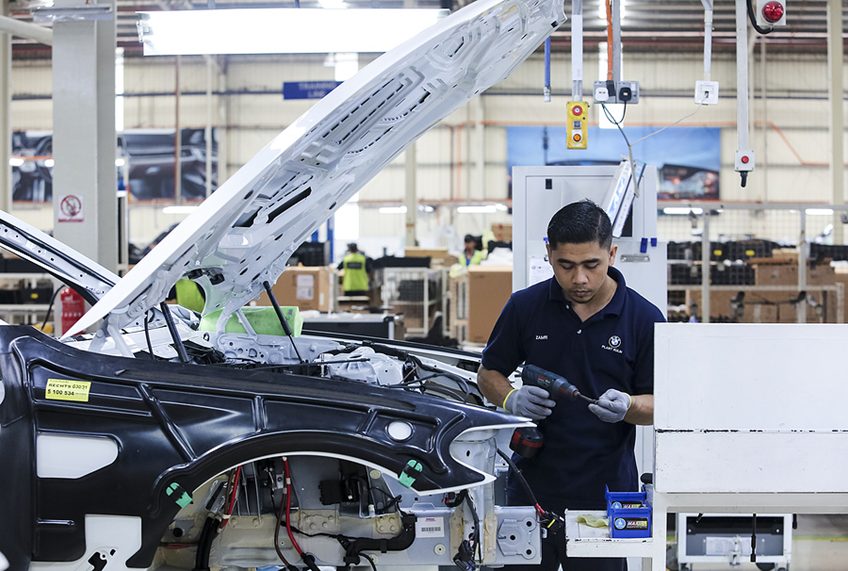
NUMMI eventually closed in 2010 due to external economic factors, but the story of its rise remains legendary.
- Cost accounting textbooks mention Toyota’s practices.
- Business schools teach Lean systems.
- Managers study NUMMI to learn how to reduce waste.
But the heart of the story lies here:
A failing factory came back to life because someone believed that people, when respected and trained, can transform cost structures more than any machine ever could.
Peter, in this narrative, was only one part of the story.
But his costing lens revealed a final truth:
“Costing is not just mathematics. It is understanding how people, processes, and materials move through an organisation — and finding the magic that makes everything work better.”
Discussion Questions:
- How did NUMMI improve labour efficiency without increasing working hours or wages?
- Which overhead costs at NUMMI likely reduced after the implementation of the Toyota Production System?
- What was the significance of “respect for people” in transforming employee morale? Bottom of Form
- How would you connect JUST-IN-TIME (JIT) with:
a) Lower material holding cost
b) Reduced inventory carrying cost
c) Improved cash flow