






Abstract: The world we are living in will shortly be recalled in two major phases: Pre-COVID and Post COVID era. That is the impact this pandemic had, not just on the lives of people, but also on the economies across the globe, and India is no exception to this. When out PM Shri. Narendra Modi made a statement that “The Mahabharata war was won in 14 days, and India will win its war against COVID in 21 days”, the people in India were very hopeful and the entire world was looking forward to the Indian strategy. However, the show did not end there. The 21 days lockdown extended to 35 days and now India is in its 70th day of Lockdown, with one lakh plus positive cases and the death toll rising sharply above 5000. The economy also tumbled after the 70 days of lockdown with thousands of people losing their jobs and struggling for a daily income. The non-availability of enough literature in the proposed topic was a limitation for the study as the situation is very novel and the economic impact that it caused is only a few months old and no one can predict how long this economic shock will subsist. The researcher has made a genuine effort to analyse the current economic situation in India and has proposed a few possible ways for the country and people to come out of the current situation, based on some validated literature.
Key Words: COVID-19, Economy, Unorganised Sector, Healthcare, Unemployment
INTRODUCTION
The post-COVID world is going to be entirely different from the one we were living until now. it will be much more complex and full of challenges. In addition, it will be the younger generations who will be severely impacted by the aftermath of COVID simply because they are used to an easy life, which is made simpler and fast by the intrusion of technology in daily life. The kind of difficulties that our parents and grandparents have gone through in their younger age might look completely novel and unimaginable for many of us. The efforts they have made, the dreams they have compromised just to fulfil our dreams is something that the new generation can least afford to imagine. They are so used to living inside the protective shell of technology that a day without the internet looks like a calamity for them. Hence, the challenge that this post-COVID era will pose to the majority of people in India (since a majority of the Indian population comprises of youth) is also going to be huge. The lack of income, job loss, economic turmoil post-COVID everything will add to the level of stress to the population in general. Forget about the economy and job situations, the basic elements of managing personal finance is also going to be a huge question mark. In this paper, the researcher is trying to find answers to a few such financial issues that the post-COVID era will pose, especially in the Indian context.
REVIEW OF LITERATURE
S. Ravi (May 2020), “Impact of COVID-19 on the Indian stock markets”, suggests that the fall in the stock markets in India are temporary phenomena in the wake of COVID and sooner or later the markets will bounce back even if the life needs to be continued in its new normal and he supports the argument taking excerpts from the past performances of the indices during such crisis in the past.
M. P. Joseph (May 2020), in the article “Three keys to success in the post COVID world”, suggests the three mantras that to an extension will help people fight and come out of the crisis that post-COVID era will throw in front of us. He says that going slow and steady, business with integrity as the success mantra, and earning low but sustainable profits will be the new success mantras for post-COVID economy and businesses.
Arvind Panagariya (April 2020), in his interview given to The Economic Times on “Time for India to think long-term during COVID 19”, says how India should plan and seize the opportunities thrown by MNCs who are leaving China in the wake of the pandemic. He elaborated that one policy measure would be to give serious thought to the creation of Autonomous Economic Zones in which local authorities are given as much power to make policy as exists in Chinese cities such as Shenzhen.
Shweta Saini (April 2020), in her article on “COVID 19 may double the poverty rate in India”, explains how a 25% fall in the income of the citizens of India in the wake of COVID will make 354 mn more people poor. And if the government wants to fix this using direct cash transfers, it will cost them Rs. 19,500 cr per month, which looks nothing more than a dream never come true.
S. Mahendra Dev and Rajeshwari Gupta (April 2020), “Covid-19: Impact on the Indian Economy”, in their working paper explains about the pre-COVID Indian economy, the extend of shock the lockdown and COVID sent through various segments of Indian economy and analysed the various policies and announcements made by the government so far to curtail the crisis.
Richard Baldwin & Beatrice Weder (April 2020), have done a detailed analysis of the impact of COVID on the countries across the globe starting from its outbreak in China and have also compared the situation and the crisis following this with the crisis created out of the pandemics that had hit earth before this including the Spanish flu and plague.
Anurag Balajee, Shekhar Tomar & Gautham Udupa (April 2020), explains how the INR 1.7 trillion fiscal packages announced by GoI will not change the face of the crisis the economy is facing as of now. They suggest that India can spend 2.2-4.8 % of its GDP, based on the global benchmark and calculates the current fiscal deficit of India at 8.4 % ( in the most pessimistic case) and 3.7% (in the most optimistic case), after taking into consideration all the tax and output shortfall in the wake of COVID. They explain how subsidy rationalization can be the only way forward to fund much-needed health expenditures and transfers while maintaining fiscal discipline.
Warwick J. McKibbin & Roshen Fernando (March 2020), explored seven different scenarios of how COVID-19 might evolve in the coming years using two modeling techniques developed by Lee & McKibbin in 2003 and McKibbin & Sidorenko in 2006. The scenarios demonstrate the scale of costs that might be avoided by greater investment in the public health care system especially in countries with high population density and lower economic growth.
Raphie Hayat (August 2019), suggests that the US-China trade war will accelerate a shift of foreign production out of China and this will be a win-win situation for many other countries including India.
DISCUSSION POINTS
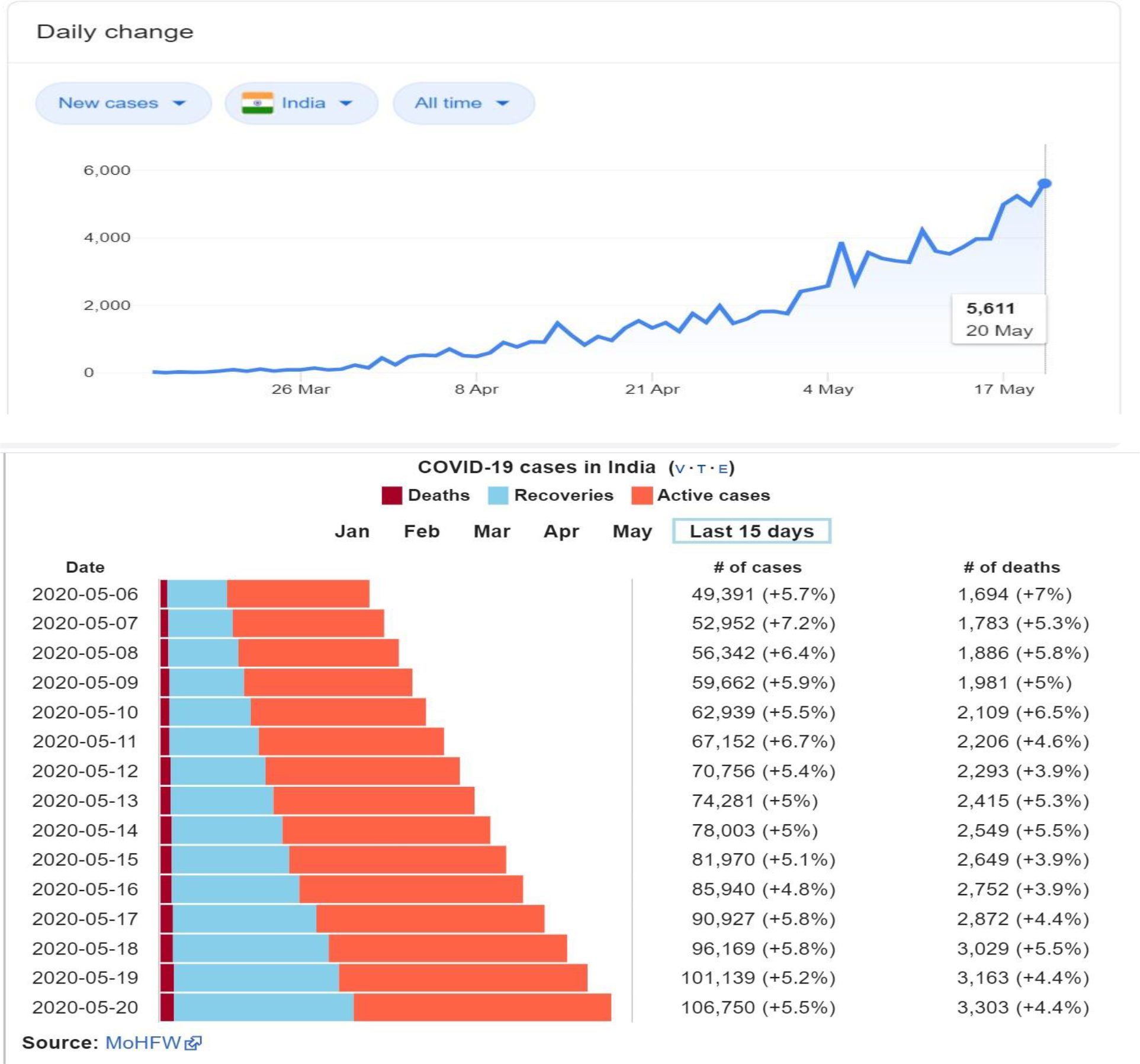
According to the latest data released by MoHFW, the number of COVID positive cases as on 20th May 2020 stands at 1.06 lakhs and the death case has touched the record high of 3,303. When the total number of cases in India in the first week of March was just 3, it spiked to a record high of 1,00,000+ in just a matter of two months and the first graph shows that the cases are now increasing at a record pace of 5000+ in a single day and the situation is worrisome for the nation with such a huge population. When the nation’s prime minister declared the first phase of complete lockdown in the country on 24th March for 21 days with the expectations of stopping the spread of the virus, no one would have imagined that the lockdown will get extended to 60 days with the cases spiking to more than 10 times as it was on the first day of lockdown. And the biggest tragedy is that not just the disease has spread to every nook and corner of the country, but the lockdown has created a huge financial chaos in the economy too with the country witnessing one of the biggest job loss rates in the near history and RBI governor announcing that the country’s growth rate might slip to negative figures for the first time. The government is in real turmoil with the responsibility of protecting the lives of its citizens, without compromising on the economic growth and the target looks almost impossible in the current scenario.
| Bourses | Indexes-14 Jan 20 | Indexes-23 Mar 20 | Indexes-24 Apr 20 | Indexes-20 May 20 |
|---|---|---|---|---|
| Nifty 50 | 12,362 | 7,610 | 9,154 | 9066 |
| Sensex | 41,952 | 25,981 | 31,327 | 30818 |
Source: moneycontrol.com
The above table shows how the market indices have performed in India over the last 5 months. On 14th January (before COVID hit the nation), nifty was at 12,362 points and the Sensex has been as 41,952 points. But with the spread of COVID, the figures went down. On the 20th of May, nifty stood at 9066 points and Sensex fell by 10,000 points and was recorded at 30818 points.
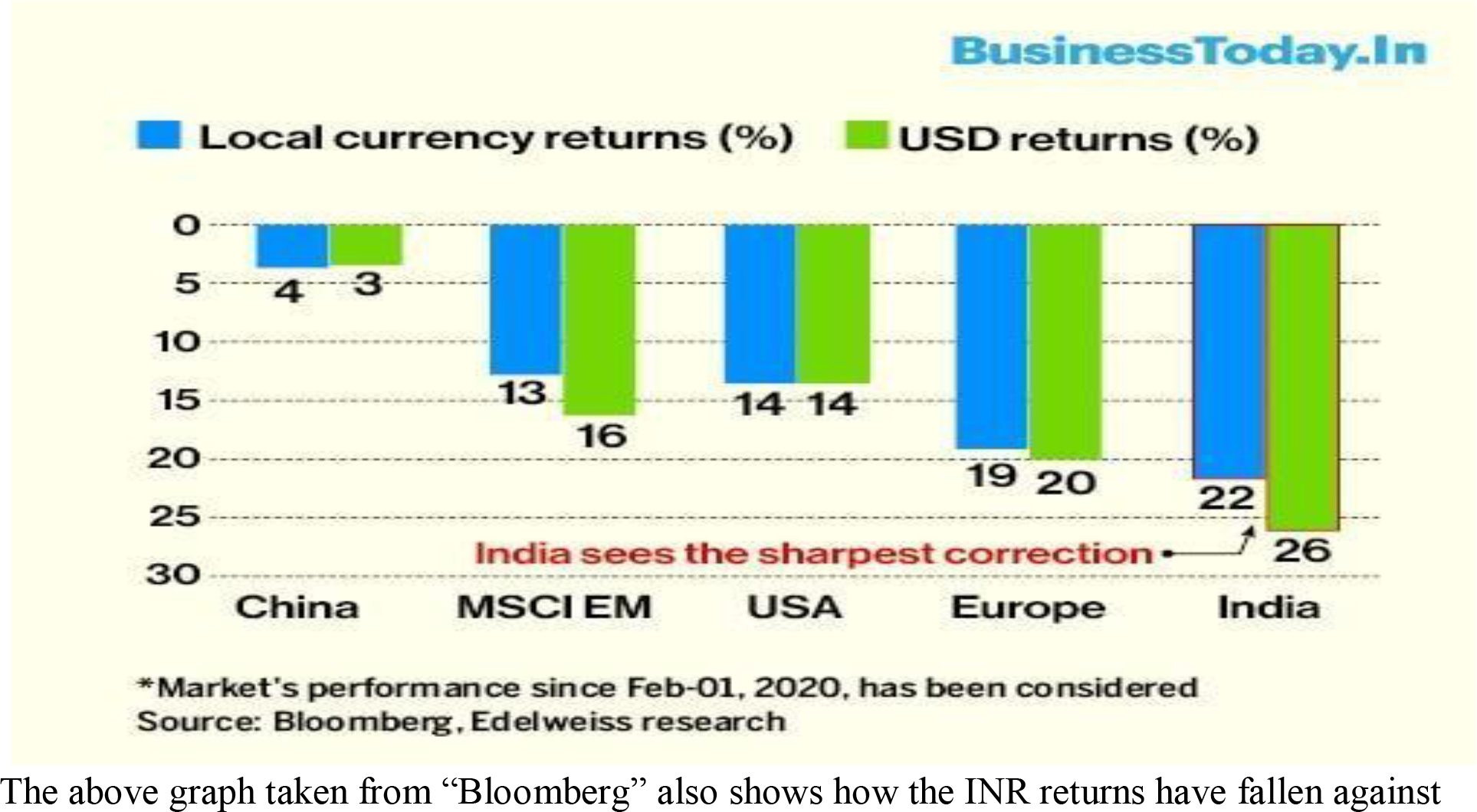
The above graph taken from “Bloomberg” also shows how the INR returns have fallen against USD over these 5 months. Although the pandemic had its first outbreak in China, yet Chinese Yuan stood strong in terms of currency returns, whereas Indian INR saw the sharpest correction at 22% against 26% of USD returns.
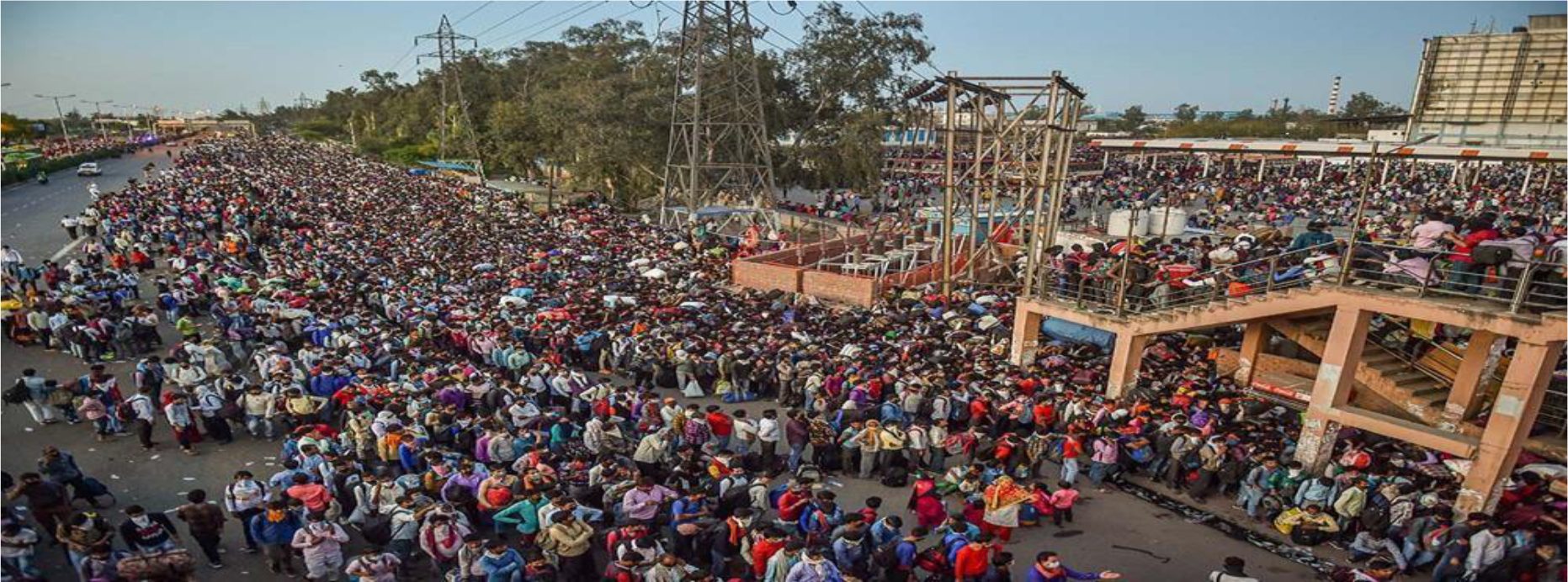
The above picture was taken from Bandra railway station (Mumbai) on 15th April, when hundreds of migrant workers—jobless, homeless, and almost without cash and food—gathered there following rumours that train services would resume on the day.
According to data released from CMIE’s Consumer Pyramids Household Survey, when the unemployment rate in India stood at 8.41% in the week ended March 22, it shot to 3 times touching at 24% in the week ended May 10. When 11% of job loss happened in the 20-24 age group, another 14 million job loss happened in the 25-29 years age category and 33 million in their 30s lost jobs in April.
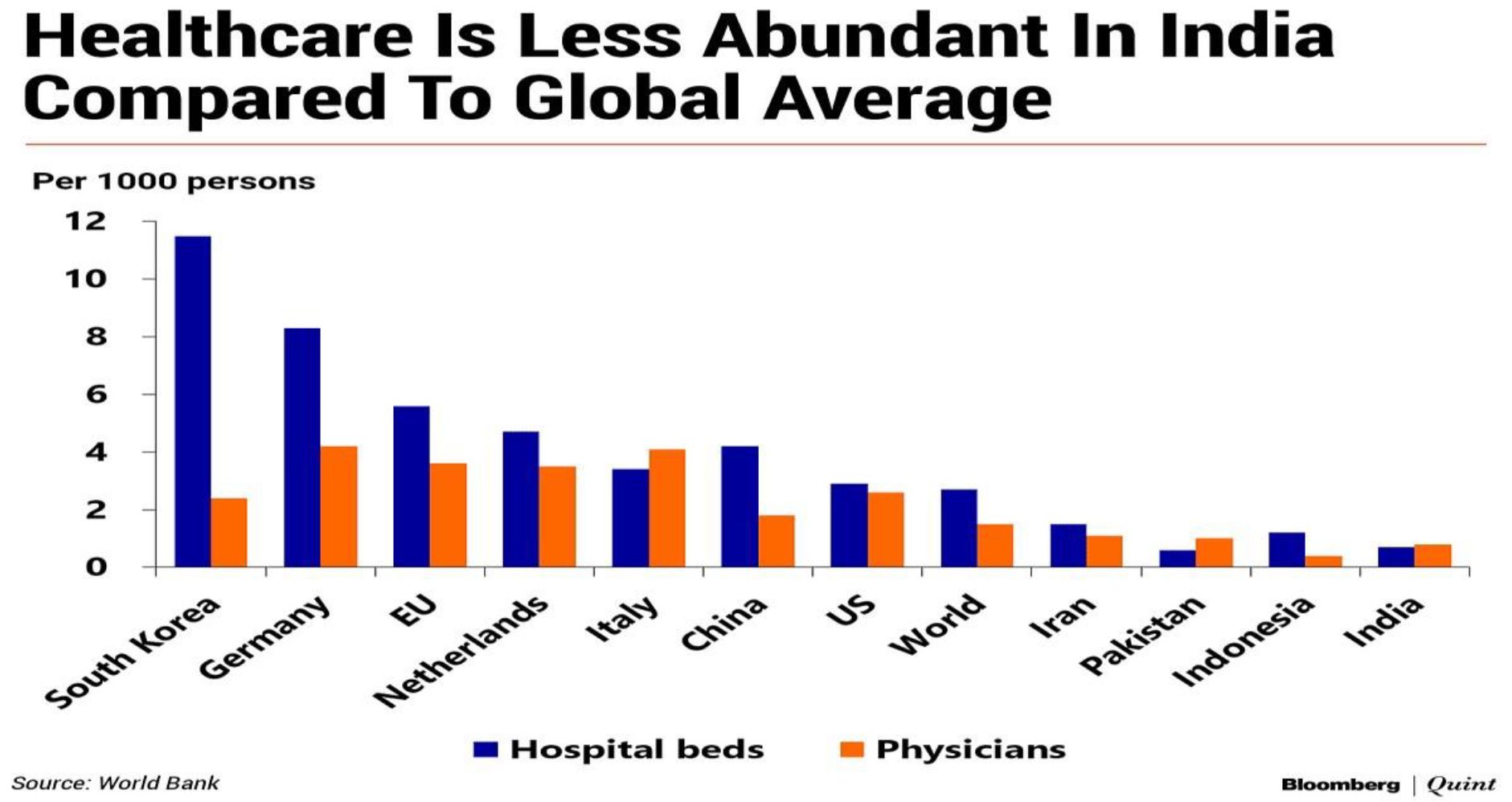
When the above figures talked about the economic and job situations, the above graph taken from the website of the World Bank gives a clear picture of the healthcare facilities in India. It’s alarming to see that India is not just in a pathetic rate, but is far below its neighboring nations like China and Pakistan in terms of healthcare services with the number of hospital beds and physicians available per 1000 patients standing at less than 2. It means that if the government decides to lift lockdown to save the economy, the people will die of the virus.
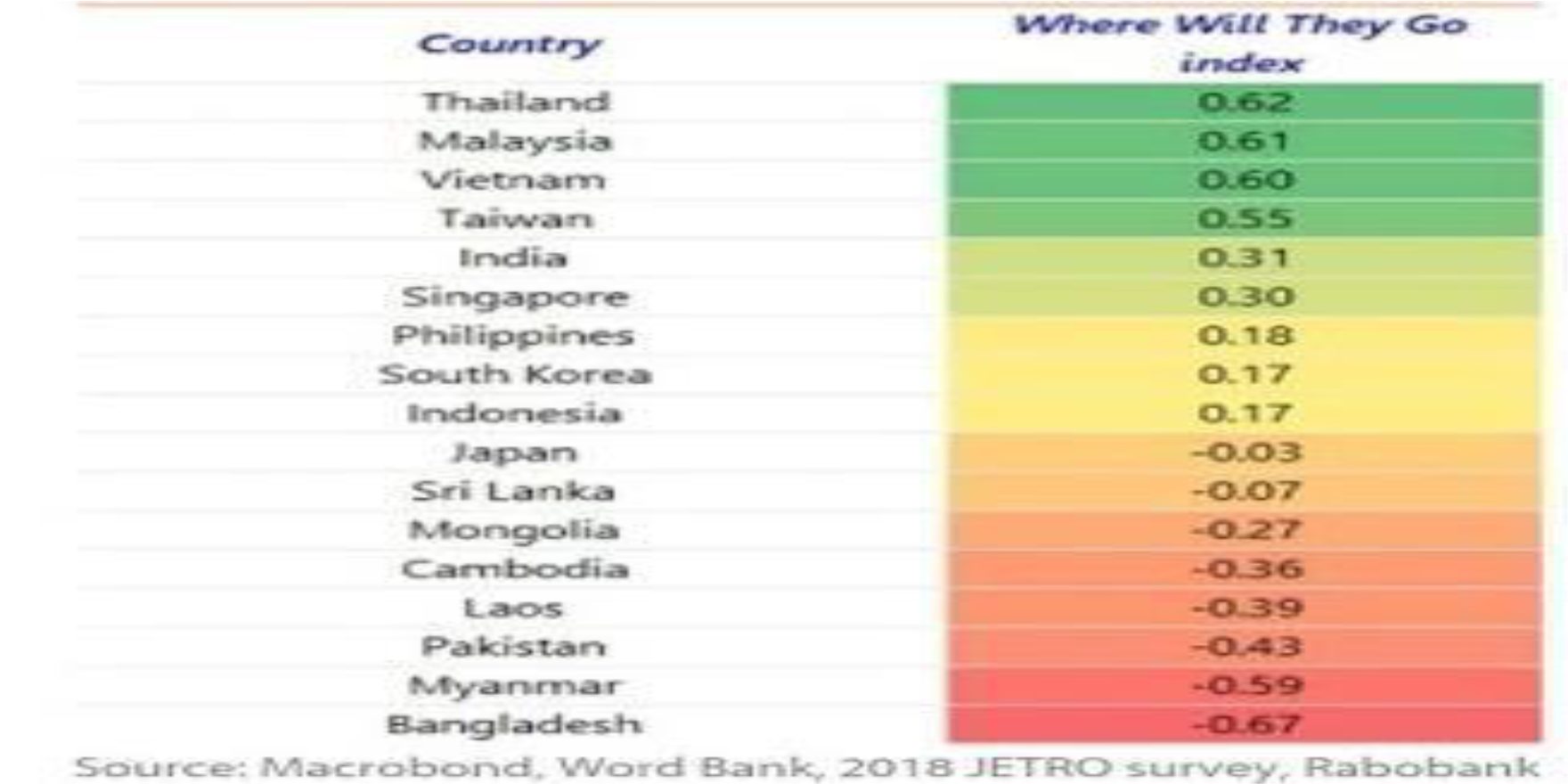
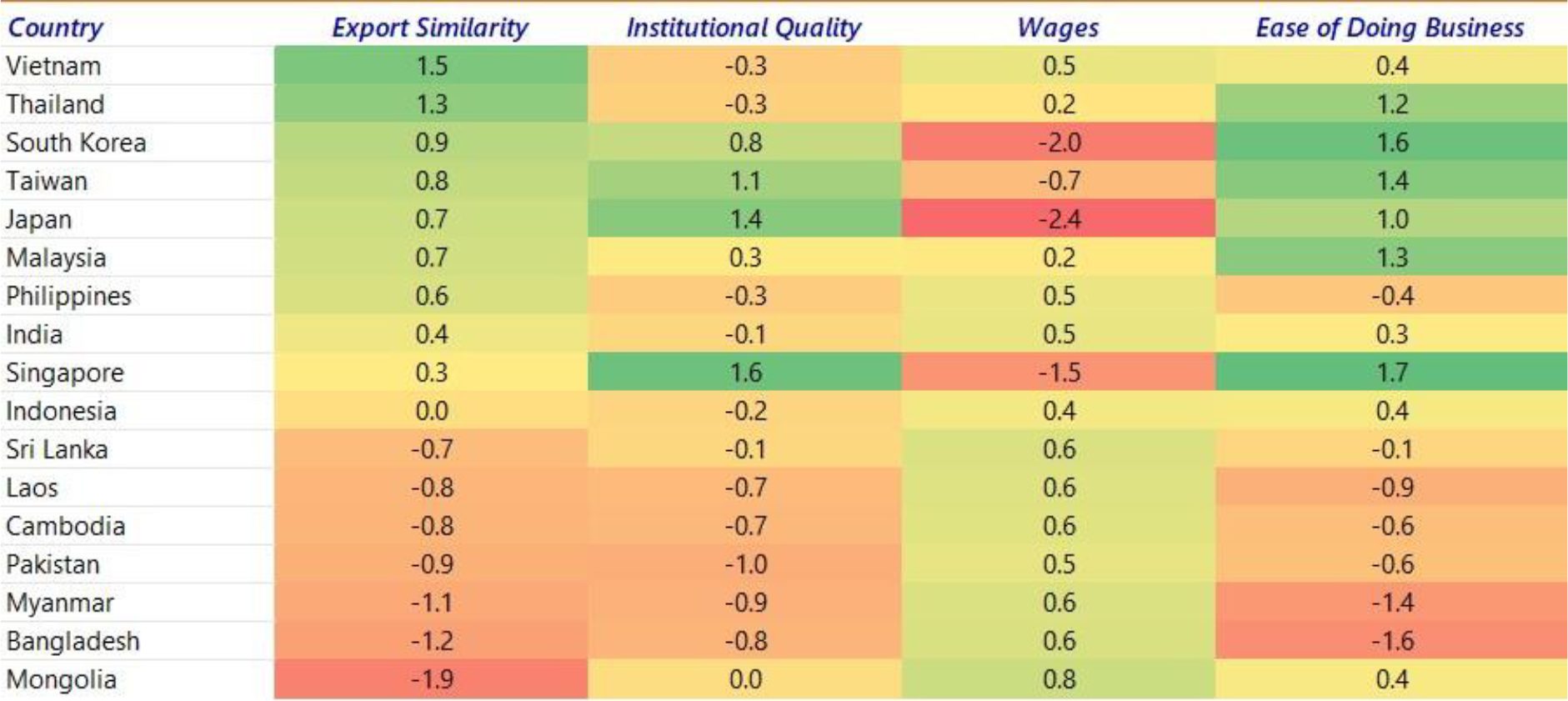
A recent article published by RaboResearch (August 2019), states that the US-China Trade war has forced many US MNCs and MNCs of countries extending support to the US, to move out of China. The above tables indicate that India stands a good chance to gain from this situation although there are a few other competitors like Vietnam, Indonesia, South Korea, Taiwan, etc. And now with COVID creating fresh controversies for China, the weather is turning pleasant for India.
SUGGESTIONS & CONCLUSIONS
A recent report published by Rabobank in Bloomberg suggests that if the COVID situations continue to worsen in India, it cannot expect its GDP to show any progress within the next four years. When the Chinese economy went down by 10% of its GDP in the first quarter of 2020 due to COVID, the financial experts are predicting that Indian economy will witness a negative GDP if the COVID situations are not contained properly, keeping in mind the poor healthcare facilities and the huge population of the country. This means that the country cannot continue with its current strategies of lock-down or curfews for a longer period nor can it wait for a vaccination to be developed soon to lift the current restrictions as there is no clarity regarding the development of any medicine or vaccination till now. So, what next, is the question that comes to the minds of most of the citizens.
A few good suggestions that the researcher is making in the light of the literature studied are discussed as follows:
1. CONTAIN THE VIRUS FIRST AND THEN REVAMP THE ECONOMY
It is impossible to maintain economic growth while the government focus is on curbing the virus. Hence, the first and foremost importance should be placed on containing the virus or at least its spread. Although ICMR has started research on developing a vaccination for the virus, it was started only recently and so the government should welcome private player participation to speed up the process. Like how the Mahindra & Mahindra group came up with a proposal to manufacture ventilators for Rs. 7500/unit, more private players can be involved in the battle against COVID. This will also help businesses to find a temporary source of revenue in the current scenario.
2. LIFTING THE LOCKDOWN IN A PHASED BUT PLANNED MANNER, THEREBY AVOIDING A SUDDEN ECONOMIC SHOCK
No scientists or medical professionals across the globe have got a clear picture of the time frame required to develop a vaccination for the virus. In this circumstance, lockdown cannot be a practical long term solution as it might help to contain the virus spread but will make people die of poverty and unemployment. At the same time, lifting the lockdown in one go in a country like India would also be fatal. So there should be a planned approach towards lifting lockdown and enough support should be given to the unorganized sector, manufacturing sectors, agriculture and farming sectors, and industries. The jobs and businesses which can be run online in an uninterrupted should be made to continue in that manner. The Government of India declared Rs. 20 lakh crore package for COVID relief which is undoubtedly a great measure. But the effect of that will be felt only when the benefits reach the hands of the neediest.
3. Universal basic income as a temporary solution
There have been lots of debates going on in the topic of a universal basic income in the current scenario. Many financial experts and opposition parties are of the view that the government should announce a special relief package sufficient enough to ensure the universal basic income to all Indians to combat the current financial crunch. But like what Dr. Raghuram Rajan (former RBI Governor) stated in his recent interview given to “The Economic Times”, a concept like universal basic income seems to be far more practical in countries like US or European nations where the government has enough funds in the treasury and the density of population is way far lesser than India. In a highly populous country with poor economic situations, the concept of ensuring a universal basic income to every individual is far more than a dream that never comes true. Though it can be a temporary solution to bring back the economy on track before taking long term financial welfare measures.
4. Creation of more formal sector jobs
Unemployment has always been the biggest menace for the current government from the day they came into power and the issue remains unattended. Its high time that the government takes sufficient measures for creating more formal sector jobs either through making enough funding allocation for that cause or by creating PPP platforms for the same. This in turn will help to reduce the migrant worker issues to a greater extent and will bring down the unemployment rates to a considerable extent.
5. More initiatives like E-Choupal
Farmers who are the soul of India are of the worst-hit group of people in the current pandemic situation. The flood and drought which takes their turn during the calendar year are already breaking the spine of farmers and now this pandemic has made it complete. The farmers are neither incentivized, nor is there a central system for procurement of their products and finding markets for them, and hence the farmers and workers of allied services don’t have a regular source of income. When the government declares a sudden lockdown like this, they are deprived of the necessities of life and hence the protest. More initiatives like ITC’s E-choupal should come up and the government should give good incentives to such initiatives which will help the farmers and allied workers to find markets for their products and thereby get a regular income.
6. Seizing the opportunities coming from MNCs leaving China
Eminent economist, Mr. Arvind Panagariya, in a recent interview given to “The Economic Times” said that even after 70 years of development effort, India has still left its workers predominantly employed on tiny farms and in informal sector or self-employment in tiny enterprises which barely gives them a subsistence income on a daily level. And he pointed out that the current pandemic hit situation has made it clear that its high time that India shifts to the creation of better-paid jobs for its working population. He also suggested this as one of the best ways for creating employment and improvement of economic conditions in India. Although it looks like a crooked move, the goal justifies the path. With most of the countries adopting an anti-China move, and the cold war between the US and China which has gone public now, many MNCs are withdrawing from China and looking for other countries to invest and set up their facilities. If India gets good to gain from this scenario, it will be a good addition to the future growth rate of the country.
7. Improvement in health services
Last but not the least, this is the biggest drawback of India as a developing nation. The fact that countries like Pakistan outstand India in terms of healthcare facilities is not only a matter of concern but a shame for a nation like ours with so much advancement in technology and foreign trade. This is the area where the government needs to make investments for the future. It can even seek the cooperation of private players for the purpose. It’s the poor health facilities, unavailability of enough hospitals and beds which has forced the government to face the current pandemic with lockdown and has made it the only option. The recent announcement by the M&M group to manufacture ventilators for the government at a minimum cost of Rs. 7500/unit is a welcome move. More such initiatives should be encouraged by the private players. This will make the country ready to face similar situations in the future with better planning.
8. Proper management of personal finance by citizens
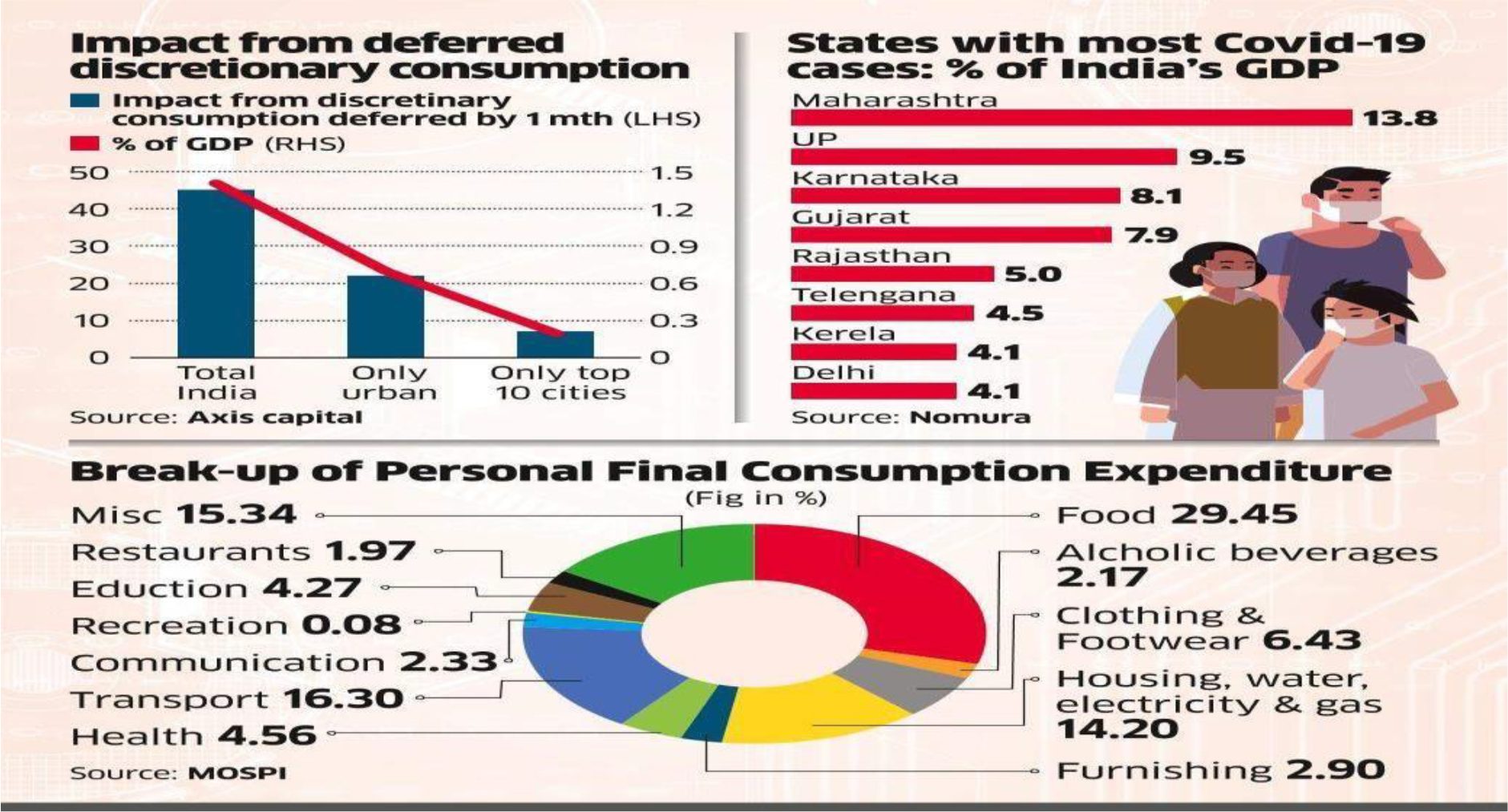
The individual income and standard of living of citizens are major determinants of the growth factors of a nation. Hence proper management of personal finance becomes a critical factor in the current scenario where job-loss has become a common phenomenon. The people who have already lost their jobs should stay positive and understand that like the Spanish flu and plague which had created similar situations in the past, this pandemic hit the world is also a temporary phenomenon and things will get better soon. Till then they should plan their finance properly and prioritize their spending requirements so that they have enough finance to continue until the situations get better. And those who still have jobs should take the lessons from people who have lost it. They should understand that, although temporary, the current situation can take away their jobs too at any point in time and hence prioritize things and save for the future. The above table taken from MOSPI indicates that the spending pattern of citizens in India has shifted from luxuries to essentials and healthcare expenses, which is a good sign and which needs to be continued. When citizens are planned and ready to face anything, the nation can easily come out of any crisis.
The above-mentioned suggestions might not be the exact solution to the current economic slowdown, but it can be a possible framework of ways to come out of the grave economic downturn that this pandemic is going to gift our economy.
BIBLIOGRAPHY
Richard Baldwin, Eiichi Tomiura (2020), “Economics in the Time of COVID-19”, Centre for Economic Policy Research Press, Pg 59–69
Anurag Balajee, Shekhar Tomar, Gautham Udupa (2020), “Fiscal Situation of India in the Time of COVID-19”, SSRN Press
Warwick J. McKibbin, Fernando Roshen (2020), “The global macroeconomic impacts of COVID-19: Seven Scenarios”, CAMA Working Paper No. 19/2020
Erken, H.P.G. Giesbergen, B.C.J., and de Vreede. I. (2018), “Re-assessing the US-China Trade War”, Rabobank
Websites:
https://www.bloombergquint.com/coronavirus-outbreak/fiscal-package-in-the-wake-of-covid19-looking-for-more
https://www.indiatoday.in/business/story/coronavirus-5-indian-sectors-that-need-urgent-help-as-virus-ravages-economy-1670099-2020-04-23
https://theprint.in/india/indias-50-day-lockdown-has-brought-economic-misery-even-as-covid-cases-surge/422012/
https://theprint.in/economy/why-the-covid-19-crisis-is-actually-an-opportunity-for-india-to-finally-reform-its-economy/398272/
https://nammudenaadu.com/kovidananthara-lokathe-moonnu-vijayamanthrangal/
https://economics.rabobank.com/publications/2019/august/leaving-china-countries-might-benefit-from-relocation-production/
http://www.businessworld.in/article/Impact-Of-COVID-19-On-The-Indian-Stock-Markets/11-05-2020-191755/
https://www.cmie.com/