






Ramya Devi Jeganathan, Dr. Pooja Nagpal
International School of Management Excellence, Bangalore, India
Abstract:
This research explores the impact of leadership on employee well-being using a survey-based approach. The study investigates key dimensions of workplace well-being, including emotional, mental, and physical health, and the role of leadership in shaping these outcomes. The survey questions address factors such as workload, work-life balance, mental health support, sense of belonging, and the influence of leadership actions on well-being. Data collected from participants revealed that leadership significantly affects employees’ perception of their work environment, engagement levels, and overall job satisfaction. Specifically, supportive leadership practices were found to enhance mental health, foster team cohesion, and encourage skill development. Open-ended responses highlighted examples of how leaders positively influenced well-being by providing resources, fostering supportive relationships, and promoting a healthy work culture. These findings underscore the critical role of leadership in fostering employee well-being, offering actionable insights for organizations aiming to create thriving workplace environments.
Keywords:
Employee Well-being, work-life balance, healthy work culture.
Abstract
Introduction
As we approach the future of work in this modern era, several dynamic trends are poised to redefine employee well-being. These developments are driven by societal transformations, technological progress, and evolving workforce expectations, necessitating strategic organizational responses. Key trends include the refinement of remote and hybrid work models to address flexibility and collaboration challenges, a heightened focus on mental health and digital well-being, and the personalization of wellness programs to cater to individual needs. Organizations are also emphasizing social connectivity, sustainable practices, inclusivity, financial well-being support, and continuous learning to address the multifaceted nature of employee health. Employee well-being has gained increasing prominence as a critical determinant of organizational success. A healthy and engaged workforce contributes to enhanced productivity, reduced turnover, and sustained organizational growth. Central to cultivating this environment is the role of leadership, which directly influences employees’ mental, emotional, and physical health.
Leadership plays a pivotal role in shaping a positive work culture that supports these trends. Effective leaders foster environments that prioritize respect, inclusivity, and open communication. Empathetic, transparent, and accountable leadership ensures that employees feel valued and supported, directly enhancing their well-being and job satisfaction.
Leadership styles such as transformational, servant, and authentic leadership are particularly impactful, as they inspire innovation, promote trust, and encourage collaboration. By aligning leadership practices with emerging well-being trends, organizations can build resilient, thriving workplaces. Companies that prioritize employee well-being not only improve the quality of life for their workforce but also strengthen their productivity, reputation, and long-term success.
Trends Changes
| Trend | Description |
|---|---|
| Remote and hybrid work models | The transition to remote and hybrid work models, accelerated by the COVID-19 pandemic, continues to have a profound impact on employee well-being. Organizations are increasingly focusing on refining these models to achieve a balance between flexibility and the benefits of in-person collaboration, while also implementing strategies to address remote work fatigue and promote a healthy work-life balance. |
| Mental health awareness | Growing awareness of mental health challenges is driving companies to incorporate more comprehensive mental health support and resources into their well-being programs. Initiatives include providing access to mental health days, counseling services, and specialized training for managers to assist employees facing mental health difficulties. |
| Digital well-being | The increasing reliance on digital tools for work has made digital well-being a crucial component of overall employee health. Organizations are adopting policies and tools to reduce digital overload, encourage digital detox practices, and foster mindfulness and well-being in the digital workspace. |
| Personalized well-being programs | The shift toward personalization is shaping well-being programs, with organizations providing tailored options to meet individual needs and preferences. These may include customized fitness and nutrition plans, mental health resources, and flexible work arrangements. |
| Focus on social connectivity | Remote and hybrid work settings can contribute to feelings of isolation, highlighting the importance of social connectivity. To address this, organizations are implementing initiatives like virtual team-building activities, mentorship programs, and online community platforms to promote a sense of belonging and collaboration. |
| Sustainable working practices | Sustainability is now a core element of corporate strategies, encompassing employee well-being. This involves promoting eco-friendly practices and assisting employees in embracing sustainable lifestyles, enhancing their sense of purpose and overall well-being. |
| Inclusivity and diversity | Inclusivity and diversity initiatives are increasingly acknowledged as vital to employee well-being. Organizations are expected to further enhance their efforts to build inclusive workplaces where all employees feel valued, supported, and respected, irrespective of their backgrounds. |
| Financial well-being support | Given the economic uncertainties and the stress associated with financial issues, more companies are expected to offer financial well-being support. This can include financial planning services, educational programs, and resources to help employees manage financial stress. |
| Continuous learning and growth | The fast-evolving landscape of various industries is emphasizing the importance of ongoing learning and professional growth as key elements of employee well-being. To ensure employees remain engaged and equipped for future challenges, employers are increasingly providing more opportunities for skill enhancement, career advancement, and continuous learning. |
Why Leadership is Crucial for a Positive Work Culture?
Work culture doesn’t emerge spontaneously; it is shaped and maintained through consistent actions, decisions, and communication from leadership. When leaders emphasize respect, open dialogue, and inclusivity, they establish a solid foundation where employees feel valued and empowered. Research indicates that organizations with strong leadership and a positive work culture experience higher employee retention and see notable improvements in business performance.
For instance, companies like Google and Zappos have transformed their work environments into exemplary models of contemporary corporate culture by focusing on innovation, employee well-being, and inclusivity. The leadership in these companies illustrates how prioritizing a healthy work culture can enhance creativity and contribute to better business results.
Traits of Effective Leaders Who Foster Positive Culture
To cultivate a work culture that resonates with employees, leaders must exhibit key qualities that nurture a positive atmosphere. One such quality is empathy. Leaders who can connect with their employees on an emotional level build trust and loyalty. Empathy enables leaders to identify when employees need support, boosting overall job satisfaction and fostering stronger team cohesion. Transparency is also essential. Leaders who communicate openly and honestly with their teams build trust and lessen uncertainties, especially during times of change or difficulty. For example, during the COVID-19 pandemic, leaders who practiced transparency about the company’s challenges and strategies for adaptation found that employees responded with heightened resilience and commitment.
Accountability is another vital trait. Leaders must take responsibility for their actions and decisions. By owning both their successes and setbacks, leaders set a standard of integrity and fairness that resonates throughout the organization.
Leadership Styles That Promote a Positive Culture
Not all leadership styles are equally effective in creating a positive work environment. However, certain styles have proven particularly successful:
- Transformational Leadership: Transformational leaders inspire their employees by developing a vision for the future and motivating them to pursue it. This leadership style fosters creativity, engagement, and a collective sense of purpose. For example, Steve Jobs at Apple was known for his vision of creating products that could change the world, motivating his team to push the limits of innovation.
- Servant Leadership: Servant leaders prioritize the needs of their employees above their own. This approach builds trust, nurtures a sense of community, and promotes collaboration. Employees of servant leaders tend to feel more valued and supported, positively impacting their work performance.
- Authentic Leadership: Authentic leaders lead with transparency, honesty, and self-awareness. They create environments where employees feel comfortable sharing their thoughts and opinions. By being genuine, authentic leaders foster an atmosphere of respect and openness, which is fundamental to cultivating a positive work culture.
When these leadership styles are effectively implemented, they create work environments where employees are motivated, supported, and inspired to perform at their best.
Leadership Styles and Their Effect on Employee Well-being
Different leadership styles have distinct effects on employee well-being:
- Transformational Leadership: This style focuses on inspiring and motivating employees, creating a shared vision, and empowering them to reach their full potential. Transformational leaders prioritize the growth and development of their employees, fostering a culture of trust and open communication. This creates a sense of purpose and meaning in work, enhancing job satisfaction and reducing stress.
- Authentic Leadership: Authentic leaders are genuine, self-aware, and act with integrity. They build strong, trust-based relationships with employees through transparency and honesty. This approach fosters a sense of belonging and connection, boosting employee engagement and alleviating feelings of isolation.
- Servant Leadership: Servant leaders place the needs and well-being of their employees above their own. They focus on creating a supportive and nurturing environment, enabling employees to grow and develop their skills. This approach cultivates a strong sense of community and belonging, leading to increased employee loyalty and job satisfaction.
- Toxic Leadership: On the other hand, toxic leadership, characterized by behaviors such as bullying, micromanagement, and fostering a hostile work environment, negatively impacts employee well-being. It can result in increased stress, anxiety, burnout, and even physical health issues.
Key Dimensions of Employee Well-being Influenced by Leadership
- Physical Health: Leaders have a significant influence on employee physical health by encouraging healthy habits, such as taking regular breaks, promoting physical activity, and offering access to nutritious food options. Additionally, they can ensure a safe and ergonomic work environment.
- Mental Health: Leaders play a vital role in supporting mental health by fostering a culture of open communication and minimizing workplace stress. They can motivate employees to seek help for mental health issues and provide access to resources like employee assistance programs.
- Emotional Health: Leaders contribute to emotional well-being by creating a supportive and inclusive workplace where employees feel valued, respected, and appreciated. They can promote emotional intelligence and provide opportunities for employees to connect with one another.
- Social Health: Leaders can enhance social health by cultivating strong team dynamics and encouraging opportunities for social interaction among employees. They can also support employee involvement in social activities and community initiatives.
Literature Review
Onesti, Gianni. (2023) A workplace that prioritizes employee well-being fosters an environment that supports good health, happiness, and success. By emphasizing worker well-being, organizations benefit from a happier, more productive workforce, which in turn drives overall success and growth (Tortia 2008; Zhang et al. 2022; Moreira et al. 2023). Additionally, companies that actively promote well-being are better positioned to retain top talent and address challenges like the “Great Resignation” (Tessema et al. 2022; Serenko 2023). Managers must consider how to leverage human capital effectively to preserve and enhance employee well-being, as it has far-reaching implications for society, families, and organizational productivity.
Teetzen F, Klug K, Steinmetz H and Gregersen S (2023) Drawing on Conservation of Resources (COR) Theory, leaders can only offer resources to employees if they receive adequate resources themselves. We propose that Organizational Health Climate (OHC) serves as a crucial organizational resource that supports health-oriented leadership. Specifically, we hypothesize that the relationship between OHC and employee outcomes, such as job satisfaction and emotional exhaustion, is mediated by health-oriented leadership.
Recent studies have underscored the need to reexamine employee well-being in light of significant transformations during the pandemic and advancements in technology. The COVID-19 pandemic profoundly affected worker well-being, not only due to fears of exposure to the virus but also from concerns about financial insecurity, heightened anxiety, and stress (Foti et al. 2023). The pandemic reshaped work habits and routines, significantly influencing job satisfaction, well-being, and work–life balance. For instance, policy measures to contain COVID-19 often mandated or encouraged temporary shifts to remote work, which have since become central to post-pandemic work practices. Remote work has introduced new considerations for worker well-being, particularly regarding the blurred boundaries between work and personal life, raising important questions about the evolving drivers of well-being (Fan and Moen 2022).
Sven Hauff, Jörg Felfe & Katharina Klug (2020): Viewing employee well-being as a multidimensional construct allows for the exploration of varied impacts and trade-offs among HRM activities and the distinct facets of employee well-being. Consistent with the broader trends in HRM research, we propose positive correlations between High-Performance Work Practices (HPWPs) and outcomes like job satisfaction and employee engagement. This aligns with the mutual gains or optimistic perspective, which suggests that HPWPs contribute to the well-being of employees.
Supportive leadership behavior—defined as actions aimed at addressing subordinates’ needs and preferences, such as showing concern for their well-being and fostering a friendly, psychologically supportive work environment—functions as a valuable job resource that helps employees manage the demanding aspects of High-Performance Work Practices (HPWPs). This perspective aligns with the Job Demands-Resources (JD-R) model (Bakker & Demerouti, 2007), which posits that job resources can mitigate the adverse effects of job demands. According to this model, employees who perceive supportive leadership are better equipped to handle the challenges posed by HPWPs. Leaders’ recognition and support not only help employees manage job demands but also enhance performance and serve as a safeguard against adverse health outcomes. Within the transactional stress theory framework (Lazarus & Folkman, 1984), this translates to a positive secondary appraisal of HPWPs, as employees view them as manageable due to the availability of coping resources.
Lundqvist et al. (2022) Explores the relationship between leadership and employees’ well-being in remote work settings compared to on-site work. The study is motivated by evidence highlighting the critical role of managerial leadership in promoting employee well-being. However, there remains limited research on whether leadership effectiveness varies between remote and on-site work environments. The COVID-19 pandemic significantly altered work dynamics, leading to a rapid shift toward remote work across various occupational groups. While emerging research has begun examining how work location influences leadership effectiveness, many studies compare employees across different occupations, roles, and tasks. Consequently, there is a lack of research focusing on the relative effectiveness of leadership in remote versus on-site settings within the same organizational context. This study seeks to address this gap by providing insights into leadership’s impact in both work environments.
Research Methodology
Research Design
- Type: Quantitative.
- Approach: Descriptive and correlational, focusing on measuring and analysing the relationship between leadership and employee well-being.
- Purpose: To test hypotheses and quantify the impact of leadership on various dimensions of employee well-being.
Research Objectives
- To assess the relationship between leadership styles and employee well-being.
- To measure the impact of specific leadership behaviours on mental, emotional, and physical well-being.
- To determine the role of leadership in fostering job satisfaction and reducing workplace stress.
Population and Sampling
- Target Population: Employees across various industries and organizational levels.
- Sampling Technique: Simple Random Sampling: To ensure a representative sample.
- Sample Size: Survey based question which includes emotional, physical and mental wellbeing taken across industry who has more than 10 years of work experience; 40 samples were collected.
Data Collection Method
- Primary Method: Structured survey/questionnaire administered online.
Variables
- Independent Variable: Leadership (supportive).
- Dependent Variable: Employee well-being (mental, emotional, physical well-being).
Hypothesis
- Leadership style has no significance associated with employee well-being.
- Supportive leadership behaviours are positively correlated with employees’ mental and emotional well-being.
- Leadership behaviors that prioritize open communication and employee recognition enhance employees’ psychological well-being.
Results and Findings
Descriptive Analysis Results
1. Well-being & Leadership Scores (Likert-scale 1 to 5)
| Statement | Mean | Std. Dev. | Min | Max |
|---|---|---|---|---|
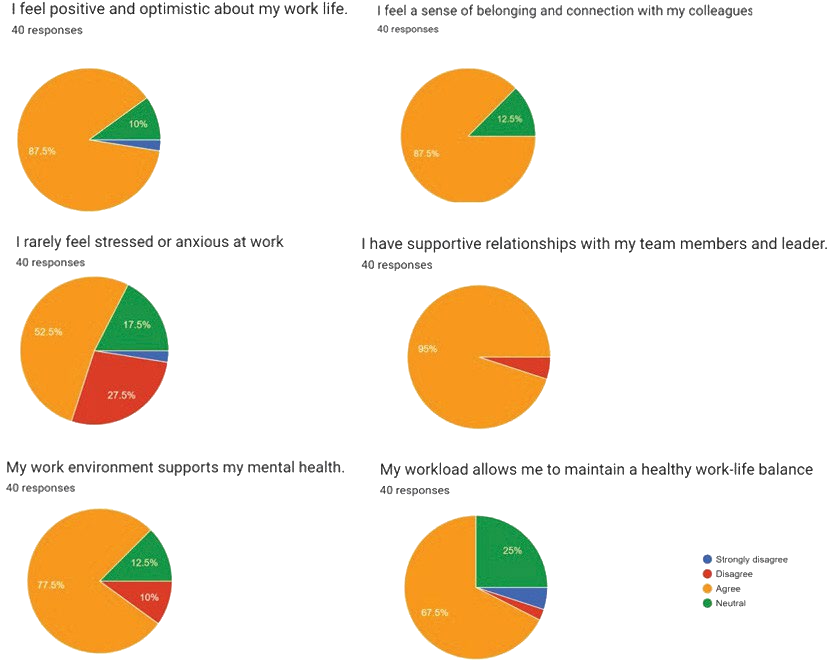
| I feel positive and optimistic about my work life. | 3.89 | 0.31 | 3.0 | 4.0 |
| I rarely feel stressed or anxious at work. | 3.26 | 0.89 | 2.0 | 4.0 |
| My work environment supports my mental health. | 3.69 | 0.65 | 2.0 | 4.0 |
| I feel a sense of belonging and connection with my colleagues. | 3.87 | 0.34 | 3.0 | 4.0 |
| I have supportive relationships with my team members and leader. | 3.90 | 0.44 | 2.0 | 4.0 |
| My workload allows me to maintain a healthy work-life balance. | 3.70 | 0.52 | 2.0 | 4.0 |
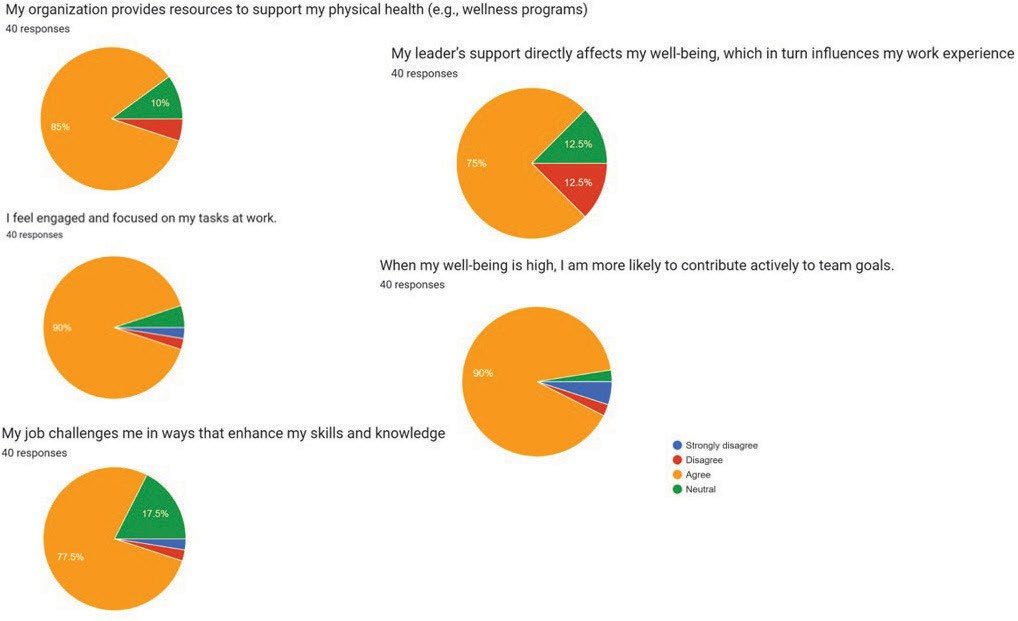
| My organization provides resources to support my physical health. | 3.79 | 0.52 | 2.0 | 4.0 |
| I feel engaged and focused on my tasks at work. | 3.89 | 0.38 | 2.0 | 4.0 |
| My job challenges me in ways that enhance my skills and knowledge. | 3.76 | 0.49 | 2.0 | 4.0 |
| My leader’s support directly affects my well-being. | 3.61 | 0.71 | 2.0 | 4.0 |
| When my well-being is high, I am more likely to contribute to team goals. | 3.92 | 0.36 | 2.0 | 4.0 |
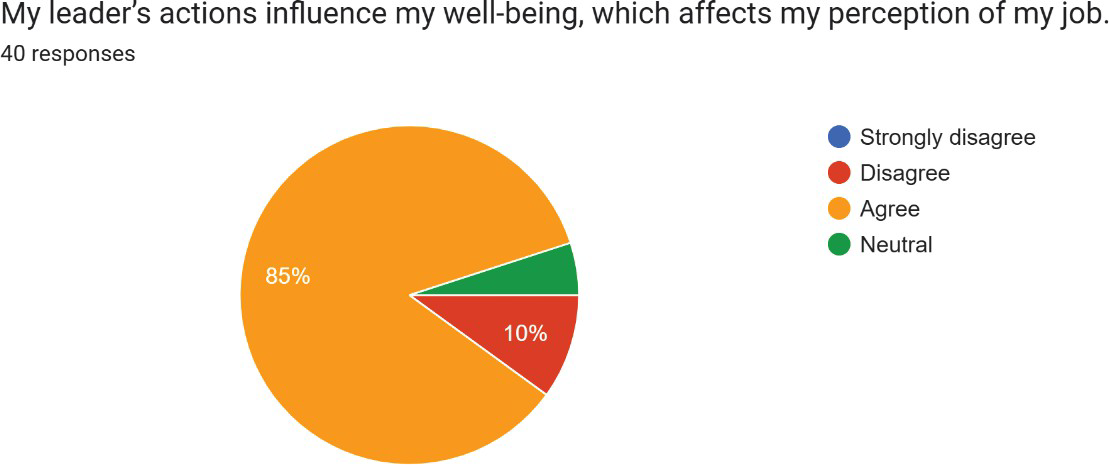
| My leader’s actions influence my well-being and job perception. | 3.74 | 0.64 | 2.0 | 4.0 |
Key Observations
- Positive Leadership Influence
- Most responses cluster around “Agree” (4.0) with a few leanings towards “Neutral” (3.0).
- Leadership support (3.61 mean) directly affects well-being, indicating a strong link.
- Employees feel a sense of belonging (3.87) and engagement (3.89) at work.
- Well-being & Workload Challenges
- Stress and anxiety (3.26) have higher variation (0.89 std. dev.), suggesting mixed experiences.
- Work-life balance (3.70) has moderate scores, indicating potential challenges.
- Supportive Environment
- Mental health support (3.69) and physical health resources (3.79) are relatively strong.
- Team and leader relationships (3.90) remain a key factor for well-being.
Discussion
Leadership’s Role in Employee Well-Being
The findings of this study highlight the critical role of leadership in influencing employee well-being. A significant majority (75–85%) of employees reported that their leader’s support directly impacts their well-being and overall work experience. These results align with transformational leadership theories, which emphasize that leaders who prioritize employee well-being create more positive and engaging work environments.
Leadership support extends beyond mere supervision; it fosters psychological safety, emotional support, and a culture of trust, all of which contribute to employees’ mental and emotional health. Employees who perceive their leaders as empathetic and supportive are more likely to experience greater job satisfaction, motivation, and resilience in the workplace.
Employee Engagement and Productivity
A substantial 90% of employees reported feeling engaged and focused on their tasks, and an equal percentage indicated that high well-being levels drive their contributions to team goals. These findings reinforce the Job Demands-Resources (JD-R) Model, which posits that supportive leadership acts as a key resource that mitigates workplace stress and enhances employee engagement.
When employees feel valued and supported, their intrinsic motivation increases, leading to higher levels of productivity and collaboration. Conversely, employees who lack leadership support may experience burnout, disengagement, and diminished performance. This underscores the need for organizations to equip leaders with the skills necessary to foster a culture of engagement and well-being.
Organizational Support and Areas for Improvement
While 85% of employees acknowledged their organization’s efforts in providing physical wellness programs, a small percentage (10–12.5%) either disagreed or remained neutral. This suggests that, while well-being initiatives exist, not all employees find them accessible, relevant, or effective. Organizations should assess whether these programs adequately address employee needs and identify potential barriers to participation.
Additionally, 77.5% of employees agreed that their job challenges them in ways that enhance their skills and knowledge. This reflects a positive link between leadership and professional development, yet a segment of employees remains neutral. Organizations should ensure that career growth opportunities are equally available and aligned with employees’ aspirations.
Recommendation
Based on these findings, organizations should consider the following strategies to strengthen leadership impact on employee well-being:
- Enhance Leadership Training – Equip leaders with skills in emotional intelligence, coaching, and well-being advocacy to create a supportive and psychologically safe workplace.
- Optimize Workload Management – While engagement levels are high, stress remains a concern for some employees. Organizations should implement balanced workload distribution, flexible work arrangements, and burnout prevention strategies.
- Improve Well-Being Program Accessibility – Organizations should assess the effectiveness of wellness programs and actively promote them to ensure employees understand and utilize available resources.
- Foster Continuous Learning and Career Growth – Leaders should actively support mentorship, career advancement, and skill-building opportunities to maintain employee motivation and long-term engagement.
Conclusion
The findings of this survey-based study underscore the pivotal role of leadership in shaping employee well-being across multiple dimensions. The results demonstrate that effective leadership practices significantly influence employee well-being, particularly through mechanisms such as emotional support and career development opportunities. Leaders who prioritize these aspects foster a supportive and inclusive work environment, leading to increased job satisfaction and overall well-being among employees.
This study highlights the importance of adopting leadership styles that emphasize empathy, clear communication, and employee development to enhance both individual and organizational outcomes. Furthermore, the integration of qualitative and quantitative data provides a nuanced understanding of the dynamic relationship between leadership and well-being, offering actionable insights for practitioners and organizations.
Future research should explore this relationship in greater depth across various industries and cultural contexts to validate and expand upon these findings. By prioritizing leadership strategies that promote holistic well-being, organizations can not only improve employee satisfaction but also drive long-term success and sustainability. By addressing these limitations, future research can build on the current findings and provide more nuanced and generalizable insights into the interplay between leadership and employee well-being.
Future Research Directions
- Longitudinal studies could examine the long-term impact of leadership interventions on well-being and engagement.
- Future research could explore industry-specific or cultural variations in leadership effectiveness, providing broader perspectives on best practices.
- Investigating the role of AI-driven leadership tools in fostering employee well-being could offer innovative solutions for the modern workplace.
Limitations
- Sample Size and Scope: The sample size of 40 employees, though diverse, may limit the generalizability of the findings across different industries or larger populations. Future studies could benefit from larger and more representative samples.
- Cross-Sectional Design: The survey-based study captures data at a single point in time, which restricts the ability to infer causality. A longitudinal design could provide deeper insights into the long-term effects of leadership on employee well-being.
- Subjectivity of Responses: The reliance on self-reported data introduces potential biases, such as social desirability bias or misinterpretation of survey questions. Incorporating objective measures or third-party assessments could enhance the robustness of the findings.
- Contextual Variations: The study does not account for contextual factors, such as organizational culture, industry-specific challenges, or regional differences, which could influence the leadership-well-being relationship. Examining these factors could provide a more comprehensive understanding.
- Limited Dimensions of Well-Being: Although this study considers multiple aspects of well-being, it may not fully capture its complexity. Future research could explore additional dimensions, such as physical health or work-life balance, to provide a holistic view.
References
Chingara, D. R. (2022). The influence of Leadership Style on Employee Wellbeing during a pandemic. International Journal of Social Sciences and Humanities Invention, 9(04), 6982–6989. https://doi.org/10.18535/ijsshi/v9i04.11
Teetzen F, Klug K, Steinmetz H and Gregersen S (2023) Organizational health climate as a precondition for health-oriented leadership: expanding the link between leadership and employee well-being. doi: 10.3389/fpsyg.2023.1181599
Dannheim, I., Ludwig-Walz, H., Buyken, A. E., Grimm, V., & Kroke, A. (2022). Effectiveness of health-oriented leadership interventions for improving health and wellbeing of employees: A systematic review. Journal of Public Health, 30(12), 2777–2789. https://doi.org/10.1007/s10389-021-01664-1
Ernst Kossek, E., Kalliath, T., & Kalliath, P. (2012). Achieving employee wellbeing in a changing work environment: An expert commentary on current scholarship. International Journal of Manpower, 33(7), 738–753. https://doi.org/10.1108/01437721211268294
Hauff, S., Felfe, J., & Klug, K. (2022). High-performance work practices, employee well-being, and supportive leadership: Spillover mechanisms and boundary conditions between HRM and leadership behavior. The International Journal of Human Resource Management, 33(10), 2109–2137. https://doi.org/10.1080/09585192.2020.1841819
Hauff, S., Krick, A., Klebe, L., & Felfe, J. (2022). High-Performance Work Practices and Employee Wellbeing—Does Health-Oriented Leadership Make a Difference? Frontiers in Psychology, 13, 833028. https://doi.org/10.3389/fpsyg.2022.833028
Inceoglu, I., Thomas, G., Chu, C., Plans, D., & Gerbasi, A. (2018). Leadership behavior and employee well-being: An integrated review and a future research agenda. The Leadership Quarterly, 29(1), 179–202. https://doi.org/10.1016/j.leaqua.2017.12.006
Liyanage, C. P. (2020). The Impact of Transformational Leadership on Employee Well-being: A Narrative Synthesis. Colombo Business Journal, 11(2), 24–66. https://doi.org/10.4038/cbj.v11i2.63
Lundqvist, D., Reineholm, C., Ståhl, C., & Wallo, A. (2022). The impact of leadership on employee well-being: On-site compared to working from home. BMC Public Health, 22(1), 2154. https://doi.org/10.1186/s12889-022-14612-9
Muhammad, L., Amin, M., Khattak, A. Z., Khan, A. Z., & Mustafa, R. (2022). The Impact of Leadership Styles on Employee Wellbeing and Resilience during COVID-19: A Partial Least Square Approach. 4(2).
Onesti, G. (2023). Exploring the Impact of Leadership Styles, Ethical Behavior, and Organizational Identification on Workers’ Well-Being. Administrative Sciences, 13(6), 149. https://doi.org/10.3390/admsci13060149
Perko, K. (n.d.). Leadership and Employee Well-Being.
Sarwar, H., Ishaq, M. I., Amin, A., & Ahmed, R. (2020). Ethical leadership, work engagement, employees’ well-being, and performance: A cross-cultural comparison. Journal of Sustainable Tourism, 28(12), 2008–2026. https://doi.org/10.1080/09669582.2020.1788039
Sudha, K. S., Shahnawaz, M. G., & Farhat, A. (2016). Leadership Styles, Leader’s Effectiveness and Well-being: Exploring Collective Efficacy as a Mediator. Vision: The Journal of Business Perspective, 20(2), 111–120. https://doi.org/10.1177/0972262916637260
Dimoff, J. K., and Kelloway, E. K. (2017). “Leaders as resources: how managers and supervisors can socially support employees towards better mental health and wellbeing” in Leading to Occupational Health and Safety. eds. E. K. Kelloway, K. Nielsen and J. K. Dimoff (Chichester, West Sussex, UK: Wiley Blackwell), 149–162.
Dollard, M. F., and Bakker, A. B. (2010). Psychosocial safety climate as a precursor to conducive work environments, psychological health problems, and employee engagement. J. Occup. Organ. Psychol. 83, 579–599. doi: 10.1348/096317909X470690
Dollard, M. F., Dormann, C., and Idris, M. A. (2019). “Psychosocial safety climate: a new work stress theory and implications for method” in Psychosocial Safety Climate—A New Work Stress Theory (Cham, Switzerland: Springer Nature Switzerland AG), 3–30.
Dollard, M. F., Opie, T., Lenthall, S., Wakerman, J., Knight, S., Dunn, S., et al. (2012a). Psychosocial safety climate as an antecedent of work characteristics and psychological strain: a multilevel model. Work Stress 26, 385–404. doi: 10.1080/02678373.2012.734154
Dollard, M. F., Tuckey, M. R., and Dormann, C. (2012b). Psychosocial safety climate moderates the job demand–resource interaction in predicting workgroup distress. Accid. Anal. Prev. 45, 694–704. doi: 10.1016/j.aap.2011.09.042
Ducki, A. (2000). Diagnose gesundheitsförderlicher Arbeit. Eine Gesamtstrategie zur betrieblichen Gesundheitsanalyse. Zurich, Switzerland: vdf Hochschulverlag.
Franke, F., Felfe, J., and Pundt, A. (2014). The impact of health-oriented leadership on follower health: development and test of a new instrument measuring health-promoting leadership. German J Hum Resour Manag 28, 139–161. doi: 10.1177/239700221402800108
Gorgievski, M. J., and Hobfoll, S. E. (2008). “Work can burn us out or fire us up: conservation of resources in burnout and engagement” in Handbook of Stress and Burnout in Health Care. (Hauppauge, NY: Nova Science Publishers).
Gurt, J., Schwennen, C., and Elke, G. (2011). Health-specific leadership: is there an association between leader consideration for the health of employees and their strain and well-being? Work Stress 25, 108–127. doi: 10.1080/02678373.2011.595947
Hall, G. B., Dollard, M. F., Winefield, A. H., Dormann, C., and Bakker, A. B. (2013). Psychosocial safety climate buffers effects of job demands on depression and positive organizational behaviors. Anxiety Stress Coping 26, 355–377. doi: 10.1080/10615806.2012.700477
Hamaker, E. L., and Grasman, R. P. P. P. (2015). To center or not to center? Investigating inertia with a multilevel autoregressive model. Front. Psychol. 5, 1–15. doi: 10.3389/fpsyg.2014.01492
Hammer, L. B., Truxillo, D. M., Bodner, T., Pytlovany, A. C., and Richman, A. (2019). Exploration of the impact of organisational context on a workplace safety and health intervention. Work Stress 33, 192–210. doi: 10.1080/02678373.2018.1496159
Hauff, S., Krick, A., Klebe, L., and Felfe, J. (2022). High-performance work practices and employee wellbeing—does health-oriented leadership make a difference? Front. Psychol. 13:833028. doi: 10.3389/fpsyg.2022.833028