







Medium Link: https://medium.com/@sangeethamns25/the-human-side-of-the-gig-economy-sustainable-hr-for-inclusive-growth-4d87ecd7f11c
Course Relevance: The case is relevant to the courses of Human Resource Management, organizational development, and change for management students.
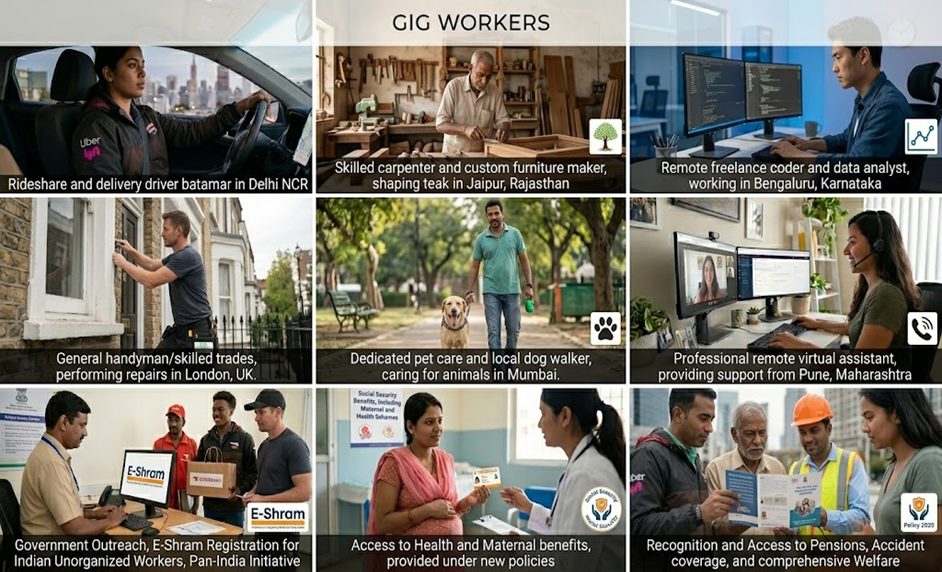
Academic Concepts: The gig economy is a labour market characterized by short-term, flexible, and freelance work arrangements instead of traditional full-time employment. In this system, individuals, known as gig workers, earn income by completing specific tasks, projects, or services for clients or companies, often through digital platforms such as Uber, Swiggy, Zomato, Fiverr, Upwork, and Amazon Mechanical Turk.
Teaching Note:
The growth of technology, internet connectivity, and mobile applications has significantly contributed to the expansion of the gig economy. These platforms connect workers directly with customers, making it easier to find work opportunities and provide services on demand. One of the major advantages of the gig economy is flexibility. Workers can choose when, where, and how much they want to work. It also provides opportunities for individuals to earn additional income, develop diverse skills, and achieve greater work-life balance. For businesses, hiring gig workers can reduce labour costs and allow access to specialized talent for specific projects. However, the gig economy also presents challenges. Many gig workers do not receive traditional employment benefits such as health insurance, paid leave, job security, or retirement benefits. Income may be irregular, and workers often face uncertainty regarding future employment opportunities. Despite these challenges, the gig economy has become an important part of the modern workforce and is expected to continue growing as digital technologies advance and organizations increasingly seek flexible labour solutions. It represents a significant shift in the way work is organized and performed in the 21st century.
Learning Objectives:
This caselet aims to
- Understand the Gig Economy Ecosystem
- Analyse Human Resource Challenges in Gig Work
- Evaluate Sustainable HR Practices
- Design Career Development Frameworks for Gig Workforce
- Assess Legal and Ethical Issues in the Gig Economy
- Promote Sustainable and Inclusive Business Practices
Introduction
In the gig economy, businesses employ people for short-term work and pay them on a task, project, or service basis instead of a set salary. With the growth of smartphone apps and the internet, this model has expanded quickly. This system is largely driven by well-known platforms like ridesharing, food delivery, freelance marketplaces, and online service providers.
Examples consist of:
Ride-hailing services, such as Ola and Uber
Apps for food delivery, such as Zomato and Swiggy
Freelance marketplaces (such as Fiverr and Upwork)
Apps for home services (like Urban Company)
Projections and Statistics
The gig workforce, which was estimated to be 7.7 million in 2020, is expected to grow to 23.5 million by 2030. Gig workers contribute about 1.25% of India’s GDP and are expected to account for 4-5% of all jobs.
Distribution of gig workers by sector:
• 35% in the transportation industry (delivery partners, taxi drivers).
• 26% in the e-commerce and retail industries.
• Others in digital services, financial economics, and production.
Organizations can create internal platforms where the gig workforce accesses multiple job opportunities, fostering long-term engagement. Organizations can empower their private internal platforms rather than relying on third-party gig economy services like Uber, Upwork, or Task Rabbit. These proprietary systems, whether web-based portals or mobile applications, enable companies to efficiently hire and manage gig workforces. Through these boards, employees can register, access job assignments, track earnings, and communicate with the organization.
Developing Structured Career Pathways
A. Tiered Progression System
HR can implement a structured career path using a tiered system based on
experience and expertise, such as:
- Entry-Level Gigs: Open to all, with foundational training provided.
- Mid-Level Gigs: Requires experience and specialized skills.
- Advanced Gigs: Reserved for experts with proven success and additional responsibilities.
B. Certification and Accreditation
Partnering with educational institutions and virtual knowledge platforms can enable the gig workforce to acquire recognized certifications, enhancing career advancement.
Leading platforms such as Coursera, Udemy, LinkedIn Learning, and edX offer gigs.
Workforce:
- Blended courses in high-demand fields like Digital Analytics, Digital Marketing, and UX design.
- Certifications from prestigious universities and companies such as Google, IBM, and Harvard.
- Access to global networking opportunities and job placement support, serving to bond them with impending clients and employers.
Industry-Specific Certifications for Gig Workforce
- Technology & IT: AWS, Google Cloud, CompTIA, Cisco.
- Digital Marketing: Hubspot, Google Ads, and Facebook Blueprint.
- Freelance Writing & Content Creation: SEO certifications and copywriting courses.
- Creative Fields: Adobe certifications (Photoshop, Illustrator).
- Healthcare & Wellness: First aid, nutrition, and fitness certifications.
Online Learning & Development Programs
- Provide micro-credentials and skill-based certifications.
- Use AI-driven recommendations for personalized learning paths.
- Promote peer-to-peer mentorship and knowledge sharing.
- Knowledge Sharing Networks
- Establish forums for the gig workforce to exchange insights and experiences.
- Conduct virtual meetups and webinars on industry trends.
By earning recognized certifications through educational institutions and online platforms, the gig workforce can gain a competitive edge, secure higher-paying opportunities, and build sustainable careers. Investing in continuous learning ensures they remain relevant in the rapidly evolving gig economy.
Legal & Ethical Considerations for Gig Workforce
The gig economy offers flexibility and creates various opportunities, but it also presents important legal and ethical subjects that administrations need to manage and handle in a more effective way.
Legal Considerations for Gig Workforce
a) Worker Classification: Employee vs. Independent Contractor
- Employees are generally authorized to benefits such as minimum wage, job security, and employment welfares, whereas independent service providers typically do not obtain these protections.
- In response, governments all over the world are introducing new labour regulations to address worker classification issues and reduce the risk of misclassification. Examples include California’s AB5 legislation and the European Union’s directives intended at enhancing protections for the gig workforce.
b) Fair Compensation & Minimum Earnings
- Gig workers frequently face income instability because of changing demand levels and irregular payment rates.
- To promote fair compensation, some governments have implemented minimum pay guarantees for the gig workforce. • Example: New York City requires Uber drivers and Lyft drivers to collect the least possible base pay, facilitating the delivery of more unwavering sources of revenue.
c) Work Hours & Overtime Protections
- Gig workers typically work unregulated hours, sometimes leading to overwork and burnout.
- Some jurisdictions are now setting limits on maximum working hours for the gig workforce. Example: Certain delivery platforms restrict daily working hours to ensure driver well-being.
d) Access to Benefits (Health Insurance, Social Security, & Retirement Plans)
- Disparate full-time workforces, gig Workforce typically has no rights to enjoy essential benefits and welfare schemes such as medical insurance, casual leave, and superannuation plans.
- Some governments and companies are introducing portable benefits or funded programs to support the gig workforce. Example: The UK’s ruling on Uber drivers granted them holiday pay and pension contributions.
e) Dispute Resolution & Job Security
- Gig workers often face sudden terminations or deactivations without clear explanations or the ability to appeal.
- Companies need transparent policies and structured grievance mechanisms for dispute resolution. Example: Some gig platforms now provide formal appeal systems and third-party mediation to handle worker disputes fairly.
Ethical Considerations for Gig Workforce
a) Fair Treatment & Equal Opportunities
- The gig workforce may encounter bias, discrimination, and unequal handling of job assignments or pay.
- Ethical businesses should ensure equal rights of entry to opportunities and fair compensation for all the workforces. Example: AI-powered job allocation should be monitored to prevent biases grounded on aspects such as gender, race, or location.
b) Job Stability & Predictability
- Gig work is often unpredictable, leading to financial and emotional stress for the workforce.
- Companies can improve worker experience by providing consistent job availability and more structured work opportunities. Example: Some gig platforms use AI-driven scheduling to distribute jobs more evenly among the workforces.
c) Data Privacy & Digital Rights
- Gig platforms collect extensive worker data, including personal details, work history, and location tracking.
- Organizations must ensure data privacy, security, and consent-based information usage. Example: The GDPR in Europe enforces stringent data security rules for gig platforms.
d) Algorithm Transparency & Worker Autonomy
- Many gig platforms rely on AI and algorithms to assign jobs, calculate earnings, and manage worker performance.
- Workforces often have little visibility or control over these automated decisions, leading to concerns over fairness. Ethical companies should ensure transparency in how these systems function and provide the workforce with explanations of algorithmic decisions.
How Corporates Can Ensure Compliance & Ethical Practices
Legal Compliance Checklist
- Define gig worker classification in accordance with labour laws.
- Ensure fair wages and minimum earnings protections.
- Provide clear contract terms and structured dispute resolution processes.
- Offer essential Welfares, like health coverage and accident insurance.
- Implement reasonable work hour policies to prevent overwork.
Ethical Best Practices
- Promote equal opportunities, anti-discrimination policies, and fair pay.
- Provide predictability in job availability to support financial stability.
- Safeguard worker data privacy and digital rights.
- Ensure transparency in AI-driven work allocation and pay calculations.
Government Initiatives & Policies for Gig Workforce
1. Recent Code on Social Security, 2020
- Inclusion of this category of workforce under social security schemes.
- Proposes health insurance welfare schemes, maternity benefits, accident coverage, and pensions and other social security benefits.
2. E-Shram Portal
National databank for disorganized workforce, including gig workforce.
Provides the right to use welfare schemes, accident insurance, and financial aid.
3. State-Level Initiatives
Some states, such as Rajasthan and Karnataka, have announced new welfare programs for the gig workforce.
Conclusion
The gig economy is undergoing rapid shifts globally. Because gig workers have historically been classified as self-governing freelancers or service providers rather than employees, they often lack legal protections like minimum wage, overtime, and unemployment insurance.
Governments worldwide are beginning to clamp down on this. For instance, labour departments and international bodies are actively pushing for new legal frameworks to force tech platforms to provide a baseline of social security, healthcare, and pension benefits to their platform workforce.
Discussion Questions:
- Should the gig workforce receive employee benefits?
- How can fairness be ensured?
- What changes are required in compensation?
References
- Dessler, G. (2024). Human Resource Management (17th Edition), Pearson Education.
- Cummings, T. G., & Worley, C. G. (2023). Organization Development and Change (12th Edition), Cengage Learning.
- Kaine, S., & Josserand, E. (2019). The organisation and experience of work in the gig economy. Journal of Industrial Relations, 61(4), 479–501.
- Wood, A. J., Graham, M., Lehdonvirta, V., & Hjorth, I. (2019), Good Gig, Bad Gig: Autonomy and Algorithmic Control in the Global Gig Economy. Work, Employment and Society, 33(1), 56–75.
- Duggan, J., Sherman, U., Carbery, R., & McDonnell, A. (2020). Algorithmic management and app work in the gig economy.
International Journal of Human Resource Management, 31(1), 114–132. - https://www.weforum.org/publications/the-future-of-jobs-report-2025/
- https://www.niti.gov.in/?utm_source=chatgpt.com
- https://www.mckinsey.com/featured-insights/sustainable-inclusive-growth/future-of-america/freelance-side-hustles-and-gigs-many-more-americans-have-become-independent-Workforce