






Abstract: Artificial Intelligence(AI) is playing pivotal role in every sphere of life, from driving car, assisting doctors to guiding students with appropriate content and solving problem. Simplicity of using different AI tools helped it to reach larger population of user quickly. In many cases users specially, students use AI without responsible way, which leads them to face problems afterwards like privacy and data risk, replying on bias or misinformation, legal and ethical consequences. There is a critical gap exists in learning how to use AI in ethical and responsible manner. This gap can lead to inconsistent strategies and hinder the ability to harness AI’s transformative potential in education effectively. In today’s world it is not only important how to use AI in doing different work effectively, it is more important how use AI responsively and ethically. In current stage it is important to give emphasize on responsible AI literacy. Since educational institutes has role in creating a responsible citizen, so it can play a vital role in creating awareness on responsible AI literacy as well. In this paper we tried to understand what important role educational institutions can play in enabling students to engage with artificial intelligence technology responsibly and ethically. This survey research aims to explore the relationship between responsible AI literacy, awareness of institutional training on AI usage in correct way, and perceptions of risks associated with AI among participants who are mainly students in post graduate and under graduate level. The findings show that there is a strong positive relationship between AI literacy and institutional training awareness, and both play important roles in addressing AI-related matters. User are concerned over perceptions of data breach risks and it is same for both male and female participants in our sample population. We also discussed awareness of students on data security, data governance, explainability and possible AI biasness. The conclusion emphasizes the critical role of educational institutions in fostering responsible AI use by enhancing AI literacy and institutional training awareness. The findings advocate for comprehensive, clear, and inclusive institutional policies and training initiatives to support responsible AI integration and mitigate risks in educational settings.
Key Words: Responsible AI Literacy, Role of Educational Institution, Data Bias, Data Governance, Data Security, Explainable AI
1. Introduction:
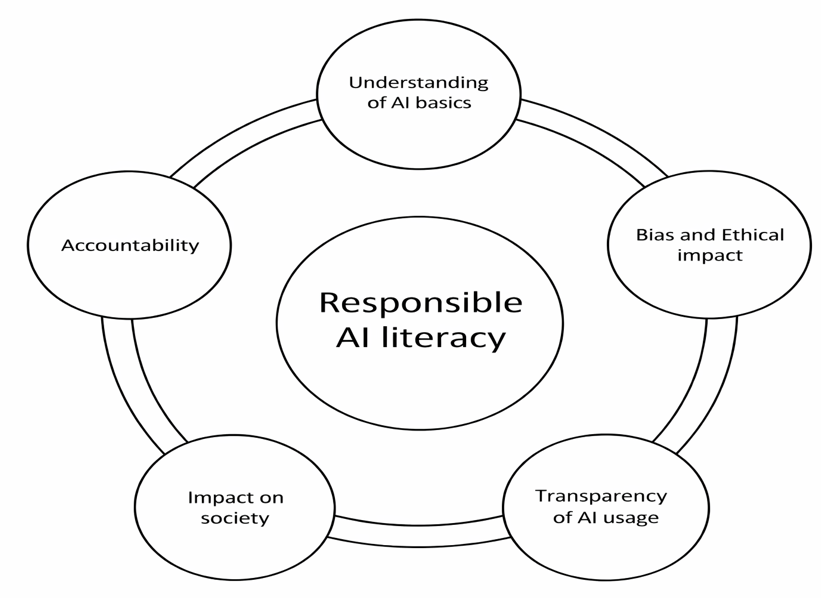
Responsible AI literacy enables user to understand, evaluate and usage of AI in ethical, transparent and aligned with societal values. It is different from AI literacy which mainly talks about application and basic technicalities of AI. Responsible AI literacy goes beyond the technical knowledge only, it emphasizes on risk, bias, accountability as well.
Here are the following important components of responsible AI-
- Understanding of AI Basics: Users should have a basic understanding of how AI works and its possible applications. This is the first step toward AI literacy.
- Bias and Ethical Impact: Beyond basic knowledge of AI, users should be able to identify potential biases and understand ethical implications rather than blindly accepting AI-generated outcomes.
- Transparency of AI Usage: Users should disclose the use of AI in academic and professional work whenever applicable.
- Impact on Society: Users should be aware of how AI can affect society, including its impact on jobs, decision-making, and social interactions.
- Accountability: Users must be accountable for both appropriate and inappropriate consequences resulting from the use of AI.
In current scenario where AI tools have progressed significantly and it became integral component in many activities and process, now user should not only be AI literate but they need to use it responsibly. Responsible AI Literacy matters because it promotes critical thinking and transparency of AI usage and encourage to create responsible citizen who can evaluate and even question AI policy, governance and innovation without accepting blindly.
Objective of this research to emphasizes the need to balance innovation with integrity in education. AI offers promising opportunities in various sector, but it must be introduced thoughtfully to avoid unintended harms to the user, society or organization. Education Institutions have a central role: setting clear policies, offering ethical training, and building governance structures that promote transparency and fairness. Addressing these issues will help ensure that AI supports, rather than undermines, core academic values.
Literature Review
To understand previous work done by various scholar on related to these topics, we have done literature survey on six thematic areas like Application of AI in education, Ethical considerations and responsible usage, Opportunities and challenges, Governance, Data Security and India government efforts for AI literacy for all.
A. Application of AI in education
Holmes and Tuomi (2022) provide a critical review of Artificial Intelligence in Education (AIED) in paper State of the Art and Practice in AI in Education, contrasting technological hype with current pedagogical realities. The authors establish a three-part typology categorizing AIED into student-focused, teacher-focused, and institution-focused systems. They argue that many existing AI tools are limited by outdated behaviorist models that prioritize data-driven efficiency over complex human learning. A central theme of the paper is the “AIED highway” metaphor, which identifies significant ethical, social, and technical roadblocks hindering meaningful integration. Ultimately, the study concludes that AI cannot replace the social-emotional intelligence of human educators and warns against a narrowing of educational goals. Their work advocates for a shift toward “AI literacy” and a more human-centric approach to educational technology policy. Eden, C., Chisom, O., & Adeniyi, I. (2024) examines the integration of artificial intelligence in education, emphasizing its potential to enhance personalized learning, improve student engagement, and streamline administrative processes. It also highlights key challenges, including accessibility, data privacy, the digital divide, and ethical concerns such as bias, transparency, and accountability. The study underscores the need for responsible and ethical AI implementation to ensure equitable, inclusive, and effective educational environments.
Balaji, V. & Ghosh, S. K. (2026), in their book chapter author discussed role of AI in education specially in experiential learning. AI demonstrates strong potential in personalizing learning pathways, delivering immediate feedback, and expanding educational access. Effective integration, however, requires preserving the irreplaceable human elements of teaching and embedding robust ethical frameworks. When combined with Kolb’s experiential learning theory, AI and human teachers create dynamic environments where students engage in hands-on activities, reflect, conceptualize, and experiment. AI supports this cycle through personalization and feedback, while teachers provide emotional support, mentorship, and critical thinking guidance. Ethical considerations remain central, emphasizing fairness, privacy protection, accountability, transparency, and learner well-being.
B. Ethical considerations and responsible usage
Domínguez Figaredo, D., & Stoyanovich, J. (2023) work on responsible AI literacy investigates how AI literacy has developed into an emerging academic discipline while showing how current programs fall short because they only teach programming skills to K–12 students. The algorithmic decision-making system creates a barrier that prevents citizens and stakeholders from accessing information about its ethical and social effects. The article presents a solution for this educational gap through its proposal of a stakeholder-first approach which will teach responsible AI education. The study uses an analysis of existing shortcomings together with selected case studies to show that different audiences need specific AI literacy programs which will help them learn about ethical matters and use new teaching methods to develop responsible AI educational research and practices.
Dave, A. (2025) studies on the ethical implications of AI in education. The research investigates how educational institutions face ethical problems when they try to implement artificial intelligence technology in their systems while also considering its advantages. Although AI systems enhance educational personalization and operational efficiency, they introduce risks that include data protection violations and system bias and lack of transparent operations and decreased human interaction. The research study shows that educational institutions need responsible management practices together with just treatment and stakeholder partnerships to achieve proper and inclusive use of artificial intelligence technology in their institutions. Kumari, A. (2025) investigates how teaching artificial intelligence ethics affects students’ understanding of ethics and their intentions to use artificial intelligence in a responsible manner. The research used survey data from computer science and engineering students to prove that ethics education enhances students’ ability to recognize ethical issues and their intention to behave responsibly in social situations while ethical knowledge served as the main linking factor between both outcomes. The results demonstrate that teaching ethics in artificial intelligence courses serves as a necessary component for creating artificial intelligence systems that align with both responsible development practices and societal values.
Minglani, D. et al (2025) discussed that the introduction of generative artificial intelligence (AI) tools into different industries has created new possibilities which improve operational productivity and creative work and decision-making processes. The technological progress brings forth major ethical problems which require thorough examination. The chapter Ethical Considerations and Challenges in Human-AI Collaboration examines how AI systems create ethical issues which require researchers to establish fair and accountable systems with transparent operations and safe data handling and results which benefit society during system development and deployment.
Rohrl, S., Tatnall, A., et al. (2024) utilized a case study design to analyze the application of the Pythia AI learning system in terms of the human-rights principles and the European Union AI Act as methods of analysis. Key Findings: It was determined in the analysis that there are ten serious ethical concerns, such as risk to privacy, algorithmic discrimination, non-transparency, abuse, and difficulty in ensuring student autonomy and dignity, highlighting the importance of responsible design and a robust ethical safeguard. The article of Wai Yie Leong., et al. (2025) performed a conceptual and literature-based review of the ethical principles that govern the development and implementation of AI systems in education. Key findings was although AI provided benefits in terms of personalized learning and administrative efficiency, the risks of bias, violation of privacy, and decreased human interaction were also substantial, which resulted in the focus on transparency, fairness, accountability, and collaboration with stakeholders.Wang C, Liu S, Yang H,et al. (2023) used a conceptual analysis method to analyze the ethical aspects of using ChatGPT in healthcare. Key Findings: The analysis revealed issues with ambiguous liability, privacy risks in patients, algorithmic bias, and explainability, and it is possible that inaccurate outputs may cause harm to patients, making it essential to apply rigorous ethical guidelines and transparency. Holmes, W., Porayska-Pomsta, K.,et al. (2022) used a methodology where the survey-based qualitative approach was implemented in the study, and researchers in the Artificial Intelligence in Education (AIED) community were surveyed to discuss issues of ethics with regards to AI usage in education. Key Findings: The results showed that AI in education is mostly created with the best intentions, but the ethical issues regarding bias, the lack of transparency, accountability, or threats to the learner autonomy are not adequately tackled. The paper reported the lack of established ethically grounded frameworks and pointed to interdisciplinary, community-wide approach as the means of influencing the ethical and responsible design and governance of AI in education.
C. Opportunities and challenges
Lydia, E. G., Vidhyavathi, P., & Malathi, P. (2023) investigates the educational transformation which AI brings through its development of personalized learning techniques, its creation of intelligent tutoring systems, its use of automated assessment methods, and its implementation of immersive technologies. The use of AI technology increases student engagement and improves learning outcomes, but it creates difficulties which involve protecting personal information and securing data and handling bias situations and making ethical decisions. The study highlights the need for responsible AI use and collaboration among stakeholders to effectively implement AI-driven personalized learning in education. Yadav, D. S. (2024) shows how educational systems integrate artificial intelligence technologies which enable customized student learning together with assessment methods and student-centered teaching approaches. The research study investigates main obstacles which include equitable access and data protection and algorithmic bias and maintenance of human relationships within educational settings. The research study demands ethical and transparent and responsible artificial intelligence implementation which requires educators and policymakers and stakeholders to work together for creating teaching and learning environments that support all students.
Ravichandran, R., & Sasikala, P. (2025) work shows how generative AI technology brings transformative changes to Indian higher education systems because it helps solve problems which include two major aspects that need to be addressed. The study examines ethical issues that involve academic misconduct and data protection and biased systems and equitable treatment together with government efforts to promote responsible artificial intelligence use. The study provides equal research results which present practical solutions for higher education institutions to achieve fair and ethical artificial intelligence implementation. Ng, D. T. K., Chan, E. K. C., et al. (2025) used a survey-type of research design that included 76 Canadian teachers who attended a generative AI training session and their written reflections were studied with the help of qualitative thematic analysis. Key Findings: It was revealed that teachers found generative AI beneficial in teaching, administrative tasks, and assessment practices, but the following challenges were also noted: low school preparedness, teacher inexperience, and students not being AI-proficient, which underscored the importance of professional training, institution-wide policies, and easier access to AI tools.
Giannakos, M. N., Troussas, C., et al. (2024) followed a commentary-based review and synthesized the responses of nine specialists in the field of learning technologies in order to investigate opportunities, challenges, and future perspectives of generative AI in education. Major Conclusions: The findings emphasized that generative AI has the potential to aid content generation, feedback, assessment, and learning design; nevertheless, it can be hazardous in terms of ethical issues, misuse, unreliable results, and interference with the conventional pedagogical pattern, which is why evidence-based adoption and human-oriented design are essential.
D. Governance
Pasupuleti, M. K. (2024) discussed about Ethical AI Governance.The chapter introduces a worldwide system for ethical AI governance which establishes its foundation through core principles that include fairness accountability transparency and privacy. The research investigates difficulties which arise when different legal systems and cultural traditions need to establish common ethical standards and it shows the importance of international partnerships together with active participation from all relevant parties. The research provides an operational framework which enables responsible AI governance to advance technological progress while protecting human rights and core values.
Yan, Y., Liu, H et al (2025 presents the Generalist Education AI (GEAI) framework as a solution which enables privacy-protected and customized multimodal educational learning. The combination of secure data architecture with ethical governance principles and pedagogical foundations in GEAI system enables responsible AI deployment which maintains transparent and accountable operations while protecting institutional data rights. The framework establishes a path which educational programs can use to validate their methods and implement their systems in actual classroom settings.
Jobin, A., Ienca, M., et al. (2019) done a systematic review and comparative analysis of 84 AI ethics and governance guidelines, published by governments, non-governmental organizations, and research institutions across the globe. Key Findings: The research discovered that there was a significant overlap in the most common AI governance principles including transparency, fairness, accountability, protection of privacy, and human control. Nonetheless, considerable differences were found between ethical standards of high level and their application to the practice, where few enforcement measures are taken and the roles are not clear. The authors asserted the necessity of tougher governance systems that can transform ethical principles into practical policies and legal systems. Floridi, L., Cowls, J., et al. (2018) used a conceptual and normative approach of analysis and suggested an AI governance framework based on the ethical philosophy and principles of human rights. Key Findings: The authors put forth five main governance principles, namely, beneficence, non-maleficence, autonomy, justice, and explicability, as the basis of responsible AI systems. The framework provides an emphasis on the societal advantages of AI, but it also emphasizes governance issues like absence of responsibility, transparency problem, and potential social harm. The paper contends that AI regulation should shift to mandatory institutional and regulatory controls as opposed to freely upheld ethics.
E. Data Security
Los Angeles Unified School District (LAUSD), & Kokomo Solutions Inc. (2025) studied on Data Breach. This study relied on secondary analysis of regulatory disclosures, investigative reports, and official statements related to a data breach involving Kokomo Solutions. Key Findings: The incident revealed serious risks associated with outsourcing sensitive student medical and safety data to third-party vendors, raising concerns about transparency, privacy protection, accountability, and governance in AI-enabled educational services. Soares, W. (2024). did a journalistic analysis drawing on classroom examples, interviews with educators, expert commentary, and survey data to examine how AI tools used by teachers can pose risks to student privacy and data security in U.S. schools. Key Findings: Soares reports that while many teachers are enthusiastic about using AI tools like ChatGPT and other platforms to streamline lesson planning and routine tasks, there is a significant lack of training on how these tools handle sensitive information such as students’ grades, personal identifiers, and educational plans, which could expose personal data to unintended audiences. The article highlights examples such as the discontinuation of the “Ed” AI assistant in Los Angeles Unified School District and the resultant uncertainty over the handling of student data. Experts quoted note that many AI systems were not designed for educational use cases and that without institutional guidance, teachers may inadvertently violate student privacy laws or contribute to long-term exposure of personal data. The piece emphasizes the need for clearer policy guidance, professional development, and district-level vetting processes to protect student data while responsibly integrating AI tools in education.
F. Indian government efforts for AI literacy for all
In addition to above literature, we also highlight India governments recent initiative of AI literacy. The “AI For All” program (https://ai-for-all.in/) is a national digital literacy initiative launched by the Government of India. in partnership with Intel to demystify Artificial Intelligence for the general public. It provides a self-paced, inclusive learning platform designed to introduce foundational AI concepts and their ethical implications to citizens of all cross section of society. In Section 2: AI Appreciate, course elaborates about the principles of responsible AI and AI ethics. This program aims to bridge the digital divide and foster a basic understanding of how AI impacts daily life. Ultimately, the initiative serves as a strategic pillar for social inclusion, ensuring that the benefits of the AI economy are accessible to a diverse and broad population.
Research Gap: While previous research has been conducted on the topic of ethical AI, data privacy, and literacy in education settings, many gaps still need to be addressed when it comes to students’ perceptions. The current body of knowledge is lacking insight regarding whether or not students feel that their institutes are obligated to cultivate awareness and ethical responsibility within students with regards to AI use. In addition, even though the issue of data privacy has been raised, demographic differences such as gender have been overlooked. Furthermore, no research has been dedicated to studying how the explanation of the AI policies impacts students’ perception of risks.
Addressing these gaps offers a more student-centered perspective on responsible AI in education, emphasizing institutional accountability, demographic differences, transparency in policy, and the connection between literacy and training.
Research methodology:
A structured questionnaire was designed to explore the perception of students regarding the responsible use of AI in education and it also includes several dimensions identified in the literature survey. Based on that an online google survey form was circulated among students. The survey was voluntary in nature and student identity like name, email id was not captured to keep the response anonymous.
In this paper we have used survey data from 205 users who are mainly under graduate and post graduate students with balanced gender representation. The data were analysed and the hypothesis testing was conducted to address the identified research gaps, guided by the following research questions.
RQ1: whether students perceive their educational institutions as responsible for creating awareness about ethical and responsible AI practices?
RQ2: whether concern regarding AI-related data breaches differs between male and female students?
RQ3: whether the clarity of institutional AI policies influences students’ concern about AI-related risks?
RQ4: whether any relationship exist between students’ responsible AI literacy and their awareness of institutional AI training initiatives?
The questionnaire has been used to record the demographic data, the patterns of using AI, AI literacy, ethical conscience, and the ideas of the institutional responsibility towards AI education.
Details of the survey questions are available in Table 1.
| Questions | Type |
|---|---|
| Are you familiar with the concept of responsible AI literacy? | AI literacy |
| I am aware of the types of personal data collected by AI tools. | Data Security |
| Users are adequately informed about how their data is stored and used by AI systems. | Data Security |
| My institution has clear policies regarding usage of AI platforms. | Data Policy and Governance |
| I am aware of privacy risks involved in using AI tools for academic work. | Data Security |
| AI-based decisions (e.g., grading, recommendations) are free from bias or unfairness. | Data Bias and Ethics |
| Ethical considerations are discussed during the adoption of new AI technologies. | Data Bias and Ethics |
| Ethical training for students using AI tools is important? | AI literacy |
| AI systems should be explainable to users, especially when making decisions that affect learning? | Explainable AI and Transparency |
| Do you consider your educational institution responsible for raising student awareness about ethical and responsible AI practices? | Institutional Responsibility |
| The tools I use ensure transparent accountability for the consequences of their AI-generated decisions. | Explainable AI and Transparency |
| To what extent do you agree that your institution should establish formal governance mechanisms—such as oversight committees or audit protocols—to ensure responsible AI integration in academic activities? | Data Policy and Governance |
| Do you believe institution includes diverse stakeholder perspectives when making decisions about integrating AI tools? | Explainable AI and Transparency |
| I am concerned about data breaches resulting from AI tools. | Data Security |
| AI tools have caused unintended harm or confusion in learning environments. | Data Security |
| The benefits of AI in education outweigh the potential risks? | Data Security |
| I feel comfortable using AI tools for academic work when I am aware of the ethical considerations involved. | Data Bias and Ethics |
Descriptive Analysis
1. Gender Distribution
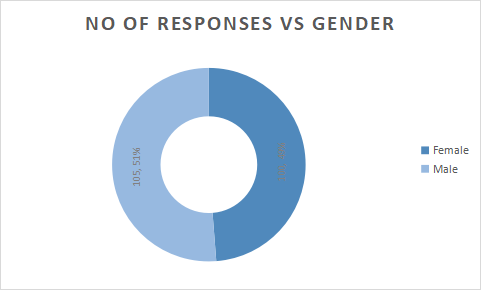
The gender composition of the respondents is shown in figure 2. Among 205 respondents, there were 105 males and 100 females, which means that the gender representation of the study was quite balanced.
2. Age Group Distribution
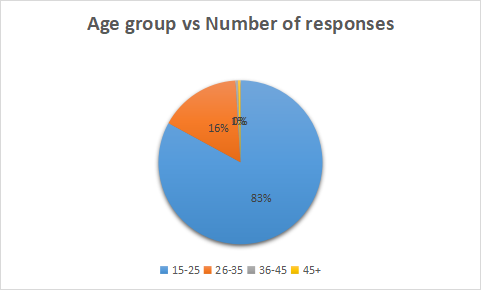
Figure 3: Age group distribution
Figure 3 indicates that most of the respondents (83 percent) fall within the 15-25 age group with 16 percent falling within the 26-35 age bracket. There were very few respondents who were older than 35 years which implies that the sample is mostly comprised of students and young learners.
3. AI Usage Pattern
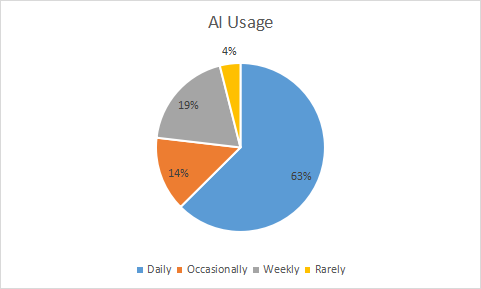
Figure 4: AI Usage pattern
Figure 4 demonstrates the occurrence of AI tools utilization among the respondents. Most of the respondents indicated that they use AI tools on a daily basis, then every week, and occasionally. The frequency of AI tools being used in academics is high, as very few respondents have indicated that they rarely use their AI tools.
4. AI Literacy Level
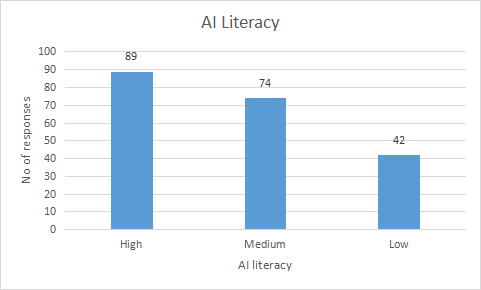
The distribution of the levels of AI literacy among the respondents is illustrated in figure 5. The majority of the respondents are of the high and medium literacy level, with a small percentage having low AI literacy, indicating a moderate to high level of AI awareness among the sample.
| Survey Item | Type | Mean | Standard Deviation |
|---|---|---|---|
| I am aware of privacy risks involved in using AI tools for academic work. | Data Security | 3.63 | 1.02 |
| Do you consider your educational institution responsible for raising student awareness about ethical and responsible AI practices? | Institutional Responsibility | 3.47 | 1.02 |
| I feel comfortable using AI tools for academic work when I am aware of the ethical considerations involved. | Data Bias & Ethics | 3.75 | 1.07 |
Awareness of Privacy Risks
The average score of 3.63 is a pointer that the respondents tend to believe that they do know about the privacy risks when using AI tools in their academic work. The standard deviation implies that there is a moderate level of variation in the awareness levels among respondents.
Institutional Responsibility for Ethical AI Awareness
The scale that gauged the institutional responsibility had a mean of 3.47 which indicates a moderate positive view on the role of learning institutions in ensuring ethical and responsible use of AI. This brings out the perceived necessity of more institutional efforts and formal training systems. SD shows there is a moderate level of variations as well.
Comfort in Using AI with Ethical Awareness
When ethical considerations are comprehended the highest mean score (3.75) was recorded in the comfort of using AI tools. This implies that the understanding of the ethical consideration makes user confidence and acceptance of AI tools in academic settings substantially better. SD shows there is a moderate level of variations in opinion.
Hypotheses Development
Based on the objectives of the study which is aligned to the four research questions discussed in research methodology section, following four hypotheses were formulated to examine students’ perceptions on ethical and responsible AI adoption in education.
H1: Institutional Responsibility for Ethical AI Awareness
This hypothesis examines whether students perceive their educational institutions as responsible for creating awareness about ethical and responsible AI practices.
Null Hypothesis (H₀₁):
Students do not consider their educational institution responsible for raising awareness about ethical and responsible AI practices.
Alternative Hypothesis (H₁₁):
Students consider their educational institution responsible for raising awareness about ethical and responsible AI practices.
H2: Gender and Concern About AI-Related Data Breaches
This hypothesis analyzes whether concern regarding AI-related data breaches differs between male and female students.
Null Hypothesis (H₀₂):
There is no significant difference in concern about AI-related data breaches between male and female students.
Alternative Hypothesis (H₁₂):
There is a significant difference in concern about AI-related data breaches between male and female students.
H3: Institutional AI Policy Clarity and Risk Concern
This hypothesis investigates whether the clarity of institutional AI policies influences students’ concern about AI-related risks.
Null Hypothesis (H₀₃):
Students with different levels of AI policy clarity show similar levels of concern about AI-related risks.
Alternative Hypothesis (H₁₃):
Students’ concern about AI-related risks differs significantly based on the clarity of their institution’s AI policies.
H4: Responsible AI Literacy and Institutional Training Awareness
This hypothesis examines the association between students’ responsible AI literacy and their awareness of institutional AI training initiatives.
Null Hypothesis (H₀₄):
There is no significant association between responsible AI literacy and institutional training awareness.
Alternative Hypothesis (H₁₄):
There is a significant association between responsible AI literacy and institutional training awareness.
Results and Hypothesis Testing
The hypotheses were tested using appropriate statistical techniques based on the nature of the variables involved.
1. Results of H1: Institutional Responsibility
One-sample t-test was carried out to investigate the opinion of the students on whether the institution is responsible to raise ethical awareness of AI. The findings showed an average score of 3.47 which was way above the neutral midpoint on the scale. The null hypothesis was rejected because the t-value calculated was larger than the critical value at the 5 per cent level of significance.
Result: The students view their educational institution to be the one that can create awareness regarding ethical and responsible AI practices.
1. Results of H2: Gender and Data Breach Concern
The independent samples t-test was conducted to assess the levels of the concerns related to AI-related data breach in relation to both male and female students. It was found out that there was no statistically significant difference between the two groups as the p-value was more than 0.05.
Result: The null hypothesis was not rejected which means that there is no significant difference in the data breach concern between the male and female students.
3. Results of H3: AI Policy Clarity and Risk Concern
| Group (AI Policy Clarity) | Sample Size (n) | Mean | Variance |
|---|---|---|---|
| Low Clarity | 54 | 3.444 | 1.799 |
| Neutral | 71 | 3.423 | 0.647 |
| High Clarity | 80 | 3.913 | 0.790 |
Table 4: AI policy clarity
| Source of Variation | SS | DF | MS | F | P-value | F crit |
|---|---|---|---|---|---|---|
| Between Groups | 11.277 | 2 | 5.639 | 5.610 | 0.0043 | 3.041 |
| Within Groups | 203.045 | 202 | 1.005 | – | – | – |
| Total | 214.322 | 204 | – | – | – | – |
Table 5: ANOVA calculation
One-way ANOVA was used to evaluate the difference of AI risk concern among students in institutions of low, neutral, and high AI policy clarity. The findings allowed finding a statistically significant difference in the mean risk concern levels among the three groups ( p < 0.05).
Result: The null hypothesis was not accepted, showing that the level of concern toward AI risks in students is different based on the clarity of institutional policies on AI.
4. Results of H4: Responsible AI Literacy and Training Awareness
Chi-square test of Independence was employed in order to test the relationship between responsible AI literacy and institutional training awareness. The calculations revealed that there was a strong correlation between the two variables because the chi-square value calculated was greater than the critical value of 5 percent.
Result: The null hypothesis was rejected, and this means that there is a significant relationship existing between responsible AI literacy and institutional training awareness.
Practical Implications of the Study:
Following are the practical implication of our study-
1.Role of Institution in Awareness: As students view their institution as an important player in generating awareness around responsible AI, it is critical for higher education institutions to develop well-planned training programs, seminars, and curriculum components to highlight the importance of responsible AI practices.
2.Policy Clarity Matters: The important distinction made by the levels of concern toward AI risks in relation to policy clarity indicates the importance of open and clear communication of the institution’s AI policies. Guidelines concerning AI use, data management, and ethical standards ought to be published by the institution, since the lack of clarity causes greater anxiety among students. It is also notable that there is no significant difference between males and females regarding the threat of data breaches, which implies that gender-neutral approaches may be adopted.
3.Correlation Between Literacy and Training: The link between the concept of responsible AI literacy and training awareness clearly indicates the role played by practical training in enhancing students’ knowledge of responsible AI. Institutions should focus on practical approaches such as simulations, rather than simply providing theoretical courses for developing literacy skills.
4.Managerial Takeaway: To administrator -this implies that any responsible use of AI systems must be integrated into institutional planning – not an elective addition. Policies, effective communication, and training can help mitigate any perceived risks for the students.
Limitation and Future research: While this study highlights the significant role that educational institutions can play in promoting responsible AI literacy, several limitations must be acknowledged.
- Geographical Scope: The current research is limited in its coverage, and future studies could expand surveys across diverse geographies to capture variations in perspectives and experiences.
- Sectoral Inclusion: The focus has primarily been on educational institutions. Extending such surveys to corporate sectors would provide insights into the availability and effectiveness of training on responsible AI usage in professional environments.
- Training Delivery Modes: The study does not explore different modes of training delivery. Future research could investigate innovative and impactful methods of disseminating responsible AI literacy to maximize societal reach and influence.
Addressing these areas in subsequent studies would enrich the understanding of responsible AI adoption and enhance strategies for broader societal impact.
Conclusion: The survey, which predominantly engaged young student participants with a balanced gender distribution, reveals that educational institutions play a pivotal role in fostering ethical awareness and responsible AI literacy. Statistical analysis and hypothesis testing confirm a significant association between students’ responsible AI literacy and their awareness of institutional training initiatives. Furthermore, both male and female respondents expressed equal concern regarding data breaches, underscoring the universality of this issue across gender lines. Finally, the degree of clarity in institutional policies on AI was found to directly influence students’ perceptions of and concerns about AI-related risks. As per this study we will recommend to emphasize of responsible AI literacy from in various educational institutes so that young minds understand how to use different AI tools responsibly, transparently and ethically.
References
Holmes, W., & Tuomi, I. (2022). State of the art and practice in AI in education. European journal of education, 57(4), 542-570.
https://onlinelibrary.wiley.com/doi/10.1111/ejed.12533
Balaji, V. & Ghosh, S. K. (2026). The Role of AI in Experiential Learning: Balancing Ethics and Expertise. In S. Khan & P. Pringuet (Eds.), Potential of AI to Replace Teachers’ Expertise: Ethics and Challenges (pp. 119-138). IGI Global Scientific Publishing. https://doi.org/10.4018/979-8-3373-0396-3.ch005
Domínguez Figaredo, D., & Stoyanovich, J. (2023). Responsible AI literacy: A stakeholder-first approach. Big Data & Society, 10(2). https://doi.org/10.1177/20539517231219958 (Original work published 2023)
Dave, A. (2025). The Ethical Implications of AI in Education. Research Review Journal of Social Science, 5(1), 1–8. https://doi.org/10.31305/rrjss.2025.v05.n01.001
Kumari, A. (2025). Cultivating Ethical AI Practices: The Impact of AI Ethics Education on Responsible AI. Journal of Informatics Education and Research, 5(2). https://doi.org/10.52783/jier.v5i2.3073
Minglani, D., Pal, M., Shanker, U., & Kumar, A. (2025). Ethical Considerations and Challenges in Human-AI Collaboration (pp. 53–86). Igi Global. https://doi.org/10.4018/979-8-3693-8332-2.ch003
Röhrl, S. S. (2025). Ethical Considerations of AI in Education: A Case Study Based on Pythia Learning Enhancement System. IEEE Access. doi:10.1109/ACCESS.2025.3583975
Wai Yie Leong, J. B. (2025). Ethical Design of AI for Education and Learning Systems. ASM Science Journal, 20. doi:10.32802/asmscj.2025.1917
Wang C, L. S. (2023). Ethical Considerations of Using ChatGPT in Health Care. J Med Internet Res. doi: 10.2196/48009
Holmes, W.-P. K. (2022). Ethics of AI in Education: Towards a Community-Wide Framework. International Journal of Artificial Intelligence in Education, 32(3). doi:10.1007/s40593-021-00239-1
Eden, C., Chisom, O., & Adeniyi, I. (2024). Integrating AI in education: Opportunities, challenges, and ethical considerations. Magna Scientia Advanced Research and Reviews, 10(2), 006–013. https://doi.org/10.30574/msarr.2024.10.2.0039
Lydia, E. G., Vidhyavathi, P., & Malathi, P. (2023). A study on “AI in education: opportunities and challenges for personalized learning. Industrial Engineering Journal, 52(05), 750–759. https://doi.org/10.36893/iej.2023.v52i05.750-759
Yadav, D. S. (2024). Navigating the Landscape of AI integration in Education: Opportunities, Challenges, and Ethical Considerations for harnessing the potential of Artificial Intelligence (AI) for Teaching and Learning. BSSS Journal of Computer, 15(1), 38–48. https://doi.org/10.51767/jc1503
Ravichandran, R., & Sasikala, P. (2025). Harnessing Generative AI in Higher Education: Opportunities, Challenges, and Ethical Imperatives. Journal of Digital Learning and Education, 5(1), 28–40. https://doi.org/10.52562/jdle.v5i1.1455
Davy Tsz Kit Ng, E. K. (2025). Opportunities, challenges and school strategies for integrating generative AI in education. Computers and Education: Artificial Intelligence, 8. doi:10.1016/j.caeai.2025.100373
Floridi L, C. J. (2018). AI4People-An Ethical Framework for a Good AI Society: Opportunities, Risks, Principles, and Recommendations. Minds Mach (Dordr), 28(4). doi:10.1007/s11023-018-9482-5
Pasupuleti, M. K. (2024). Ethical AI Governance: A Global Blueprint (pp. 60–77). National Education Services. https://doi.org/10.62311/nesx/97832
Yan, Y., Liu, H., Zhang, H., Chau, T., & Li, J. (2025). Designing a Generalist Education AI Framework for Multimodal Learning and Ethical Data Governance. Applied Sciences, 15(14), 7758. https://doi.org/10.3390/app15147758
Jobin, A. M. (2019, September 1). The global landscape of AI ethics guidelines. Nature Machine Intelligence, 1(9). doi:10.1038/s42256-019-0088-2
Floridi L, C. J. (2018). AI4People-An Ethical Framework for a Good AI Society: Opportunities, Risks, Principles, and Recommendations. Minds Mach (Dordr), 28(4). doi:10.1007/s11023-018-9482-5
Soares, W. (2024, Dec 13). AI tools and student data: Teachers can endanger kids’ privacy without robust training. Retrieved from Chalkbeat: https://www.chalkbeat.org/2024/12/13/ai-tools-used-by-teachers-can-put-student-privacy-and-data-at-risk/
Keierleber, M. (2025, August 14). Retrieved from The 74: https://share.google/ZhmgHtPwbh78yTUTt
AI For All. Ministry of Education, Government of India. Accessed [28-01-2026], from https://ai-for-all.in/