







MBA Student, Bharathidasan Institute Management, Tiruchirappalli
anurag.chanda@bim.edu
Assistant Professor, Bharathidasan Institute Management, Tiruchirappalli
Abstract:
The Indian government’s initiatives have created plethora of opportunities in the fintech space. The India stack not only boasts the finesse of having the latest technological advancements, ranging from the creation of digital identity through the Aadhaar initiative to digital payments via IMPS & UPI services, making India as one of the pioneers in financial technology providers across the globe.
The architecture weaved by the NCPI; an RBI backed initiative which has given birth to these initiatives that has created a breakthrough in a country with more than a billion population.
The two most remarkable events that led to the exponential rise in the use of UPI services were demonetisation by the government of India and the COVID-19 outbreak.
These significant milestones made UPI one of the most promising alternatives to traditional cash.
Keywords- India Stack, UPI, IMPS, NCPI, RBI.
Introduction
The Indian fintech journey began to take shape in 2009, when the creation of two mammoth institutions took place.
First, the National Payments Corporation of India (NPCI) revolutionized the retail payments & settlements sector.
Second, the creation of Unique Identification Authority of India (UIDAI) paved the way for Aadhaar-based authentication.
The combination of UPI and Aadhaar led to the development of India Stack, positioning India as a global leader in financial technology.
The research focused on understanding how technology evolved and how Indian consumers are adapting to UPI-based financial services.
Literature Review
NPCI was incorporated by the Reserve Bank of India (RBI) as an umbrella organization to manage retail payment systems in association with the Indian Banks’ Association (IBA).
Prior to 2010, online transactions mainly depended on Internet Banking services such as NEFT and RTGS.
RBI introduced Immediate Payment Service (IMPS) in 2010 to facilitate 24×7 banking services.
Unified Payments Interface (UPI) was introduced by NPCI in 2016 to make India a cashless economy.
UPI enabled instant fund transfers using mobile platforms integrated with secure authentication systems like MPIN and Aadhaar-linked identification.
Figure 1
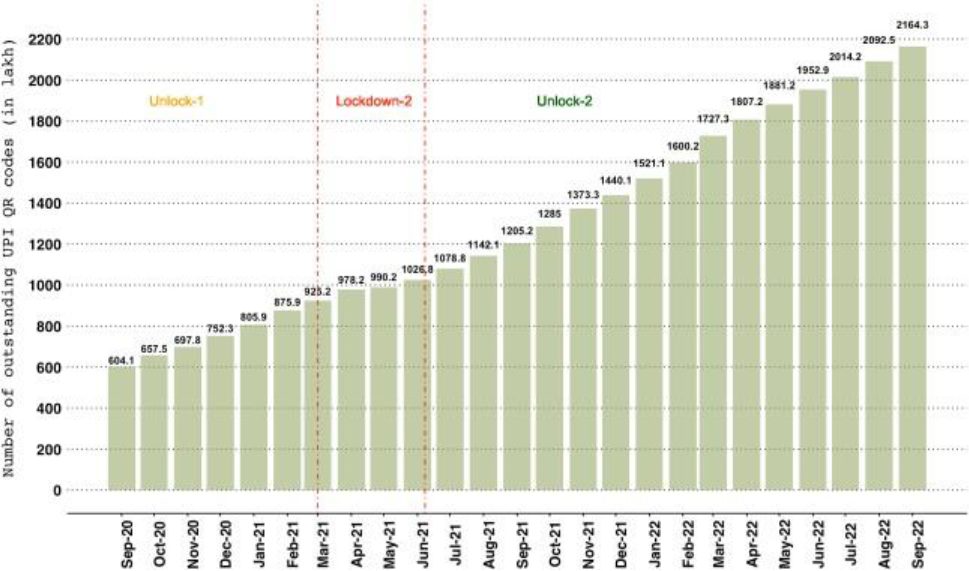
The chart reflects the growth of UPI QR Codes in India from Sep-20 to Sep-22.
Figure 2
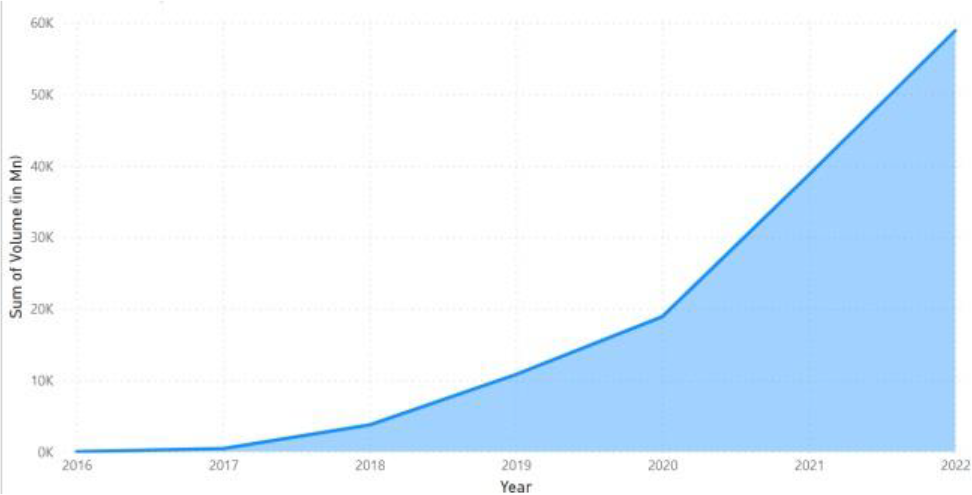
The graph shows exponential growth in UPI transactions since 2018.
Objectives of the Study
The literature review highlighted the rapid growth of the UPI market and the competition among major players such as Google Pay, PhonePe, Paytm, Amazon Pay, and WhatsApp Pay.
The study aimed to understand how individuals choose among different UPI services and the factors influencing their decisions.
It also explored how India Stack has the potential to pave the way for a globally cashless economy.
Research Methodology
A Consumer Dipstick survey was designed using Longitudinal Survey Design methodologies.
Around 300 participants from different age groups and states across India participated in the study.
Data from NPCI was also referred to analyse the growth of UPI transactions compared to NEFT, IMPS, and mobile wallets.
Parameters such as trust, ease of use, app stability, and security were considered while framing the questionnaire.
Results
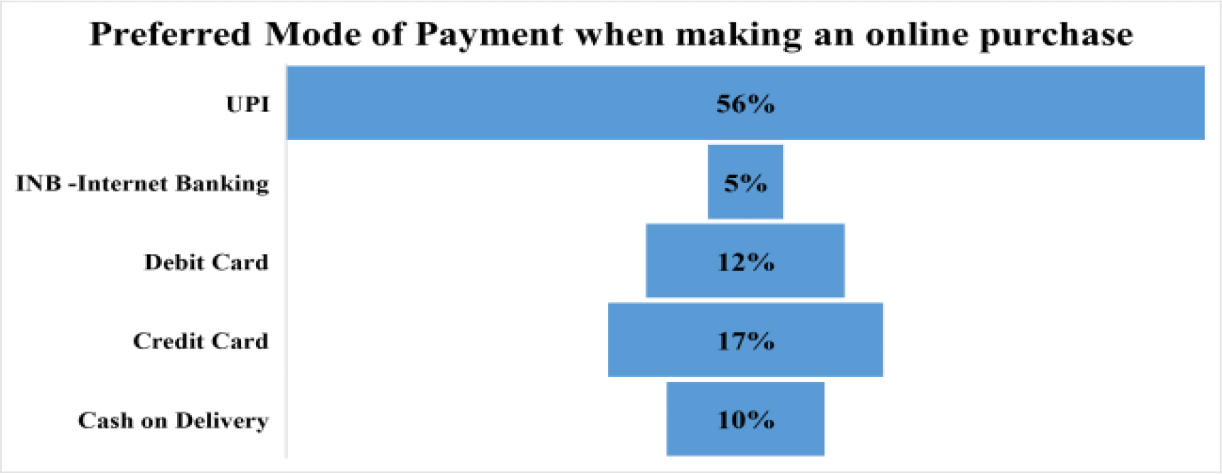
Preferred Payment Mode
56% of respondents preferred UPI for online purchases, followed by credit cards, debit cards, cash on delivery, and internet banking.
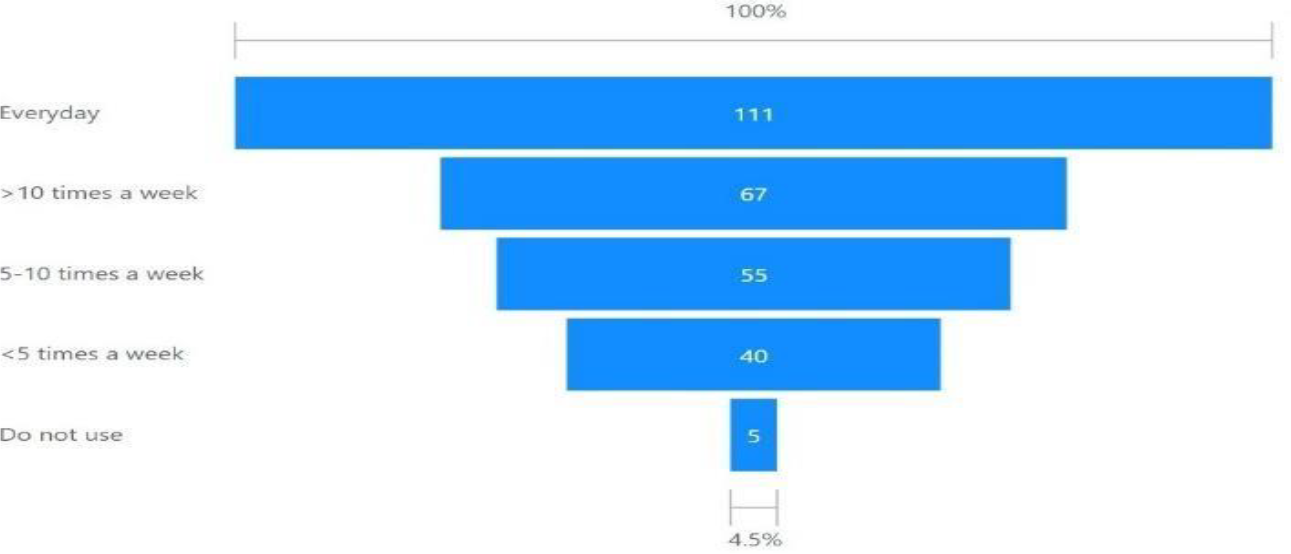
Frequency of UPI Usage
40% of users used UPI almost every day and more than once daily.
UPI Spending Behaviour
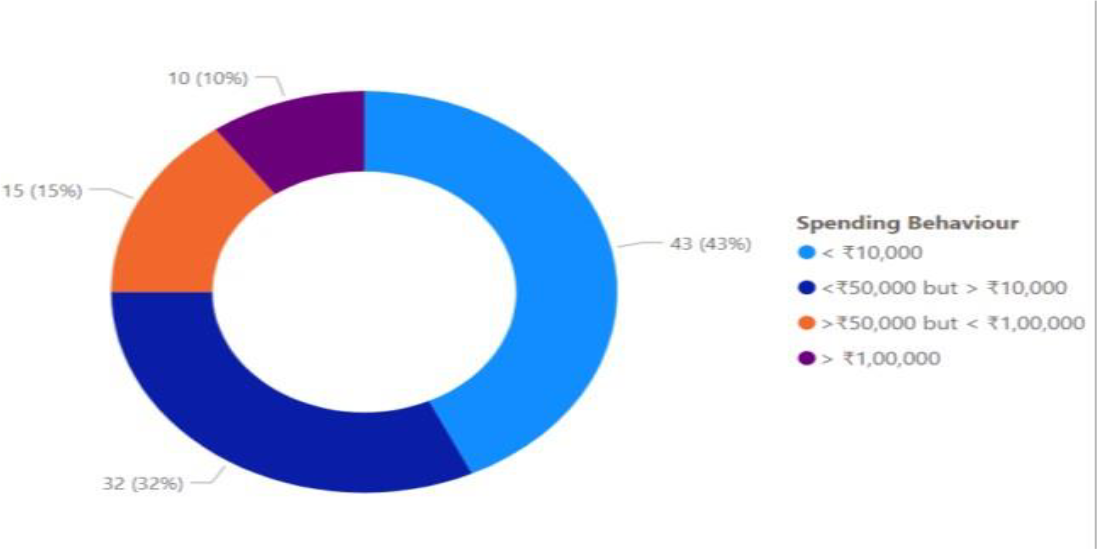
43% of respondents preferred transactions below ₹10,000 while using UPI services.
Most Preferred UPI Applications
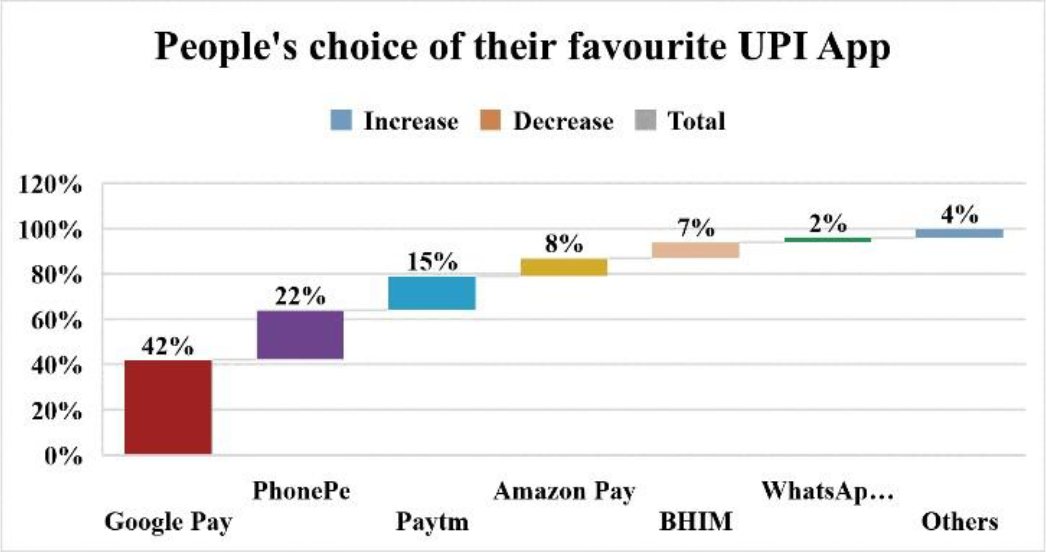
Google Pay emerged as the most preferred UPI application, followed by PhonePe and Paytm.
Average Wallet Size
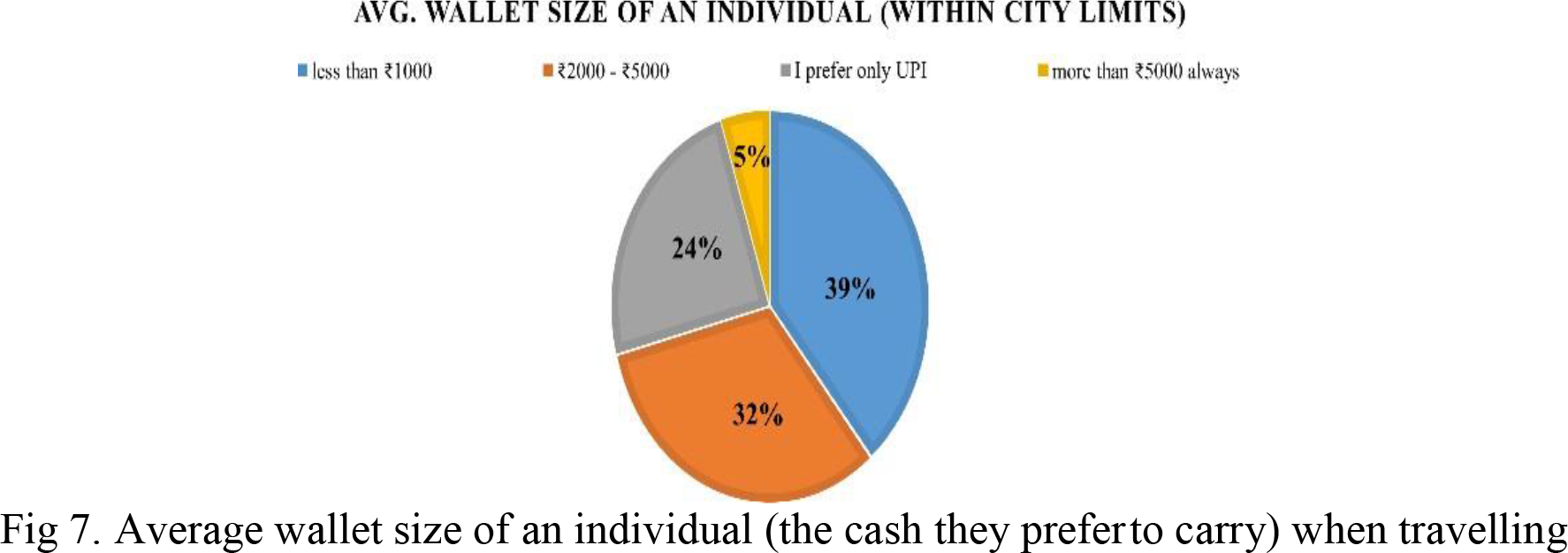
Most individuals preferred carrying less than ₹1000 cash while travelling within city limits.
Cash vs UPI Outside City Limits
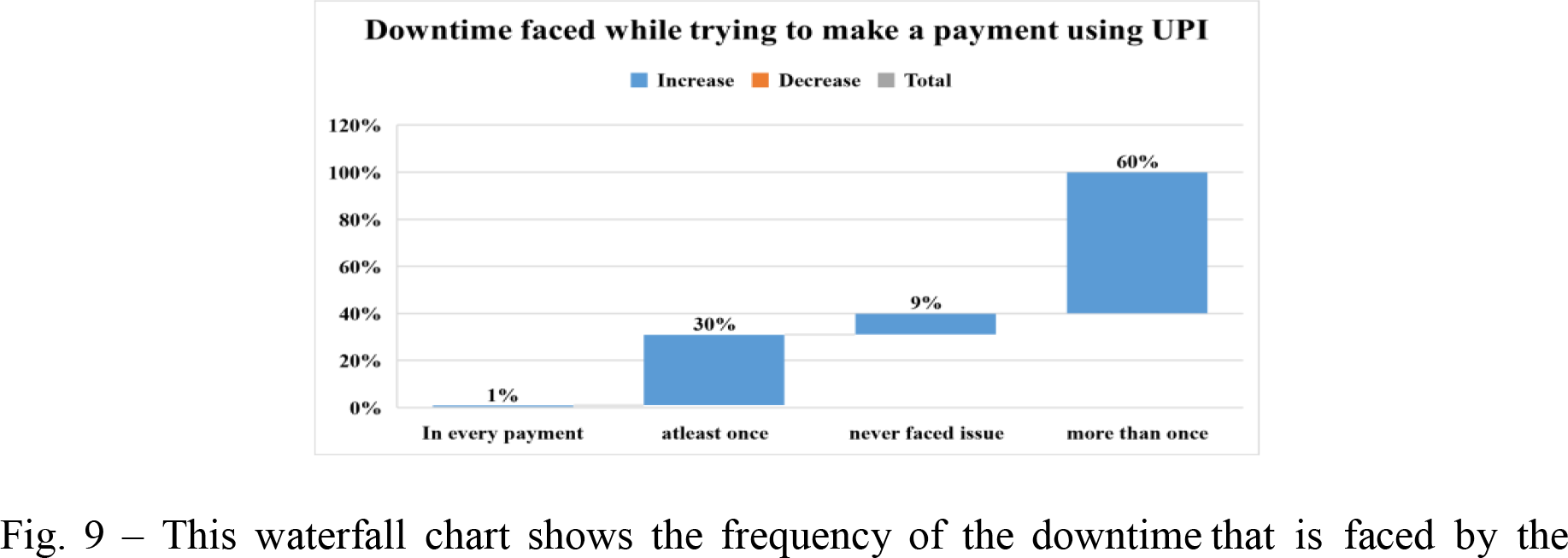
Downtime Frequency
Most respondents reported experiencing downtime issues more than once a month while using UPI applications.
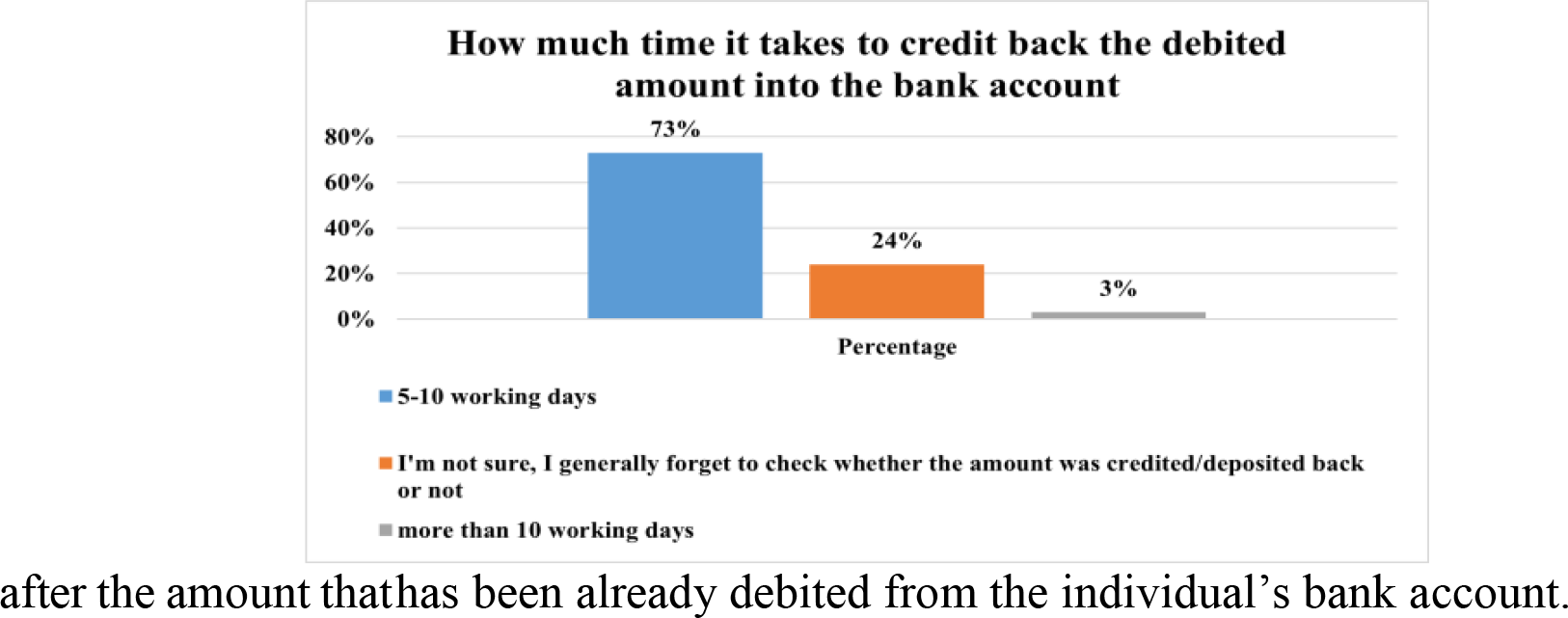
Refund Timeline
The majority reported that failed transaction amounts were credited back within 5–10 working days.
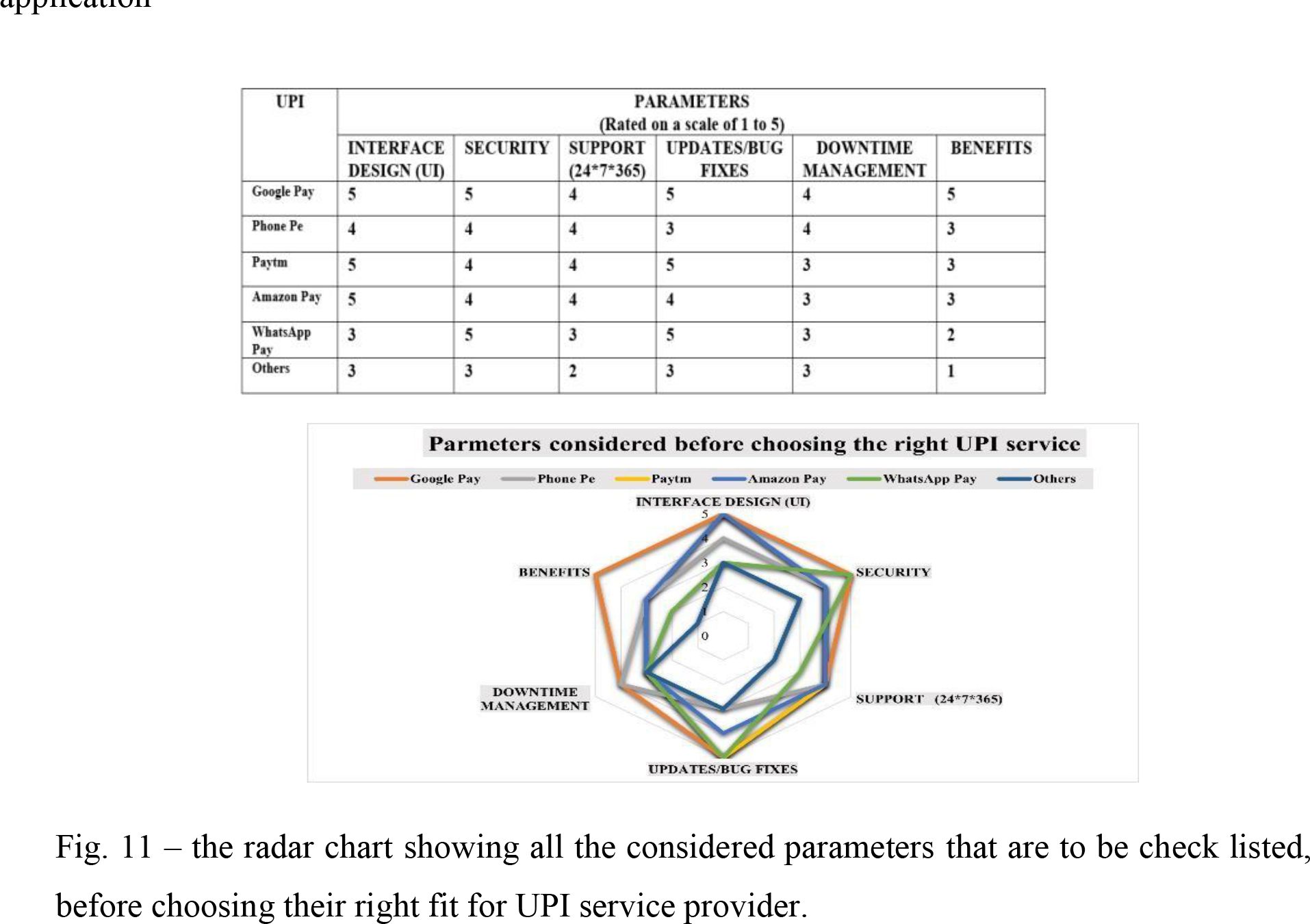
UPI Service Parameters
Parameters such as interface design, security, support, downtime management, and updates were important in selecting UPI applications.
Discussion
- People are moving away from traditional payment methods like Internet Banking and cards toward UPI transactions.
- Most users trust UPI for lower-value transactions below ₹10,000.
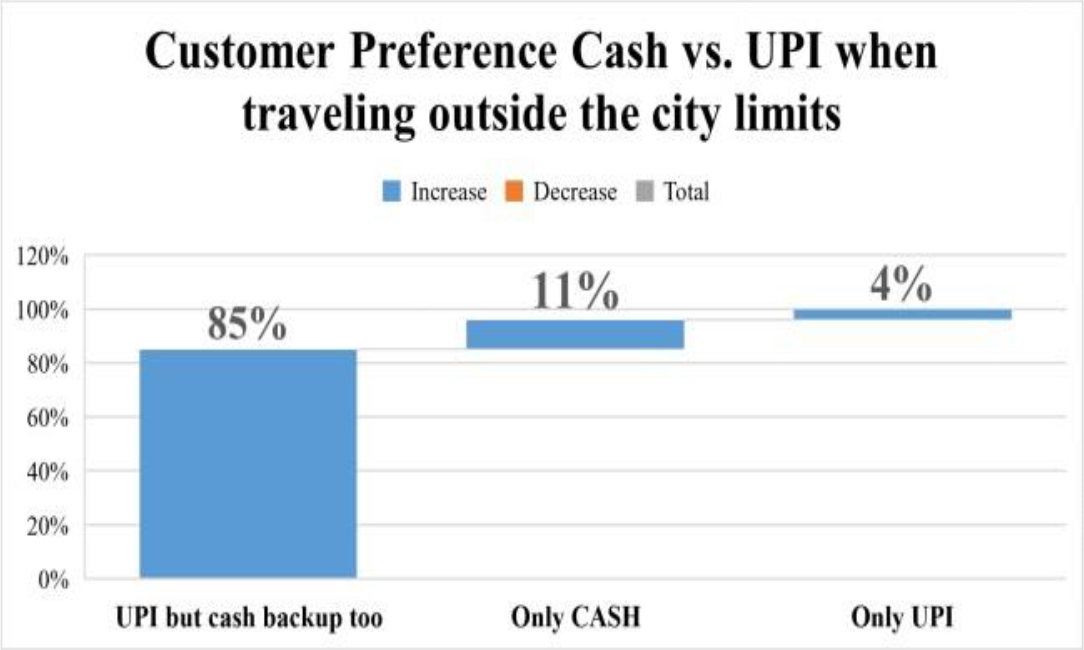
- Cash is still preferred as a backup while travelling outside city limits.
- Downtime and failed transactions remain major concerns for users.
- UPI adoption increased significantly during and after COVID-19.
Conclusion
India has achieved remarkable growth in digital payment systems, especially UPI services.
The rise of smartphones, affordable internet, demonetisation, and the COVID-19 pandemic accelerated UPI adoption across the country.
Although trust in higher-value transactions is still developing, UPI continues to transform India into a cashless economy.
The future holds immense potential for UPI to expand globally and replace physical cash transactions.
References
Yadav, P., Sinha, V. (2022): Paradigm Shift of Digital Payments in India.
Perannagari, K. T., & Gupta, V. (2022). Recent Trends in Digital Infrastructure in India.
Mahesh, A., & GaneshBhat, S. (2022). India’s Digital Payment Landscape–An Analysis.
Kandpal, V., Malhotra, A., Sharma, M., & Sabiha, A. (2022). Cashless Payment Systems.
Ingale, D. (2022). Strategic Analysis of E-Wallets – Digital Payments Apps.
Sharma, A. (2016). Unified payments interface: The recent Indian financial innovation demystified.
Bech, M. L., Faruqui, U., & Shirakami, T. (2020). Payments without borders.
Basavaraj, R. K., & Veshne, N. A. (2017). Unified Payment Interface (UPI) – A Way Towards Cashless Economy.
Gopinath, R., Vevek, S., & Sivaprakkash, S. (2022). Paradigm Shifts In Digital Payment Transactions.